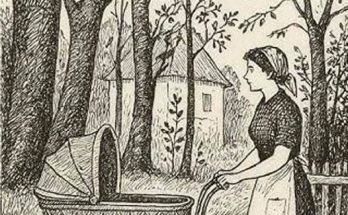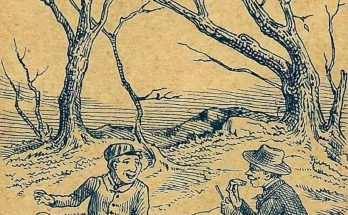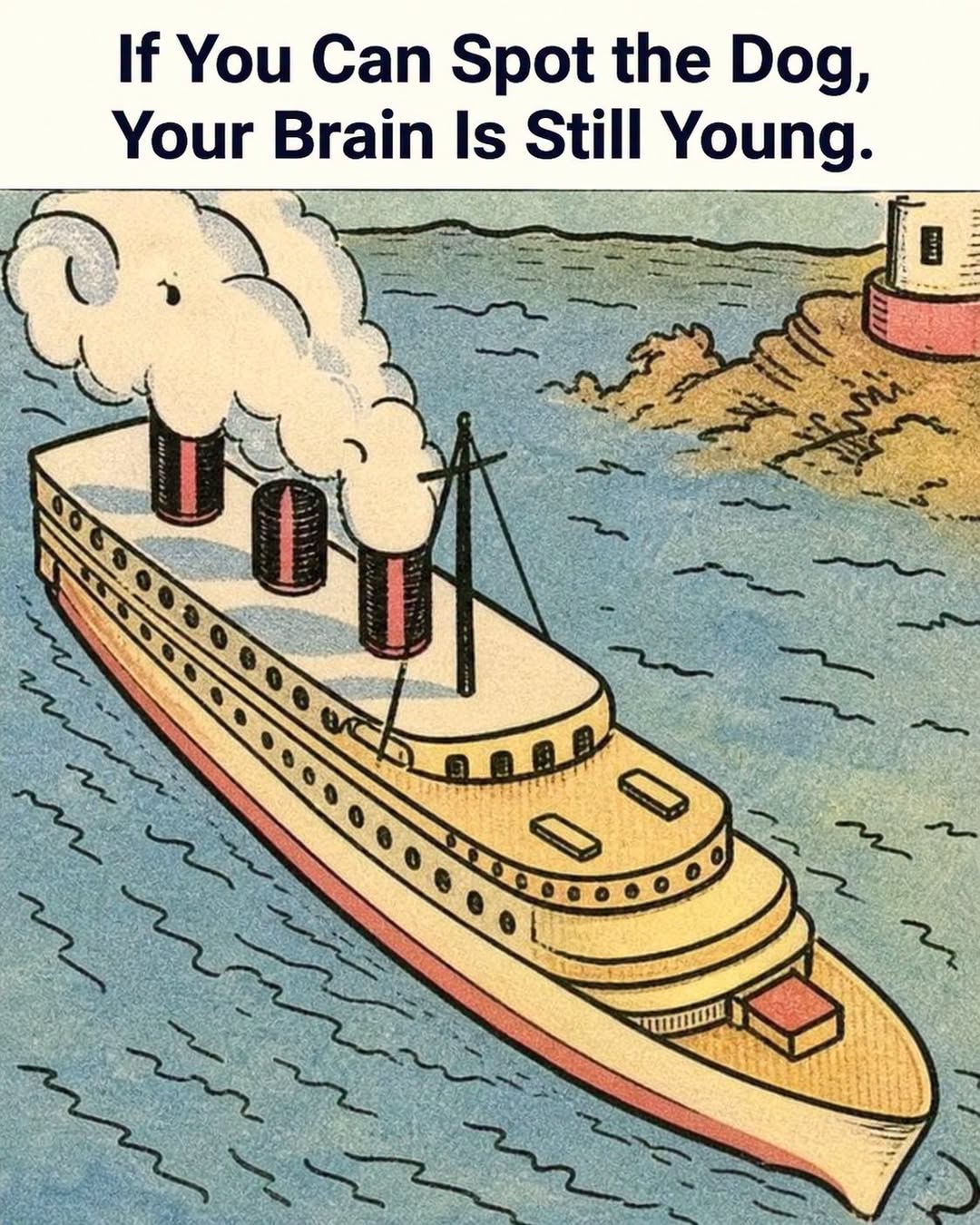
Have you ever looked at a picture and noticed one thing immediately, only to discover a completely different image hiding in plain sight?
That is exactly what makes hidden-image puzzles so fascinating. At first glance, your brain may recognize familiar objects and quickly decide what the picture represents. But when you are asked to find something unexpected, such as a dog hidden within the scene, you have to reconsider what you are seeing.
Some versions of this puzzle are presented with claims that finding the hidden dog means your brain is “young.” That makes for an interesting headline, but the puzzle itself does not actually measure your biological age or prove how young your brain is.
What it can demonstrate, however, is something more interesting: how easily your mind can change its interpretation of visual information.
Why the Dog Can Be Difficult to See
The main challenge is not necessarily poor eyesight. Instead, it has to do with expectations.
When you first look at an unfamiliar image, your brain immediately tries to organize it. It searches for recognizable shapes and objects and gives them names.
You might see the outline of a boat, water, smoke, a lighthouse, or another familiar object. Once your brain has settled on that interpretation, it becomes much harder to consider that the same shapes might form something else.
This is one reason hidden-image puzzles can be surprisingly challenging.
The dog may not appear as a clear drawing with obvious ears, legs, and a body. Instead, its outline can be created by the combination of several unrelated shapes in the surrounding scene.
Your Brain Likes Familiar Patterns
Human vision is constantly working to make sense of incomplete information.
Rather than examining every tiny detail separately, the brain often looks for patterns and familiar forms. This allows us to recognize objects quickly and navigate everyday situations without consciously analyzing everything we see.
That ability is extremely useful, but it can also make optical illusions difficult.
Once you decide that a particular shape is a boat, for example, you may continue interpreting its lines as parts of a boat. You may not immediately consider that some of those same lines could also contribute to the outline of an animal.
The hidden dog becomes easier to recognize when you stop concentrating on the original interpretation.
Look at the Spaces Between Objects
One useful approach with hidden-image puzzles is to stop looking only at the objects themselves.
Instead, pay attention to the spaces around them.
An animal’s outline might be created partly by the edge of one object, partly by another shape, and partly by empty space. When viewed individually, these details may appear unrelated. When your brain puts them together differently, however, they can suddenly resemble a recognizable figure.
This is why the moment you finally see the hidden image can feel almost like a switch has been turned on.
Before that moment, the picture seems ordinary. Afterward, the hidden shape becomes much easier to recognize.
Why It Feels Like a Sudden Discovery
One of the most enjoyable parts of an optical illusion is the moment of recognition.
You can spend several seconds—or even several minutes—looking at the same image without noticing anything unusual. Then, suddenly, the hidden figure seems obvious.
Nothing in the picture has actually changed.
What changed was your interpretation.
Your brain has found a new way to organize the same visual information. Lines and spaces that previously appeared disconnected now work together to create a recognizable shape.
Once you have seen the hidden dog, it can become difficult to return to the original way of seeing the picture.
Does Finding the Dog Really Mean Your Brain Is Young?
Not necessarily.
There is no reason to treat one hidden-image puzzle as a reliable test of someone’s age or overall brain health. Your ability to find the dog can be influenced by many factors, including familiarity with optical illusions, attention, visual experience, expectations, and simply how quickly you happen to notice the relevant shapes.
Someone who struggles to find the dog is not automatically experiencing a problem with their brain. Likewise, spotting it quickly does not prove that someone’s brain is biologically younger.
The more reasonable interpretation is that the puzzle challenges perceptual flexibility—your ability to move away from an initial interpretation and consider another possibility.
A Small Exercise in Flexible Thinking
That flexibility is what makes these puzzles more than just a quick visual challenge.
When you look at an ambiguous picture, your first interpretation can become an anchor. The longer you focus on it, the more natural it may seem.
Finding the hidden image requires you to loosen that assumption.
Instead of asking, “What am I looking at?” try asking:
“What else could these shapes represent?”
That small change in perspective can make a surprising difference.
You may begin noticing outlines, curves, shadows, and empty spaces that you previously ignored.
Try Looking at the Picture Differently
If you are struggling with a hidden-image puzzle, there is no need to stare at it continuously.
Try taking a short break and looking again.
You can also change your focus. Rather than examining the most obvious object in the center of the image, scan the edges and surrounding spaces. Look for unusual curves or shapes that don’t seem to fit the scene.
Sometimes slightly changing the distance between your eyes and the screen can also alter how the image is perceived.
The goal is not to force yourself to see a dog. It is to give your brain permission to consider another interpretation.
The Real Lesson Behind the Puzzle
The hidden dog is entertaining, but the more interesting lesson is how strongly our expectations influence perception.
Our brains are constantly making predictions about what we are seeing. Those predictions help us process the world quickly, but they can also cause us to overlook alternative interpretations.
A hidden-image puzzle gives us a harmless way to notice that process.
The picture stays exactly the same, yet our experience of it can change dramatically.
At first, you may see a collection of ordinary objects. Then, after changing your perspective, those same lines and spaces can suddenly become the outline of a dog.
That moment of recognition is a simple reminder that seeing is not always the same as understanding.
Final Thoughts
If you can spot the hidden dog quickly, enjoy the challenge—but don’t take the result as a scientific measurement of your age or brain health.
The real skill being tested is your willingness to reconsider what initially seems obvious.
Sometimes the answer is not hidden because it is too small or too complicated. It is hidden because your brain has already decided what the picture is supposed to be.
So the next time you face an optical illusion, take a second look.
Change your perspective.
Look beyond the obvious shapes.
And remember that sometimes, the most interesting thing in a picture is the thing your brain wasn’t expecting to see.