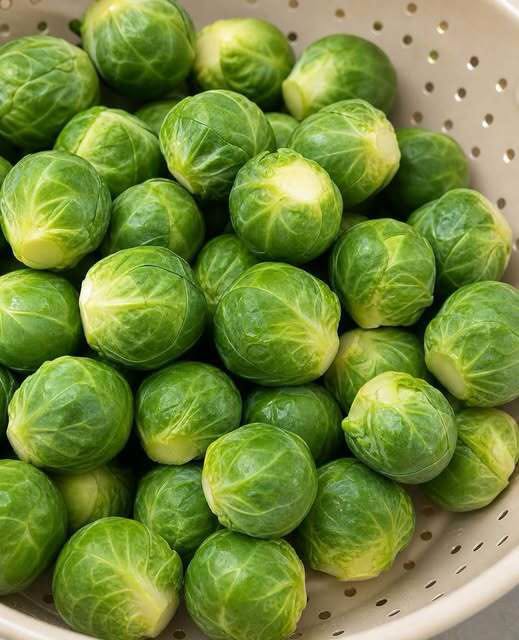
For years, Brussels sprouts had a reputation for being one of those vegetables that people either avoided or reluctantly ate because they felt they had to. Many people remember them as soft, watery, and accompanied by a strong smell.
But there is a good chance that the problem was never really the Brussels sprouts themselves. In many cases, it came down to how they were prepared.
Traditional cooking methods often involved boiling Brussels sprouts for a long time. While boiling can be a simple way to cook vegetables, overcooking Brussels sprouts can make them lose their firmness and develop a strong sulfur-like aroma. The result can be a vegetable that looks unappetizing and has a texture that is difficult to enjoy.
Fortunately, there are many other ways to prepare them.
Roasting Can Change Everything
One of the easiest ways to give Brussels sprouts a completely different character is to roast them.
When Brussels sprouts are exposed to high heat, their outer leaves can become browned and crisp. At the same time, the inside remains tender. The natural flavors also become more noticeable, producing a slightly sweet and nutty taste.
Before roasting, it helps to cut the Brussels sprouts in half and coat them lightly with oil and your preferred seasonings. Place them on a baking sheet with the cut sides facing down when possible.
The amount of space on the baking sheet also matters. If the vegetables are packed too closely together, moisture can build up around them. Instead of roasting and browning, they may begin to steam.
Giving each piece enough room allows the hot air to circulate and encourages better browning.
Seasonings Can Make Them More Interesting
Brussels sprouts have a fairly distinctive flavor, but that also makes them a good vegetable to pair with different ingredients.
Simple seasonings such as garlic, lemon, black pepper, mustard, fresh herbs, or a small amount of nuts can add extra flavor without overwhelming the vegetable.
For a richer dish, some people also enjoy pairing roasted Brussels sprouts with ingredients such as crispy bacon or Parmesan cheese.
The key is not necessarily to use a large number of ingredients. A few complementary flavors can be enough to make the dish more enjoyable.
You Don’t Have to Roast Them
Roasting may be one of the most popular modern methods, but it is certainly not the only option.
Brussels sprouts can also be thinly sliced and used raw in salads. When prepared this way, they have a fresh, crunchy texture that is very different from the soft texture associated with overcooked vegetables.
Light steaming is another option. Cooking them briefly can help preserve their firmness and bright green appearance while making them tender enough to eat.
You can also experiment with sautéing, grilling, or combining them with other vegetables in a balanced meal.
Different cooking methods produce different results, so it can be worth trying more than one approach before deciding that Brussels sprouts are not for you.
Why Brussels Sprouts Got Such a Bad Reputation
The reputation of Brussels sprouts may have been influenced by the way they were commonly prepared in the past.
When vegetables are boiled for too long, they can lose some of their appealing texture, color, and flavor. Brussels sprouts can be particularly noticeable because excessive cooking may intensify their characteristic aroma.
That experience can easily shape someone’s opinion of the vegetable for years.
Modern cooking techniques have given people more opportunities to experiment. Instead of treating Brussels sprouts as something that simply needs to be boiled until soft, cooks can focus on texture, browning, seasoning, and presentation.
A Different Way to Look at Brussels Sprouts
Sometimes, changing the cooking method is enough to completely change how a food is perceived.
A Brussels sprout that has been roasted until the edges are crisp can feel like an entirely different dish from one that has been boiled until soft. A raw Brussels sprout shaved into a salad offers another experience altogether.
This is one reason it can be useful to give familiar foods another chance.
If you have disliked Brussels sprouts since childhood, it may not hurt to try them prepared in a different way. Roasting them with a little oil and seasoning is a simple place to start.
The Bottom Line
Brussels sprouts do not necessarily need to be transformed into something completely different to become enjoyable. The cooking technique can make a significant difference.
Roasting can bring out browned, crisp edges and a deeper flavor. Raw preparations can provide freshness and crunch, while light steaming can preserve a firmer texture.
In the end, the biggest lesson may be simple: sometimes the food is not the problem—the preparation is.
If Brussels sprouts have never been your favorite vegetable, trying a new cooking method could be enough to change your mind.