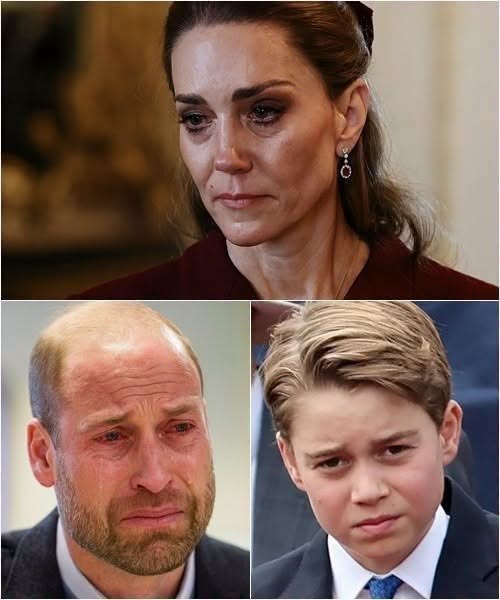
A brief exchange at a Cancer Research UK reception offered a rare glimpse into the personal bond between Catherine, Princess of Wales, and Prince William after one of the most difficult periods of their family life.
Sometimes, the most meaningful moments involving members of the Royal Family are not the ones carefully prepared for a speech or captured in a formal portrait.
Sometimes, they happen in the middle of an ordinary conversation.
For Catherine, Princess of Wales, one such moment came during a reception marking the 125th anniversary of Cancer Research UK at St James’s Palace on June 2, 2026. The event brought together researchers, medical professionals, supporters, volunteers and others connected with the organization’s long history.
Catherine’s presence carried particular significance because of her own experience with cancer treatment and recovery.
During the evening, she spoke with Irish singer Ronan Keating and his wife, Storm. At one point, the conversation turned to Prince William, who was not present because he was carrying out other royal duties.
According to the account provided in the source material, when Keating expressed that he wished William could have been there, Catherine gave a remarkably simple response:
“Me too.”
Pasted markdown
The words were brief, but the circumstances surrounding them gave the moment a more personal quality.
It was not a formal declaration of affection or a carefully prepared statement about marriage. It was simply a wife acknowledging that she missed her husband.
For a couple whose public lives are closely observed but whose private relationship is generally kept away from the cameras, that small exchange offered an unusually natural glimpse of affection.
A Meaningful Evening for Catherine
The Cancer Research UK anniversary reception was an important occasion in its own right.
The organization has a long history of supporting cancer research, awareness and efforts to improve prevention, diagnosis and treatment. Bringing together researchers, clinicians, campaigners, supporters and families gave the anniversary a broader significance beyond the royal attendance.
For Catherine, however, the subject had a deeply personal connection.
In March 2024, she announced that cancer had been discovered following major abdominal surgery. She explained publicly that the diagnosis had come as a major shock and that she and William had needed time to process the news and explain the situation to their children.
She subsequently stepped away from many public duties while undergoing chemotherapy.
William continued with selected royal responsibilities while also supporting his wife and helping maintain stability for their family.
By September 2024, Catherine announced that she had completed chemotherapy. In January 2025, she shared another important update, saying that she was in remission.
Her return to public life was gradual.
Rather than immediately returning to the pace of her previous schedule, Catherine described recovery as an ongoing process that required time, patience and adjustment.
That history gave her appearance at the Cancer Research UK reception an additional layer of meaning. She was attending an event connected to cancer research not simply as a senior member of the Royal Family, but as someone whose own family had recently experienced the uncertainty surrounding a cancer diagnosis and treatment.
Pasted markdown
The Conversation With Ronan Keating
Ronan Keating also has a personal connection to cancer awareness.
His mother, Marie Keating, died from breast cancer in 1998 at the age of 51. Following her death, Keating and his family established the Marie Keating Foundation, which focuses on cancer awareness and prevention.
The source material notes that Cancer Research UK has also worked with Keating and the foundation through cancer-awareness initiatives.
That background made the conversation between Catherine and the Keatings particularly relevant to the evening.
At some point, William’s absence became part of the discussion.
William was carrying out another royal engagement that day, including a visit connected with the Royal Navy’s Submarine Service in Scotland.
When Keating reportedly mentioned that it would have been nice to see William, Catherine smiled and responded:
“Me too.”
There was no long explanation.
She did not turn the comment into a public discussion about her marriage.
She simply agreed.
That simplicity may be part of what made the exchange so noticeable.
Why Two Simple Words Attracted Attention
The phrase “me too” is not normally considered a major declaration.
In everyday conversation, it can be almost insignificant.
But context can change the meaning of even the simplest words.
Catherine was speaking about her husband after a period in which their family had faced serious health challenges, increased public attention and major changes to their normal routines.
The remark therefore offered a small glimpse of something deeply ordinary: she wanted the person she had spent years building a life with to be there.
It was not proof of anything about the private details of their marriage.
Only William and Catherine know what happens away from public engagements.
But it was an authentic-sounding moment in which Catherine expressed that she missed him.
That is different from a carefully prepared royal statement.
Royal engagements are normally structured around official responsibilities. Speeches are prepared. Meetings are scheduled. Conversations often take place in front of cameras.
A spontaneous personal comment can therefore stand out precisely because it feels less formal.
Another Personal Conversation
The evening also included another conversation that brought Prince William into the discussion.
Catherine spoke with Sebastien Bowen, the husband of the late Dame Deborah James.
Deborah James became widely known in Britain for her work raising awareness of bowel cancer. Through writing, broadcasting and advocacy, she encouraged people to discuss symptoms and seek medical attention.
Prince William developed a connection with Deborah and her family during the final period of her life.
In May 2022, he visited the family home to present her with her Damehood. Deborah died the following month at the age of 40.
At the 2026 Cancer Research UK reception, Bowen reportedly spoke positively about William’s kindness toward his family.
Catherine responded with another short but revealing comment:
“That’s just like him.”
Pasted markdown
Once again, there was no dramatic speech.
Instead, Catherine appeared to describe a quality she associates with her husband: compassion toward people going through difficult circumstances.
Together, the two brief exchanges created a picture of William not only as the Prince of Wales, but as the husband Catherine knows personally.
A Marriage Tested by a Difficult Period
William and Catherine married at Westminster Abbey on April 29, 2011.
Their relationship, however, began much earlier.
They met while studying at the University of St Andrews in Scotland and developed a friendship before their relationship became romantic.
Their journey was not completely straightforward. They experienced a temporary separation in 2007 before eventually reconciling.
William proposed in 2010, using the sapphire engagement ring that had belonged to his mother, Diana, Princess of Wales.
Their wedding in 2011 transformed their relationship into one of the world’s most recognizable royal marriages.
Over the years, they became parents to three children: Prince George, Princess Charlotte and Prince Louis.
Their public responsibilities also continued to increase.
After Queen Elizabeth II died in September 2022 and King Charles III became monarch, William became Prince of Wales and Catherine became Princess of Wales.
Then came the extraordinary events of 2024.
King Charles was undergoing cancer treatment.
Not long afterward, Catherine announced her own diagnosis.
For William, this meant supporting his wife while also dealing with his father’s illness and continuing important royal responsibilities.
For Catherine, it meant stepping away from a highly visible public role while undergoing treatment and focusing on her recovery.
For both of them, it also meant thinking carefully about their children.
Protecting Their Children
One of the most difficult challenges for William and Catherine was explaining Catherine’s illness to George, Charlotte and Louis.
The children were still young when their mother began treatment.
Catherine explained that she and William had needed time to speak with their children and reassure them before publicly announcing her diagnosis.
That decision reflected a challenge many families understand.
When a parent becomes seriously ill, children need honesty, but they also need reassurance.
Parents must decide how much information is appropriate for their children’s ages and personalities.
There is no single formula.
The source material also describes William later speaking about communication with his children and the importance of helping them understand difficult circumstances without creating unnecessary fear.
For the Wales family, ordinary routines remained important.
School.
Meals.
Time together.
Family conversations.
Everyday activities can become particularly valuable when a family is dealing with uncertainty.
For children, those familiar routines can provide a sense of stability when other parts of life suddenly feel unfamiliar.
Pasted markdown
Catherine’s Gradual Return to Public Life
Completing chemotherapy was an important milestone for Catherine, but it did not mean that everything immediately returned to normal.
In September 2024, she announced that she had completed chemotherapy.
In January 2025, she announced that she was in remission.
The news brought relief to many people who had followed her health journey.
But recovery from serious illness can involve more than simply completing treatment.
Physical recovery can take time.
Emotional adjustment can take time.
Returning to work and public responsibilities can also require a gradual approach.
Catherine’s later appearances therefore carried a different meaning.
When she attended health-related events, she was no longer simply representing a royal patronage or fulfilling an official engagement.
She was also someone with personal experience of the uncertainty that can accompany cancer.
That made the Cancer Research UK anniversary particularly significant.
She was standing in a room filled with researchers, medical professionals, campaigners and others working to improve the lives of people affected by cancer.
Her own experience gave that setting a personal connection without needing to become the entire focus of the event.
Pasted markdown
William’s Changing Approach to Family Life
Prince William has generally been careful about how much he reveals about his private life.
That has not changed completely.
However, over recent years he has occasionally offered glimpses into family life and the emotional challenges of parenting.
His comments about communicating with his children during difficult circumstances have been particularly notable.
For a future king, discussions about school runs, family routines and conversations with children may sound ordinary.
But those details help show another side of a family whose lives are often discussed primarily in terms of royal duties.
William and Catherine are not only senior members of the monarchy.
They are also parents.
Their children are growing up within an extraordinary institution, but their parents have continued to emphasize the importance of family life and ordinary routines.
The experience of Catherine’s illness appears to have made that family-centered approach even more meaningful.
When circumstances become uncertain, familiar things can become sources of comfort.
A family meal.
A school morning.
A conversation at home.
A walk outside.
Simple moments can matter enormously during difficult periods.
Fifteen Years of Marriage
By the time of the Cancer Research UK reception, William and Catherine had been married for 15 years.
Their relationship itself had lasted much longer.
They had known each other for years before becoming husband and wife, and their relationship had developed through friendship, courtship, separation, reconciliation, marriage and parenthood.
Their public relationship has generally been more restrained than the highly demonstrative style associated with some celebrity couples.
That restraint is understandable given their roles.
Members of the British Royal Family are expected to maintain a certain level of professionalism during official engagements.
Yet over the years, William and Catherine have also shared plenty of lighter moments: smiles, jokes and occasional gestures of affection.
After more than two decades together, small expressions of emotion can sometimes say more than an elaborate public declaration.
The “Me too” moment fits naturally into that longer history.
It was only two words.
But they came from a relationship shaped by many years together, including some exceptionally difficult ones.
Pasted markdown
Why the Moment Resonated With So Many People
Perhaps the biggest reason the exchange attracted attention is that the emotion behind it is easy to understand.
Missing someone you love is not a uniquely royal experience.
It is something people experience in ordinary families every day.
The difference is that William and Catherine’s private lives are surrounded by extraordinary public attention.
Millions of people know their names.
Their official appearances are photographed.
Their family milestones are followed around the world.
Yet beneath those titles are still two people who have spent years supporting each other through major life changes.
The past few years included illness, treatment, recovery, increased responsibility and difficult conversations with their children.
Against that background, Catherine saying that she wished William had been there was something many people could understand immediately.
It was not necessarily the words themselves.
It was the human feeling behind them.
Cancer Is a Family Experience Too
Cancer is often discussed in terms of diagnosis, treatment and survival.
But serious illness can affect an entire family.
A diagnosis can change routines.
Partners may become caregivers.
Children may have questions that are difficult to answer.
Parents and friends may worry from a distance.
Every member of the family can experience fear and uncertainty differently.
That is one reason moments like Catherine’s appearance at the Cancer Research UK reception can carry a broader emotional meaning.
Her experience does not make her circumstances identical to those of other families.
Royal life is obviously very different from ordinary life.
But some emotions remain recognizable.
Fear.
Uncertainty.
Relief.
Exhaustion.
Hope.
Gratitude.
And the desire to have someone you trust beside you.
The source material notes that Cancer Research UK’s work continues against the enormous scale of cancer diagnoses in the United Kingdom. The organization’s anniversary therefore represented not only a celebration of past progress, but also a reminder of the research and support still needed.
Pasted markdown
A Different Definition of Strength
Royal families have traditionally been associated with ideas such as duty, composure, continuity and endurance.
But Catherine’s recent experience offers another possible definition of strength.
Strength can mean recognizing that something is frightening.
It can mean stepping away from work when treatment requires it.
It can mean having difficult conversations with children.
It can mean accepting help from a partner.
It can mean returning slowly rather than pretending that recovery happens overnight.
And sometimes, strength can simply mean showing up again.
Catherine’s appearance at the Cancer Research UK reception represented that quieter kind of resilience.
She did not need to deliver a dramatic speech about everything she had experienced.
Her presence was enough.
She was back in a room connected to a subject that had changed her own life, meeting people whose work is focused on helping others facing similar challenges.
That kind of return can carry its own significance.
A Couple Changed by Adversity
It would be impossible for anyone outside their marriage to know exactly how Catherine’s illness affected William and their relationship.
Only they know the private reality of those months.
What they have shared publicly, however, indicates that the period was deeply important for their family.
They had to make decisions together.
They had to think about their children.
They had to adjust responsibilities.
They had to manage public expectations while dealing with a deeply personal situation.
And they had to navigate uncertainty while continuing with life as a family.
Adversity does not automatically make every relationship stronger.
Real life is more complicated than that.
But the public glimpses William and Catherine have offered suggest that their partnership remained an important part of how they approached the difficult period.
That is why a tiny exchange at a reception could attract so much attention.
“Me too.”
There was no elaborate declaration.
No carefully staged romantic photograph.
No anniversary message.
Just a wife acknowledging that she wished her husband were there.
Looking Ahead
William and Catherine continue to balance several roles.
They are the Prince and Princess of Wales.
They are senior working members of the Royal Family.
William is heir to the throne.
They support numerous charitable causes.
And away from official engagements, they are parents raising three children.
The events of 2024 and 2025 added another dimension to their family story.
They became a family navigating cancer.
That experience will likely remain part of their personal history even as Catherine continues her return to public life.
It may influence the causes they support.
It may shape how they approach health-related work.
It may affect how they protect family time.
And it may help explain why small expressions of affection can feel more meaningful after such a difficult period.
Their story is not compelling because royal life protects people from ordinary hardship.
It is compelling for almost the opposite reason.
Illness does not disappear because someone has a title.
Uncertainty does not disappear inside a palace.
Children still need reassurance.
Partners still need each other.
And people still miss the ones they love.
A Quiet Declaration After a Difficult Journey
The Cancer Research UK reception was ultimately about 125 years of cancer research, scientific progress and the people working toward better outcomes for patients and families.
For Catherine, it also represented another step in her return to public life.
She met people whose lives had been shaped by cancer.
She spoke with families and advocates.
She attended alongside senior members of the Royal Family.
And during one brief conversation, Prince William’s name came up.
Her response was only two words.
“Me too.”
Perhaps that is why the moment stayed with people.
After 15 years of marriage, three children, enormous public responsibilities and an exceptionally difficult period for their family, Catherine did not need to make a grand statement about her feelings.
The simplicity was enough.
Her journey has included diagnosis, treatment, recovery and a gradual return to public life.
It has also included partnership.
William supported Catherine through an intensely difficult period. Together, they worked to protect and reassure their children. Catherine, in turn, has offered small public glimpses of the qualities she sees in her husband.
The public will never know every detail of their private relationship, and it does not need to.
Sometimes, a brief moment can offer a small window into a much larger story.
At St James’s Palace, that window lasted only a few seconds.
But those two words offered a simple reminder that behind the titles of Prince and Princess of Wales are two people who have spent more than two decades growing together, raising a family and facing some of life’s most difficult uncertainties side by side.
And sometimes, after everything a family has been through, saying “Me too” is enough.