Old photographs of Princess Diana and King Charles continue to attract attention decades after they were taken. From their clothing and expressions to their body language and surroundings, people often examine historic images for small details that may have been overlooked when the photographs first appeared.
One particular type of photograph has generated a surprisingly simple question: Why does the height difference between Charles and Diana sometimes appear much greater in certain pictures than in others?
At first glance, the images can seem confusing. In some photographs, Charles appears noticeably taller than Diana. In others, the difference looks less dramatic.
The explanation, however, may have much more to do with photography and positioning than with anything mysterious.
A Photograph Captures Only One Moment
Photographs are powerful because they preserve a specific moment in time. However, a photograph does not necessarily show every detail of the situation surrounding that moment.
The people being photographed may be standing at different elevations. One person might be sitting while another is standing. They may be positioned closer to or farther away from the camera. Shoes, posture, stairs, furniture, and the angle of the camera can also influence the way proportions appear.
These factors can make two people look significantly different in height even when the actual difference between them is smaller than the photograph suggests.
This is particularly important when looking at photographs of Charles and Diana.
The Detail Many People Miss
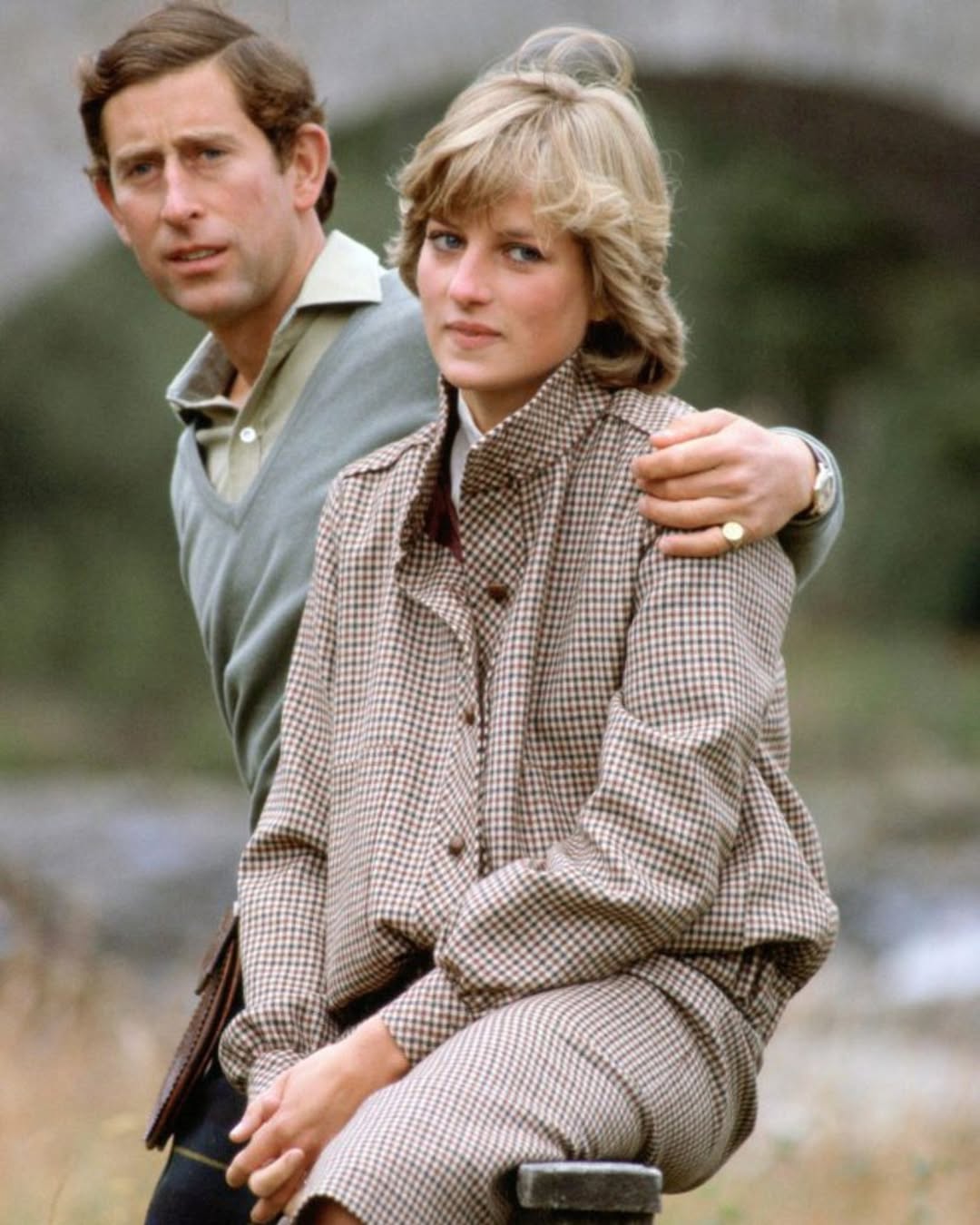
One of the clearest examples is an image associated with Balmoral.
At first glance, the photograph may appear to show Charles standing beside Diana, creating an obvious difference in their apparent height.
But there is a detail that changes the way the photograph should be interpreted.
Diana is sitting while Charles is standing.
That simple difference in position naturally makes Charles appear considerably taller.
It is an important reminder that photographs need to be considered in context. The image itself may be completely genuine, while the first impression created by the image can still be misleading.
Why Perspective Matters So Much
Imagine two people standing next to each other on a staircase.
If one person is several steps higher, the photograph may make the difference between them look much greater. If they move onto a flat surface, their proportions may suddenly appear very different.
Nothing about either person’s physical height has changed.
Only their position has changed.
The same principle applies to photographs taken on uneven ground, around steps, near furniture, or from unusual camera angles.
Even a relatively small difference in elevation can have a noticeable effect when the image is viewed without knowing what was happening outside the frame.
Shoes and Posture Can Also Change the Picture
Footwear is another factor that is easy to overlook.
Different styles of shoes can add several centimeters of height. High heels, formal shoes, boots, and flatter footwear can all create subtle differences in appearance.
Posture matters as well.
A person standing straight with their shoulders back can appear taller than the same person when leaning forward or bending slightly. Someone sitting naturally will, of course, appear much shorter than they would while standing.
When photographs are compared side by side, these small differences can create the impression that people’s proportions have changed dramatically.
In reality, the camera may simply be capturing them under different circumstances.
Comparing Charles and Diana With William and Catherine
The subject becomes even more interesting when photographs of the younger generation of the royal family are considered.
Prince William is commonly reported to be around 6 feet 3 inches tall, while Catherine, Princess of Wales, is often reported at approximately 5 feet 9 inches.
That means there is a genuine height difference between them.
Even so, photographs do not always make that difference look exactly the same.
Depending on the footwear, posture, camera position, and surroundings, the apparent gap can become more noticeable in one photograph and less noticeable in another.
This demonstrates a broader point about photography: a picture records reality, but the way that reality appears to the viewer can be influenced by composition.
Why Old Photographs of Diana Still Attract Attention
Princess Diana’s photographs remain widely recognized because her public life was documented extensively.
Images from the early years of her marriage show a young woman adapting to royal life and appearing at official events around the world.
Later photographs show different stages of her public life, including changes in her fashion, confidence, public role, and relationship with the media.
Because so many photographs exist, people can easily compare images from different periods.
That naturally encourages viewers to look for small details.
Sometimes the detail may be a hairstyle or an outfit. Other times it might be facial expressions, posture, body language, or the way people are positioned within a photograph.
The fascination often comes from realizing how much information can be contained within a single still image.
How Social Media Revived Interest in Old Images
The internet has changed the way historic photographs are discussed.
A picture that received relatively little attention when it was originally published can suddenly become popular decades later.
One person may notice an unusual detail.
Another person may compare the image with an older photograph.
Someone else may create a short video explaining what they noticed.
The image can then be shared thousands or even millions of times.
This process can transform an ordinary historical photograph into the subject of a much larger online discussion.
Photographs involving Diana are particularly likely to attract this kind of attention because of the continued public interest in her life and legacy.
Does This Prove That Photographs Were Deliberately Staged?
Not necessarily.
There is an important difference between saying that a photograph was carefully arranged and saying that every apparent difference in a photograph was intentionally created.
Official photographs are often organized to some degree. People may be asked where to stand, where to look, or how to pose.
But other images are simply spontaneous moments.
A person might sit down because a chair is available. Someone else may remain standing. One person might be on a step while another is on the ground.
Without additional evidence, it would be difficult to determine the exact intention behind every individual photograph.
That is why it is better to examine the circumstances visible in the image rather than immediately assuming there was a hidden explanation.
The Role of Social Expectations
There is also a broader cultural dimension to the discussion.
Sociologist Lisa Wade has discussed the way expectations surrounding male height and masculinity can influence how couples are perceived and represented.
That interpretation raises an interesting question about how society has traditionally viewed differences in height between men and women.
However, a broader cultural interpretation should not automatically be treated as proof that a particular photograph was deliberately arranged for that reason.
There may be several explanations for a single image.
Photography, social expectations, clothing, posture, location, and simple coincidence can all contribute to how a photograph looks.
What Photographs Can and Cannot Tell Us
One of the most useful lessons from this discussion is that photographs are not complete records of everything that happened.
A camera captures a particular frame from a particular location at a particular moment.
It does not show what happened immediately before or after.
It does not necessarily show what is happening outside the edges of the image.
And it cannot always tell us why people were positioned where they were.
That means viewers should be cautious when drawing conclusions from a single photograph.
A picture can be completely authentic while still producing an incomplete impression.
Looking Beyond the Obvious Detail
The fascination surrounding photographs of Charles and Diana may ultimately have less to do with their actual height and more to do with how easily our eyes can be influenced.
We naturally interpret images quickly.
If one person appears much taller than another, we may immediately assume that the photograph is accurately showing their relative height.
But then we notice the chair.
Or the stairs.
Or the shoes.
Or the angle of the camera.
Suddenly, the photograph looks different.
This is why seemingly ordinary details can become so important when studying historic images.
Final Thoughts
The apparent height difference between Charles and Diana in old photographs has inspired plenty of discussion, but there may be a much simpler explanation than some online theories suggest.
In the well-known Balmoral photograph, one of the most important details is easy to overlook: Diana is sitting while Charles is standing.
Other photographs can produce different impressions because of footwear, posture, perspective, positioning, terrain, and the circumstances surrounding the picture.
That does not mean every photograph was deliberately manipulated. It simply demonstrates how strongly composition can influence what viewers see.
Perhaps that is the most interesting lesson hidden within these old photographs.
A photograph can preserve a genuine moment while still allowing the viewer to interpret that moment incorrectly.
Sometimes, the most important part of an image is not the person in the center of the frame.
It is the small detail just outside our first impression.