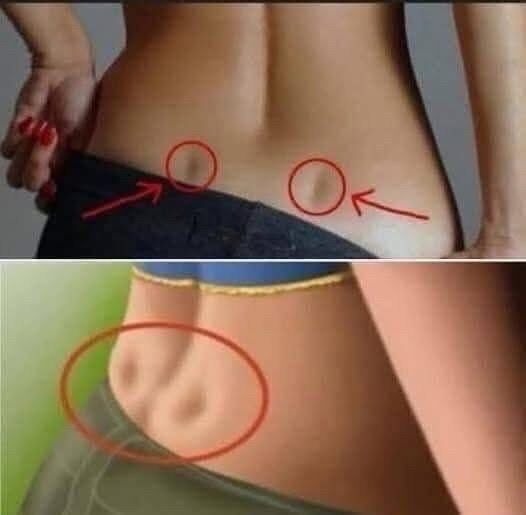
The small indentations on the lower back—often called Venus dimples in women and Apollo holes in men have quietly captured attention for generations. Positioned just above the hips, these natural features may seem minor at first glance, yet they are often admired for the way they enhance the body’s natural symmetry and shape.
What makes these dimples especially interesting is that they are entirely genetic. Unlike features that can be influenced by exercise or lifestyle, Venus dimples are determined by your body’s structure. Some people have them, and others don’t—and both are completely normal. They typically remain unchanged over time, regardless of weight or fitness levels.
From an anatomical perspective, these dimples form where the pelvic bone (specifically the posterior superior iliac spine) sits close to the skin. A ligament connects the skin to this underlying bone, creating a slight indentation. Because there is very little fat or muscle in this area, the dimples can appear more defined in some individuals.
Throughout history, these dimples have been associated with balance and natural beauty. The name itself is inspired by Venus, the Roman goddess of love and beauty, reflecting long-standing cultural admiration. Artists and sculptors have often paid attention to such details when depicting the human form, highlighting the importance of symmetry and proportion in visual art.
Despite common myths, Venus dimples do not have any proven health or functional benefits. They are not indicators of fitness, strength, or overall health. While some theories suggest possible links to circulation or sensitivity, there is no strong scientific evidence to support these claims. Medically speaking, they are simply a natural variation in human anatomy.
In modern culture, Venus dimples continue to be appreciated for their subtle appearance. They are sometimes highlighted in photography, fashion, and fitness imagery, where the lower back is visible. Their appeal lies in their understated nature they enhance the body’s contours without being overly noticeable.
It’s also important to remember that not having these dimples is just as natural. Human bodies vary widely, and no single feature defines beauty. Venus dimples are simply one of many unique traits that contribute to individual appearance.
Ultimately, the fascination with these dimples reflects a broader appreciation for the small details that make each body unique. Whether seen as a genetic trait or an aesthetic feature, they remain a simple yet intriguing part of human anatomy—quietly admired and naturally occurring.