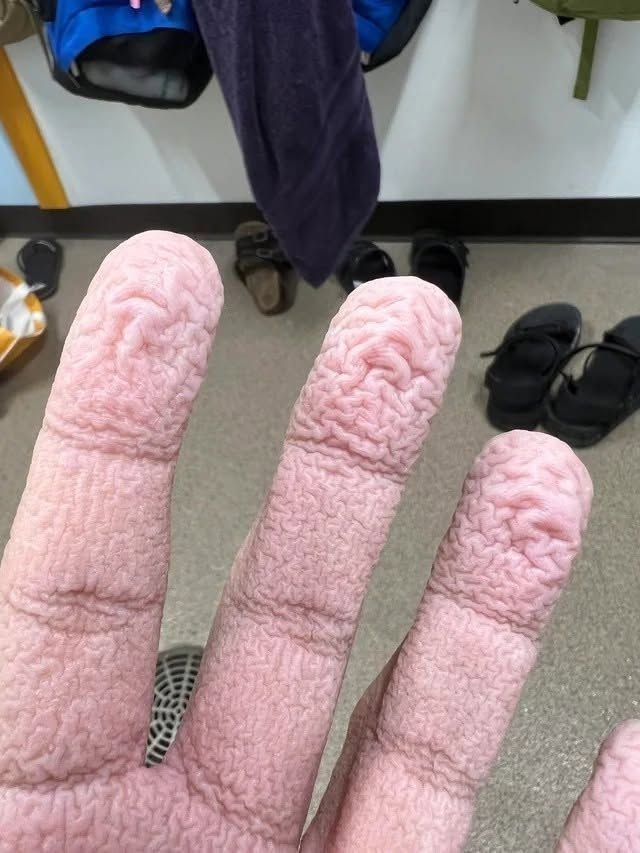
Wrinkled fingertips after a bath, swim, or washing dishes are something almost everyone experiences. While many people believe the skin wrinkles because it absorbs too much water, research suggests the explanation is much more interesting.
In most cases, these temporary wrinkles are a completely normal response controlled by the nervous system. However, if your fingers wrinkle unusually fast, remain wrinkled for an extended period, or appear wrinkled without water exposure, it may be worth discussing the symptoms with a healthcare professional.
Why Do Fingers Wrinkle in Water?
For many years, scientists believed fingertips wrinkled because the outer layer of the skin absorbed water and expanded. More recent research has shown that the process is actually controlled by the body’s nervous system.
After your hands remain underwater for several minutes, tiny blood vessels beneath the skin begin to narrow. As these blood vessels constrict, the skin pulls inward, creating the familiar wrinkles that appear on the fingertips and palms. Once the hands dry and normal blood flow returns, the wrinkles gradually disappear.
A Helpful Built-In Feature
Researchers believe these wrinkles may serve a useful purpose. Studies suggest that wrinkled fingertips improve your ability to grip wet objects, much like the tread on a tire helps maintain traction on slippery roads. This natural response may have given early humans an advantage when handling food, tools, or objects in wet environments.
Although scientists continue to study this process, it appears to be a beneficial adaptation rather than a problem.
How Long Does It Take?
For most people, finger wrinkling begins after about five to ten minutes of water exposure. The wrinkles gradually disappear after the skin dries, and no treatment is needed. This temporary change is considered a normal biological response.
When Wrinkling May Need Medical Attention
While water-related wrinkling is usually harmless, some people experience excessive or unusually rapid wrinkling. In rare cases, this may be associated with conditions such as aquagenic wrinkling of the palms, certain inherited conditions that affect salt balance in the skin, some medications, disorders involving the autonomic nervous system, or chronic eczema that weakens the skin barrier.
Although these conditions are uncommon, persistent or unusually rapid wrinkling should be discussed with a healthcare professional, especially if it is accompanied by pain, itching, excessive sweating, or skin peeling.
Everyday Habits That Can Affect Your Hands
Frequent handwashing, harsh soaps, alcohol-based hand sanitizers, and repeated exposure to water can strip away the skin’s natural oils. As a result, the hands may appear rougher, drier, cracked, or more wrinkled than usual. Applying a fragrance-free moisturizer after washing can help restore hydration and strengthen the skin’s protective barrier.
People whose work involves frequent contact with water, including healthcare workers, cleaners, chefs, hairdressers, and swimmers, are especially likely to experience dry or irritated hands. Using gentle cleansers and wearing protective gloves when appropriate may help reduce skin irritation.
An Interesting Medical Observation
Doctors have also observed that people with certain nerve injuries may not develop fingertip wrinkles after soaking their hands in water. Because this response depends on healthy nerve function, it can sometimes provide an additional clue during a medical evaluation. However, it is not used as a stand-alone diagnostic test.
When Should You See a Healthcare Professional?
Medical advice is recommended if finger wrinkling occurs without water exposure, is accompanied by severe pain, numbness, significant skin peeling, swelling, unusual discoloration, or sores that do not heal. These symptoms could indicate an underlying condition that requires further evaluation.
The Bottom Line
For most people, wrinkled fingers after bathing, swimming, or washing dishes are completely normal. Rather than showing that the skin has absorbed too much water, the wrinkles are part of a natural response controlled by the nervous system and may even help improve grip on wet surfaces.
Understanding the science behind this everyday phenomenon helps separate common myths from established research. While temporary wrinkles are usually harmless, paying attention to unusual or persistent changes in your skin is an important part of maintaining your overall health.