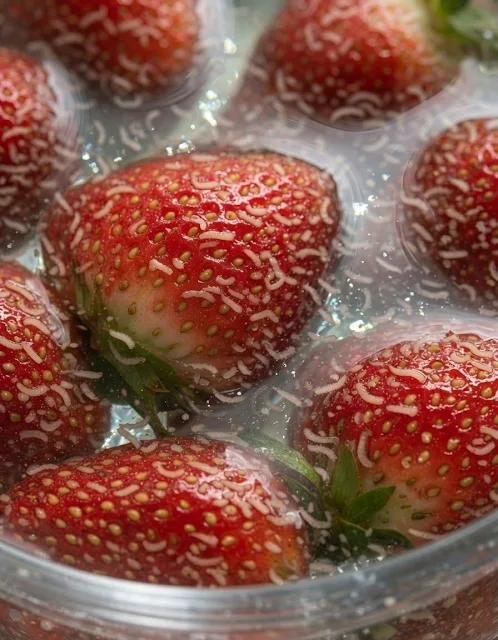
Fresh strawberries are one of the most loved fruits around the world. They are naturally sweet, rich in vitamin C, packed with antioxidants, and enjoyed in everything from smoothies to desserts. Every now and then, however, videos appear online showing tiny white creatures coming out of strawberries after the fruit is soaked in salt water. Seeing these videos can be surprising and may leave many people wondering whether strawberries are still safe to eat.
The good news is that there is usually no need to worry. Food experts explain that what people are seeing is often a completely natural occurrence. Learning what these tiny creatures are and how to clean strawberries properly can help you enjoy this delicious fruit with peace of mind.
The tiny white organisms sometimes found inside strawberries are commonly identified as fruit fly larvae. Fruit flies are naturally attracted to ripe fruit and may lay eggs on or near the surface while the berries are still growing in the field. Because strawberries have a soft texture and many tiny openings around their seeds, they can occasionally provide a place where these insects develop before the fruit is harvested.
Although the idea may sound unpleasant, this does not automatically mean the strawberries are spoiled or unsafe to eat. Fresh fruits grow outdoors where they are naturally exposed to insects, wind, rain, and other environmental conditions. Modern farming practices greatly reduce these issues, but nature cannot be completely eliminated from fresh produce.
Many people only discover the tiny larvae after soaking strawberries in salt water. The salt changes the environment around the fruit and encourages any hidden insects to leave the berry, making them visible. Without soaking, most people never notice anything unusual at all, which explains why these videos often surprise viewers.
Fortunately, strawberries remain safe to enjoy when they are fresh, properly stored, and thoroughly washed before eating. Food safety experts generally consider the occasional presence of fruit fly larvae to be a natural part of outdoor fruit production rather than a sign of poor quality. What matters most is making sure the berries are fresh and free from mold or spoilage. If a strawberry develops an unpleasant smell, becomes soft and mushy, or shows visible mold, it should be discarded. Otherwise, properly cleaned strawberries are considered perfectly suitable for eating.
Cleaning strawberries before eating is always a good habit. One of the most common methods is soaking them in cold water mixed with a small amount of salt for about ten to fifteen minutes. After soaking, the berries should be rinsed thoroughly under clean running water and gently dried with a paper towel before serving or storing them.
Another popular option is using a vinegar solution. Many people prepare a bowl of cold water mixed with white vinegar or apple cider vinegar and allow the strawberries to soak for several minutes. Once finished, the berries should be rinsed very well with fresh water to remove any remaining vinegar taste before being dried.
Some households prefer using baking soda instead. Mixing a tablespoon of baking soda into a bowl of cold water creates another gentle cleaning solution. Allowing the strawberries to soak for around ten to fifteen minutes before rinsing them thoroughly can help remove dirt and surface residues while leaving the fruit fresh and ready to eat.
Proper storage is equally important if you want strawberries to stay fresh for as long as possible. Keeping them in the refrigerator slows spoilage and reduces the chance of attracting fruit flies. Many experts also recommend waiting to wash strawberries until just before eating them because excess moisture during storage can encourage mold growth. Removing damaged or overripe berries from the container can also help the remaining fruit stay fresh longer.
Fruit flies are naturally attracted to ripe fruits, especially during warm weather. Keeping your kitchen clean, storing fruit in covered containers, refrigerating strawberries whenever possible, and disposing of overripe produce promptly can all help reduce fruit fly activity inside the home.
Many people ask whether the tiny white creatures found in strawberries are dangerous. In most cases, they are not considered harmful to humans and are simply a natural part of fruit grown outdoors. Others wonder whether their presence means the strawberries are poor quality. In reality, they can occasionally appear even in fresh, high-quality berries, which is why washing fruit before eating is always recommended regardless of where it was purchased.
Discovering something unexpected inside fresh strawberries may be surprising the first time, but it is generally not a reason to stop enjoying one of nature’s healthiest fruits. Strawberries remain an excellent source of vitamins, fiber, and antioxidants, making them a nutritious addition to a balanced diet. By washing them thoroughly, storing them properly, and choosing fresh berries free from spoilage, you can continue enjoying strawberries with confidence. A few simple cleaning habits are all it takes to make this delicious fruit ready for your table while giving you extra peace of mind.