Woodworking has changed dramatically over the centuries. Modern workshops now have access to electric sanders, precision saws, cordless drills, and other advanced equipment. Yet some of the simplest hand tools remain essential.
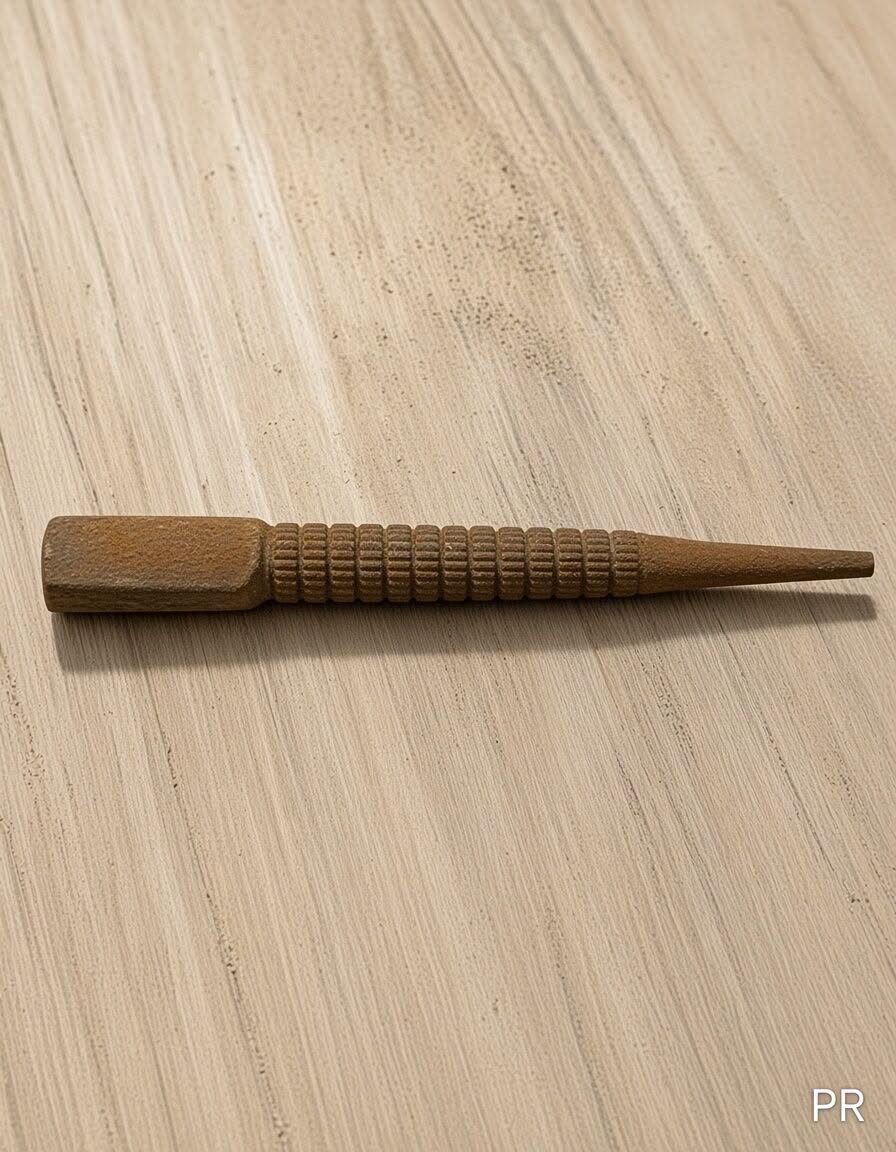
One excellent example is the nail punch, a small tool designed to help woodworkers achieve a clean and professional finish when working with nails.
It may not look particularly impressive, but this compact tool solves a very specific problem with remarkable efficiency. By allowing a nail head to be driven slightly below the surface of the wood, a nail punch helps create a smoother appearance and makes it easier to conceal the fastening point during finishing.
What Is a Nail Punch?
A nail punch, sometimes called a nail set, is a simple hand tool with a narrow tip designed to rest against the head of a nail.
Once the nail has been partially driven into the wood, the punch can be positioned over the nail head and gently struck with a hammer. This allows the nail to be recessed beneath the surrounding surface without requiring a larger tool.
The small indentation left behind can then be filled with an appropriate wood filler or putty. After the area is sanded and finished, the nail location can become much less noticeable.
This is particularly useful when appearance matters, such as when building furniture, installing decorative trim, repairing wooden cabinets, or restoring older pieces.
Why Do Woodworkers Still Use It?
The continued popularity of the nail punch is largely due to its simplicity.
Unlike powered woodworking equipment, a traditional nail punch does not require electricity, batteries, complicated settings, or a large workspace. It is small enough to keep in almost any toolbox and can be ready to use within seconds.
For many woodworking tasks, that simplicity is an advantage.
A craftsman working on a small repair may not want to bring out a power tool when a basic hand tool can accomplish the job quickly and precisely. The nail punch provides direct control over the final position of the nail while helping protect the surrounding wood from unnecessary marks.
A Tool With a Long History
The basic principle behind the nail punch has been used by craftspeople for generations.
Traditional woodworkers understood that exposed metal fasteners could interrupt the appearance of carefully finished wooden surfaces. Recessing the nail and covering the resulting indentation became a practical way to create a cleaner final result.
As woodworking techniques and manufacturing methods developed, nail punches became available in different sizes and designs. This allowed craftsmen to select a tool appropriate for different nail diameters and applications.
Modern nail punches are commonly manufactured from durable steel so they can withstand repeated contact with a hammer. Some designs feature shaped handles for improved comfort, while others use spring-loaded mechanisms that can make positioning and operation more convenient.
Despite these variations, the fundamental purpose has remained almost unchanged.
Choosing the Right Size
One of the most important considerations when using a nail punch is selecting a tip that matches the nail.
Nails are available in many different sizes, so a single punch may not be suitable for every job. A tip that is too large can leave a larger indentation than necessary. On the other hand, a tip that is too small may not sit securely on the nail head.
Using an appropriately sized punch gives the user better control and can help produce a more consistent result.
For detailed woodworking, this small difference can be especially important because the final appearance often depends on careful finishing.
Useful for Furniture and Trim
Nail punches can be particularly valuable when working on furniture and interior wood trim.
For example, a woodworker installing trim may want the nail heads to sit below the surface so they can later be filled and finished. Similarly, someone repairing an older cabinet may need to secure a loose section without leaving obvious fasteners visible.
Because the tool is manually controlled, it can also be useful when working in areas where precision is more important than speed.
This makes the nail punch a practical addition to a basic woodworking toolbox.
Helpful During Restoration Projects
Restoration work often requires a different approach from ordinary construction.
Older furniture and wooden structures may contain delicate surfaces, decorative details, or materials that need to be handled carefully. In these situations, a simple hand tool can provide a level of control that is useful for small adjustments and repairs.
A nail punch can help a woodworker position a nail more neatly without relying on larger equipment.
Of course, the appropriate technique depends on the type and condition of the wood. Older or valuable furniture should always be handled carefully, especially when the original finish or structure needs to be preserved.
Simple Tools Can Still Be Valuable
One of the most interesting things about the nail punch is how little has changed about its basic function.
Modern woodworking technology has introduced machines capable of performing highly precise tasks in a fraction of the time. However, there are still situations where a small hand tool is more convenient.
A nail punch represents a straightforward approach to tool design: identify a specific problem and create a simple instrument that solves it effectively.
There is no complicated mechanism to learn and no elaborate setup required. Its usefulness comes from its precision, durability, and ease of use.
Why It Remains Part of the Modern Toolbox
The nail punch may be an old-fashioned tool, but its purpose has not disappeared.
Woodworkers still need ways to create clean finishes, conceal fasteners, and make small adjustments during furniture construction and repair. As long as nails remain part of woodworking, there is a practical reason for tools designed to position them accurately.
That is why this small piece of steel continues to appear in toolboxes, workshops, and restoration projects.
The nail punch is a good reminder that useful tools do not always need to be complicated. Sometimes, a simple design that performs one job reliably can remain relevant for generations.
Final Thoughts
From traditional craftsmen to modern woodworking enthusiasts, the nail punch has earned its place as a practical hand tool.
Its design is simple, its purpose is easy to understand, and its usefulness extends across furniture making, trim installation, repairs, and restoration work.
While modern technology continues to transform woodworking, traditional tools such as the nail punch show that some solutions stand the test of time. A well-designed hand tool can remain useful for decades—or even centuries—simply because it does its job effectively.
For anyone interested in woodworking, understanding these classic tools is also a great way to appreciate how craftsmanship has evolved while many fundamental techniques have remained remarkably consistent.