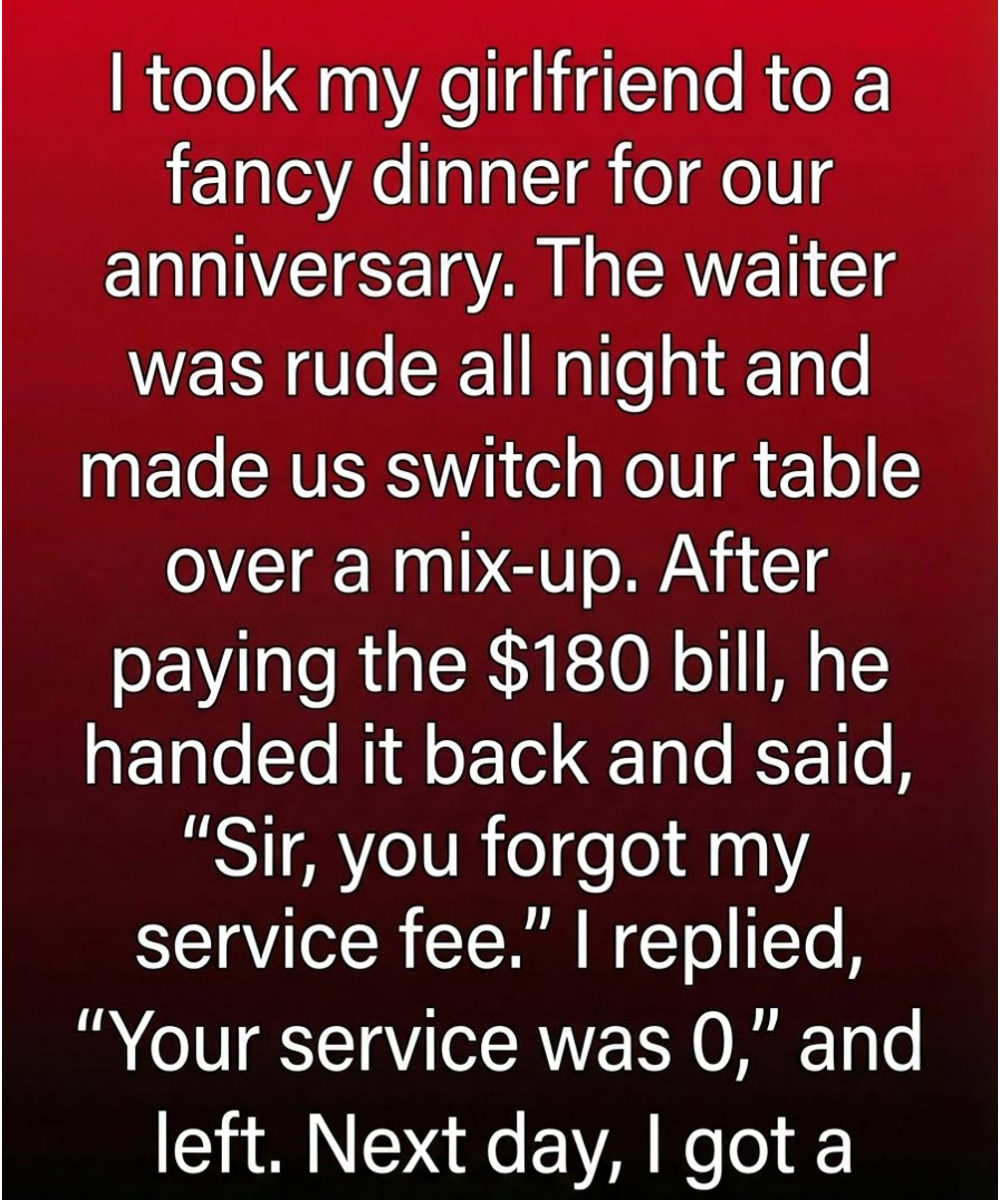
The evening was meant to be memorable—the kind of night you plan carefully and look forward to for weeks. I had saved up, replayed conversations in my mind, and chosen a restaurant known for its calm atmosphere and understated elegance. Soft lighting, neatly set tables, and a peaceful setting all suggested a night meant for connection. When my girlfriend arrived, smiling and full of warmth, I felt confident the evening would unfold just as I had hoped.
At first, it did.
We shared appetizers, laughed about past challenges, and talked about how much we had grown together. For a while, nothing else seemed to matter. It felt like one of those rare moments when time slows down and the outside world fades into the background.
Gradually, though, the tone of the night shifted.
From the beginning, the waiter seemed impatient. Simple questions were met with short answers, and requests felt like interruptions rather than part of the service. Midway through dinner, we were asked to change tables due to an unexplained “error.” The move disrupted the flow of the evening and left us feeling uncomfortable, as if we were causing a problem simply by being there.
I tried to brush it off. No experience is ever perfect. Still, small details kept piling up—heavy sighs, brief glances, a tone that suggested annoyance. My girlfriend noticed too. She gently held my hand, reminding me that what truly mattered was our time together, not the surroundings.
When the bill arrived, totaling $180, I paid without comment. I just wanted the night to end on a calm note. As we stood up to leave, the waiter returned and placed the receipt back in front of me.
“You forgot the service fee,” he said plainly.
It wasn’t the amount that bothered me. It was the assumption behind the comment. The suggestion that respect was owed regardless of how the experience felt. I stayed calm and explained that the service did not justify an extra charge. Then we quietly left.
On the drive home, I reflected on the moment. I wondered briefly if I had been too firm, but the feeling passed. My girlfriend and I talked instead about respect—how subtle it can be, and how important it is in everyday interactions. Situations like that don’t stand out because they’re dramatic, but because they reveal how we choose to respond.
The following afternoon, I received a call from the restaurant’s manager.
He explained that they had reviewed the situation and wanted to understand what happened. I shared my experience calmly and without blame. He apologized sincerely, acknowledged that the behavior was unacceptable, and thanked me for taking the time to explain.
The call didn’t feel like a win. It felt like closure.
The night didn’t turn out the way I imagined, but it offered something meaningful in return: a reminder that dignity doesn’t require raised voices, only honesty—and that respect, once missing, matters far more than the price of any meal.