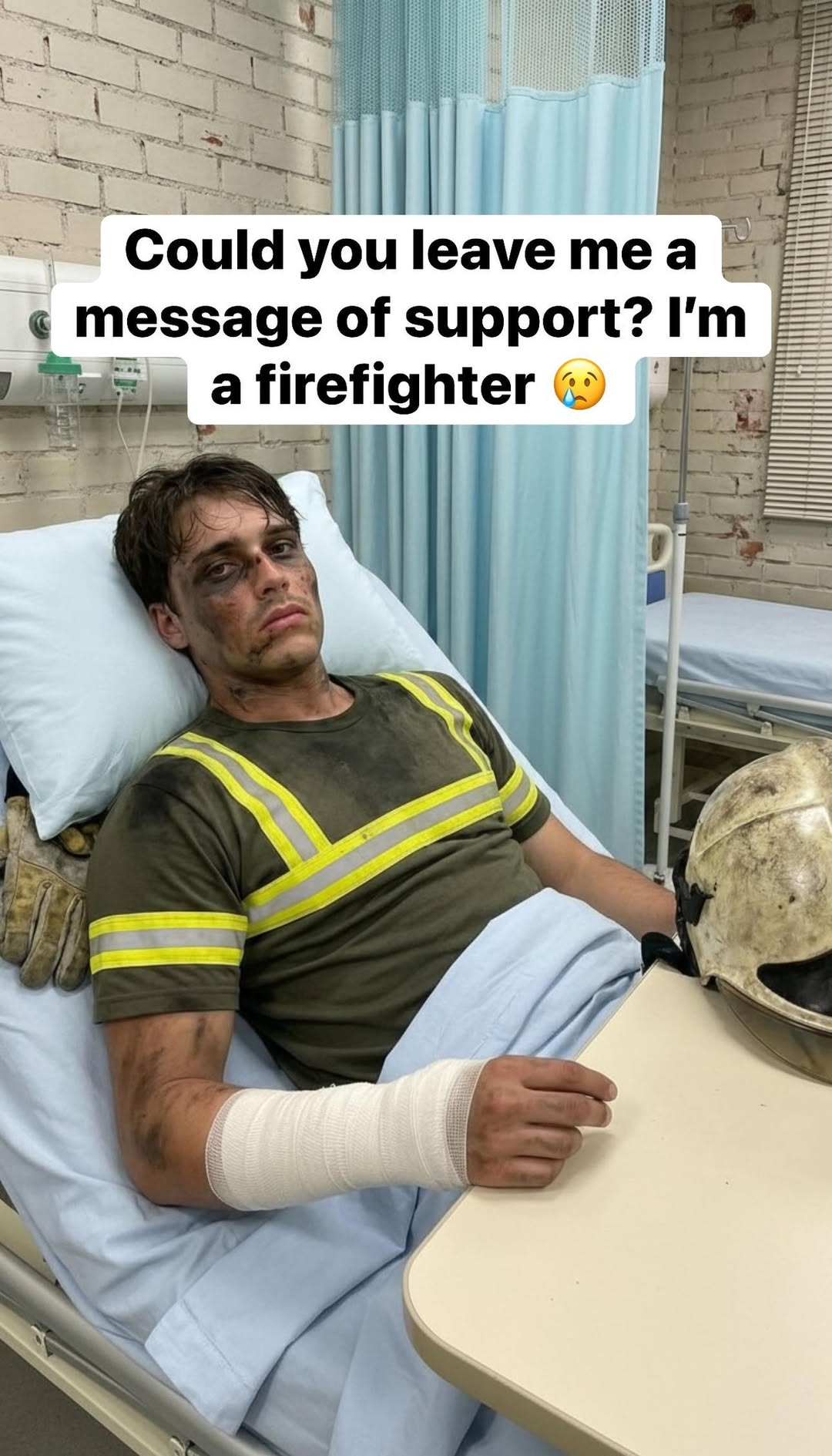
Today, I’m not standing at attention.
I’m not running toward flashing lights.
I’m not stepping into smoke-filled rooms.
Today, I’m lying in a hospital bed, listening to the quiet hum of machines and the soft footsteps in the hallway. 🏥
It’s a different kind of silence here. Not the charged stillness before a call comes in. Not the urgency of sirens echoing through the streets. This silence is slower. Heavier. It gives you time to think.
My uniform, folded neatly on a nearby chair, still carries the visible reminders of what happened. Even though the smoke has cleared, the experience lingers—in my body, in my thoughts, and in the quiet moments when everything slows down.
The Reality Behind the Uniform
Many people see firefighters as symbols of strength and bravery. And while courage is certainly part of the job, there’s another side that often goes unnoticed.
Behind every emergency response is a human being. Someone with a family. Someone who feels fear but moves forward anyway. Someone who understands the risks but chooses to serve.
You train to be strong.
You prepare for the unexpected.
You learn to stay calm in chaos.
But no one talks enough about what it costs—physically, mentally, and emotionally.
Long hours. Heavy gear. Intense heat. Split-second decisions. The responsibility of knowing that others depend on you. Over time, those pressures add up. And sometimes, your body reminds you that even strength has limits.
When Strength Looks Different
There’s a moment that comes unexpectedly—the moment when you realize you’re the one who needs help.
It can feel unfamiliar. Even uncomfortable.
Firefighters are used to being the ones who reach out a hand. Being the one lying in recovery, accepting care instead of giving it, is a different experience altogether.
But recovery is not weakness.
Rest is not failure.
Healing is not surrender.
In fact, it takes courage to pause. It takes resilience to admit when you need time to rebuild.
The Power of Human Connection
If you’ve ever faced a difficult moment—whether it was physical exhaustion, emotional strain, or simply reaching your limit—you understand how meaningful support can be.
Maybe a stranger once stepped in to help you.
Maybe someone offered words that gave you strength.
Maybe you felt seen when you needed it most.
Those small acts of kindness matter more than we often realize. 🤝
As I lie here focusing on recovery, I’m reminded that service doesn’t only happen in emergencies. It happens in quiet hospital rooms. It happens in encouraging messages. It happens when people choose compassion over indifference.
A New Perspective
This experience has brought clarity in unexpected ways.
It highlights the importance of caring not only for others—but also for ourselves. First responders, healthcare workers, teachers, parents—anyone who carries responsibility for others—must remember that self-care is part of service.
When we allow ourselves to heal, we come back stronger.
When we accept support, we build deeper connections.
When we slow down, we gain perspective.
Today isn’t about sirens or alarms. It’s about recovery. It’s about gratitude for medical teams, colleagues, friends, and even strangers who offer encouragement.
It’s about remembering that humanity extends far beyond emergency scenes.
Moving Forward
There will be a day when I stand again.
A day when I lace up my boots and answer another call.
A day when the sirens sound and I step forward with renewed purpose.
But today is about rest.
Today is about healing.
And today, more than anything, it’s about remembering that strength isn’t only measured by how much you can carry—it’s also measured by your willingness to recover, reflect, and rise again. ❤️