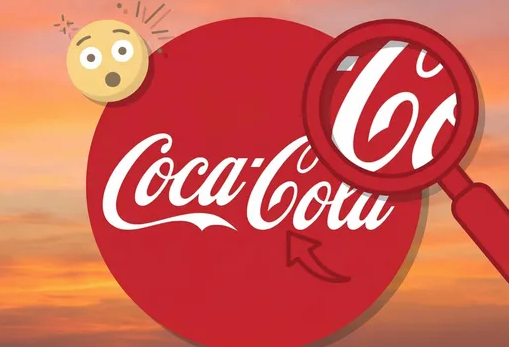
It often begins with a casual comment. Someone points out a tiny detail, almost in passing, and suddenly a familiar logo feels different. A curve you’ve seen for years seems to carry new meaning. What once looked purely decorative now feels more expressive, even friendly. From that moment on, it becomes difficult to look at it the same way again. A simple observation can quietly change perception, showing how easily meaning shifts once awareness takes hold.
This subtle change isn’t the result of a redesign or a hidden feature being revealed. The logo itself has remained the same for generations. Its flowing script dates back more than a century, created during a time when handwritten styles were associated with craftsmanship, reliability, and approachability. Designers focused on balance and clarity, not on embedding emotion or symbolism. Historical records suggest the curves were meant to be visually pleasing, nothing more.
Over time, however, meanings evolve. While the logo stayed the same, the world around it changed. Advertising became more emotionally driven, and brands began to appear in everyday moments—mealtimes, celebrations, and family routines. With repetition came familiarity. The symbol became linked to shared experiences and daily habits, quietly building emotional associations without any deliberate intent.
Human psychology plays a key role in this process. People naturally look for patterns, especially familiar ones. Our brains are wired to recognize faces and expressions, even in abstract shapes. This tendency helps us connect with our surroundings and interpret them quickly. When a familiar visual appears alongside positive experiences, the mind may begin to assign warmth or friendliness to it. The design doesn’t change, but our interpretation does.
That perceived friendliness isn’t the result of clever marketing or hidden messages. It develops gradually through recognition and repetition. Over time, the brain links the visual form with moments that feel safe and familiar. The shape becomes a visual shortcut for comfort, even though the design itself never instructed us to feel that way.
This is how long-standing symbols grow beyond their original purpose. Technically, they remain unchanged—same lines, same proportions. Emotionally, they evolve. They collect memories, associations, and personal meaning. A logo becomes less about design and more about experience, which is why different people can look at the same image and feel entirely different things.
The idea of noticing warmth in a familiar symbol says more about perception than design. It reflects a human desire to find comfort in everyday life. In a fast-moving world, people naturally seek reassurance in the familiar. Even a simple curve can take on new meaning when viewed through the lens of memory.
What makes this phenomenon so interesting is its subtlety. There’s no dramatic discovery or official explanation. The shift happens quietly, within the viewer. Once noticed, the image feels gentler—not because it changed, but because our perspective did.
This kind of perception isn’t limited to logos. It applies to places, routines, and even relationships. Once we notice a detail that suggests warmth or care, it often becomes inseparable from the whole. The mind fills in meaning where it feels safe to do so.
In the end, the detail itself matters less than what it reveals about us. People naturally attach meaning to familiar forms. We connect memory to image and emotion to repetition. Sometimes, a simple shape feels welcoming because we’re ready to see it that way.
And once that happens, the image becomes more than a design—it becomes part of a shared experience shaped by memory, familiarity, and the quiet human desire for comfort in everyday life.