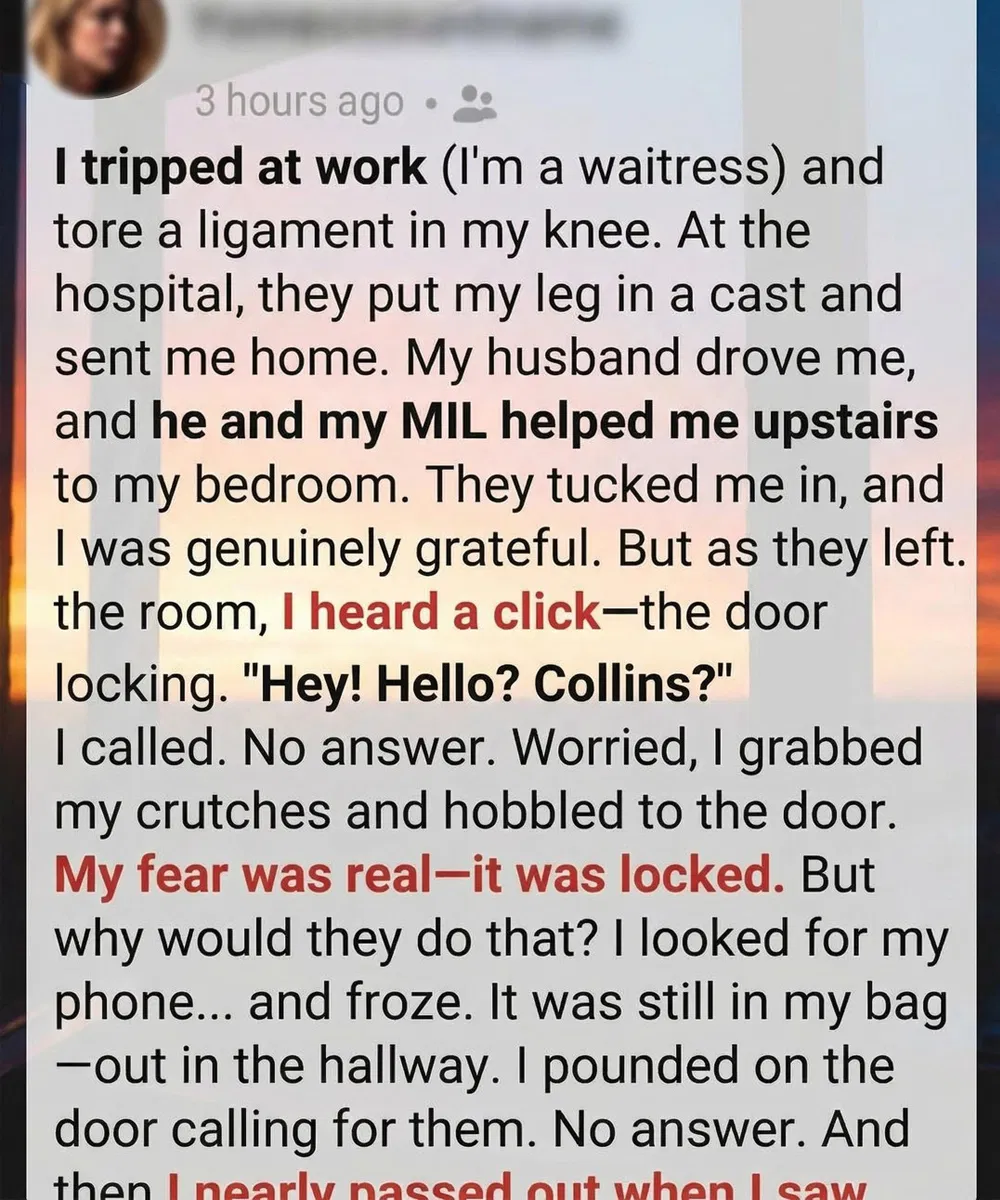
It happened on an ordinary workday. I was waitressing, moving quickly between tables, when my foot slipped on a damp spot on the floor. The fall was sharp, sudden, and unforgettable. A few hours later, I was at the hospital hearing the news no active person wants to hear—a torn ligament and a long recovery ahead.
With my leg in a cast, my husband drove me home. He and my mother-in-law supported me up the stairs, step by careful step. They helped me settle into bed with pillows, water, and everything they thought I might need. Their kindness eased the stress of the long day, and I felt truly grateful for the comfort of home.
But just as they stepped out of the room, I heard a sound that made my heart jump—the click of the door lock.
“Hello? Collins?” I called softly, expecting a quick reply.
Silence.
I grabbed my crutches and moved toward the door. My chest tightened when I reached for the handle and felt it resist. Locked.
Why would they lock me in? I turned to look for my phone and suddenly realized it wasn’t there—it was still in my bag out in the hallway. A wave of uneasiness washed over me.
I tapped lightly on the door, trying not to let my voice shake. The house felt unusually still. No footsteps. No voices. Just quiet.
Minutes stretched into what felt like hours. I wasn’t terrified—just deeply confused. My husband and mother-in-law had been nothing but supportive since my injury, and they weren’t the kind of people to joke around with something like this.
I tried to relax, lying back on the bed and watching the afternoon sun drift across the ceiling. That’s when I noticed a small piece of paper taped to my nightstand, almost hidden beneath my water bottle.
It was my husband’s handwriting.
“Rest. Don’t move. We’ll explain soon. Everything is okay.”
The note eased some of the tension, but it also stirred new questions. Why the secrecy? What happened?
A few minutes later, I heard footsteps outside—steady, calm footsteps that didn’t sound rushed or worried. The lock clicked again, and the door opened.
My husband walked in with a tray of warm soup, water, and my phone. His mother followed behind him carrying fresh ice packs. Their faces didn’t show guilt—they showed concern.
He explained everything at once.
When they closed the door earlier, the old lock jammed. It had happened before, although rarely. Just as they tried to fix it, they heard a sudden crash downstairs. Our elderly dog had knocked over a stack of dishes, and they hurried to clean it up before it startled me.
The note was written quickly and left by my bedside in case I woke up and wondered where they’d gone.
As he talked, the tension inside me slowly began to loosen. What felt like a frightening mystery just moments ago was nothing more than a series of small accidents happening at once.
They helped me sit up, placed the tray over my lap, and made sure I was comfortable. In that quiet bedroom, surrounded by care and reassurance, I realized something important: when you’re vulnerable, even little moments can feel overwhelming. Fear grows quickly when your sense of control shrinks.
But just as quickly, understanding can sweep it away.
My world felt a bit smaller because of the injury, but my support system felt stronger than ever. That day reminded me that sometimes the doors in our lives aren’t closing us in—they’re simply stuck, waiting for patient, loving hands to open them again.