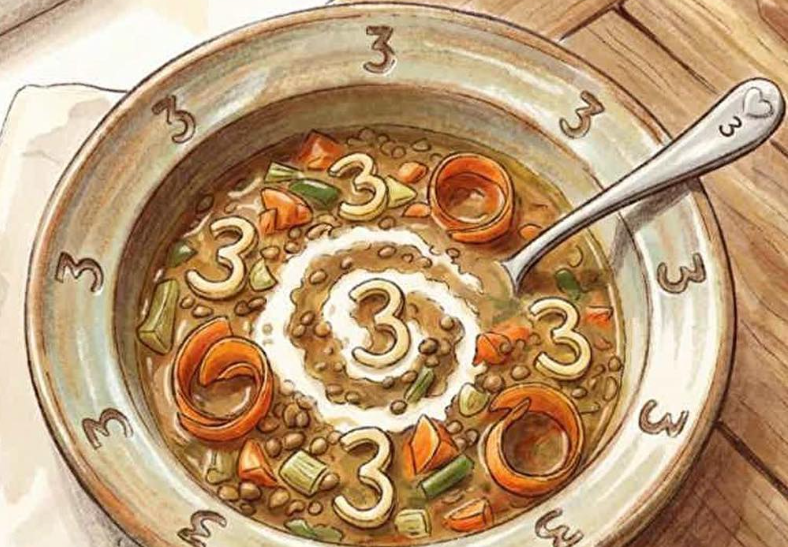
At first glance, the image appears simple: a warm bowl of soup resting quietly on a wooden table. It feels familiar and comforting, almost ordinary. But the longer you look, the more your perception begins to change. Subtle curves start to resemble symbols, reflections seem intentional, and shapes that once looked random begin to feel meaningful. Before long, many viewers notice something unexpected—the image seems to contain multiple hidden versions of the number three.
For some people, only a few threes stand out right away. Others continue spotting more as their eyes move across the image, feeling as though new details appear each time they look again. What begins as a calm, everyday scene quickly turns into a visual puzzle that plays with attention and perception.
The image has gained popularity through viral psychology-style posts online, many of which suggest that the number of threes you notice can reveal something about your personality. These claims often spark curiosity and discussion, encouraging people to count what they see and compare results with friends.
The illusion works by subtly embedding the shape of the number three into different elements of the scene. The curve of the bowl, reflections on the soup’s surface, the shapes of vegetables or pasta, and even shadows or background lines can resemble the number. Some of these forms are easy to recognize, while others blend naturally into the image. There is no confirmed or correct total—only what each viewer personally notices.
Popular online explanations tend to group viewers based on how many threes they find. Seeing only a few is often described as a sign of a practical mindset, suggesting comfort with focusing on what stands out most. Noticing a moderate number is commonly linked to balanced observation and awareness. Spotting many more is sometimes portrayed dramatically as intense attention to detail. These interpretations are designed to entertain rather than inform and are often exaggerated for effect.
It’s important to keep perspective. Visual puzzles like this are not scientific tools and cannot measure personality traits. They do not diagnose behavior or define who someone is. Personality is shaped by experience, habits, and environment—not by how many hidden shapes appear in a single image. What these illusions really reveal is how attention works and how the brain responds once it starts searching for patterns.
Images like this go viral because they combine curiosity, self-reflection, and easy comparison. They invite people to pause, look closer, and ask others what they see. That sense of discovery keeps them engaging while remaining lighthearted and harmless.
In the end, whether you noticed just a few threes or many, it doesn’t define you. It simply highlights something universal: once the human brain starts looking for a pattern, it tends to keep searching.