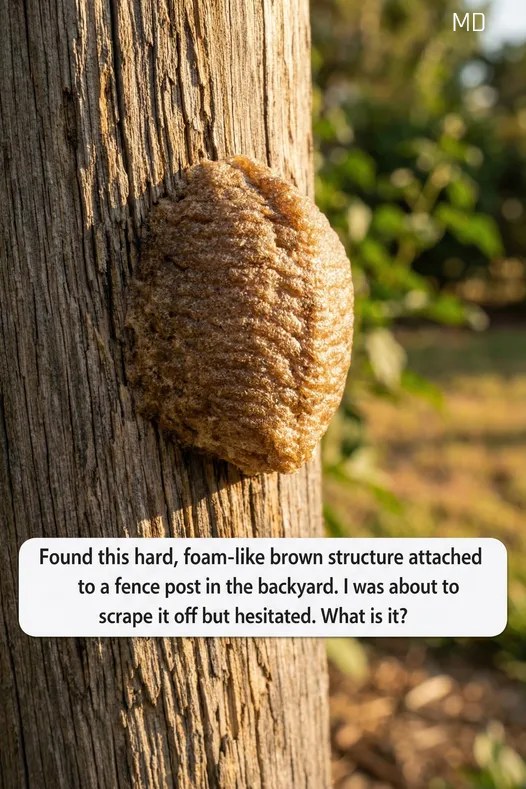
Discovering something unusual attached to your fence, garden post, or tree branch can be surprising. A small, brown, foam-like mass with a firm texture may not look familiar at first glance. You might even wonder whether it’s harmful, invasive, or something that needs to be removed immediately.
In most cases, however, this curious structure is completely natural — and often beneficial for your garden.
A Closer Look at the Mysterious Structure
What you’re likely seeing is a praying mantis egg case, known as an ootheca. Female mantises create these protective egg cases in late summer or early fall as part of their natural life cycle.
After mating, the female deposits her eggs onto a stable surface such as:
-
Wooden fences
-
Shrubs
-
Tree branches
-
Garden furniture
-
Exterior walls
She then secretes a frothy, foam-like substance that surrounds the eggs. Within hours, this material hardens into a durable casing that protects the developing mantises inside.
Though it may only measure one to two inches long, a single egg case can contain dozens — sometimes even hundreds — of tiny mantises waiting for spring.
Why the Foam-Like Texture?
The unusual texture serves an important purpose. Once hardened, the casing becomes:
-
Weather-resistant
-
Insulating during cold temperatures
-
Protective against predators
-
Durable enough to stay attached through wind and rain
Throughout winter, the eggs remain safely inside this shield. When temperatures consistently warm in spring, the young mantises emerge all at once in a remarkable natural event.
Are Praying Mantises Good for Your Garden?
Yes in most home gardens, they are considered beneficial insects.
Praying mantises feed on a variety of other insects, including:
-
Aphids
-
Caterpillars
-
Flies
-
Beetles
-
Moths
By feeding on plant-damaging insects, mantises can help support a balanced garden ecosystem. While they are general predators and may also eat other small insects, their presence often signals a healthy outdoor environment.
For gardeners who prefer to limit chemical pesticides, mantises can play a supportive role in natural pest management.
Should You Remove the Egg Case?
If the egg case is in a quiet corner of your yard, the best option is usually to leave it undisturbed. It does not pose a danger to people, pets, or plants.
However, if it’s located in a high-traffic area — such as near a doorway or frequently used walkway — you can carefully relocate it. The safest method is to:
-
Trim the small twig or branch it’s attached to.
-
Move it to a sheltered spot in your garden.
-
Secure it in a similar upright position.
Avoid scraping or crushing the structure, as this may damage the eggs inside.
A Sign of a Thriving Backyard
Finding an ootheca can actually be a positive sign. It suggests your outdoor space provides a suitable habitat for wildlife. Many beneficial insects rely on safe, undisturbed areas to complete their life cycles.
Rather than being a cause for concern, this foam-like structure is often a reminder that nature is quietly at work all around you.
When to Be Concerned
In rare cases, if the structure looks very different — such as appearing slimy, spreading, or growing rapidly — it could be something else. If you’re uncertain, you may consider consulting a local gardening center or extension service for guidance.
But in most situations, that small, hardened brown mass is simply part of a fascinating natural process.
The Bottom Line
That strange, foam-like structure on your fence is most likely a praying mantis egg case — a protective home for the next generation of helpful garden predators. What might first appear unusual can turn into an opportunity to observe one of nature’s remarkable life cycles up close.
Sometimes, the most interesting discoveries are the ones quietly attached to a backyard fence.