My name is Claire. I’m 28 years old, and I grew up in the foster care system.
By the time I was eight, I had already moved through more homes than I could count. You learn quickly not to unpack too much—emotionally or otherwise. People often call foster kids “resilient,” but in truth, we just learn to expect very little and adapt fast.
That all changed when I met Noah.
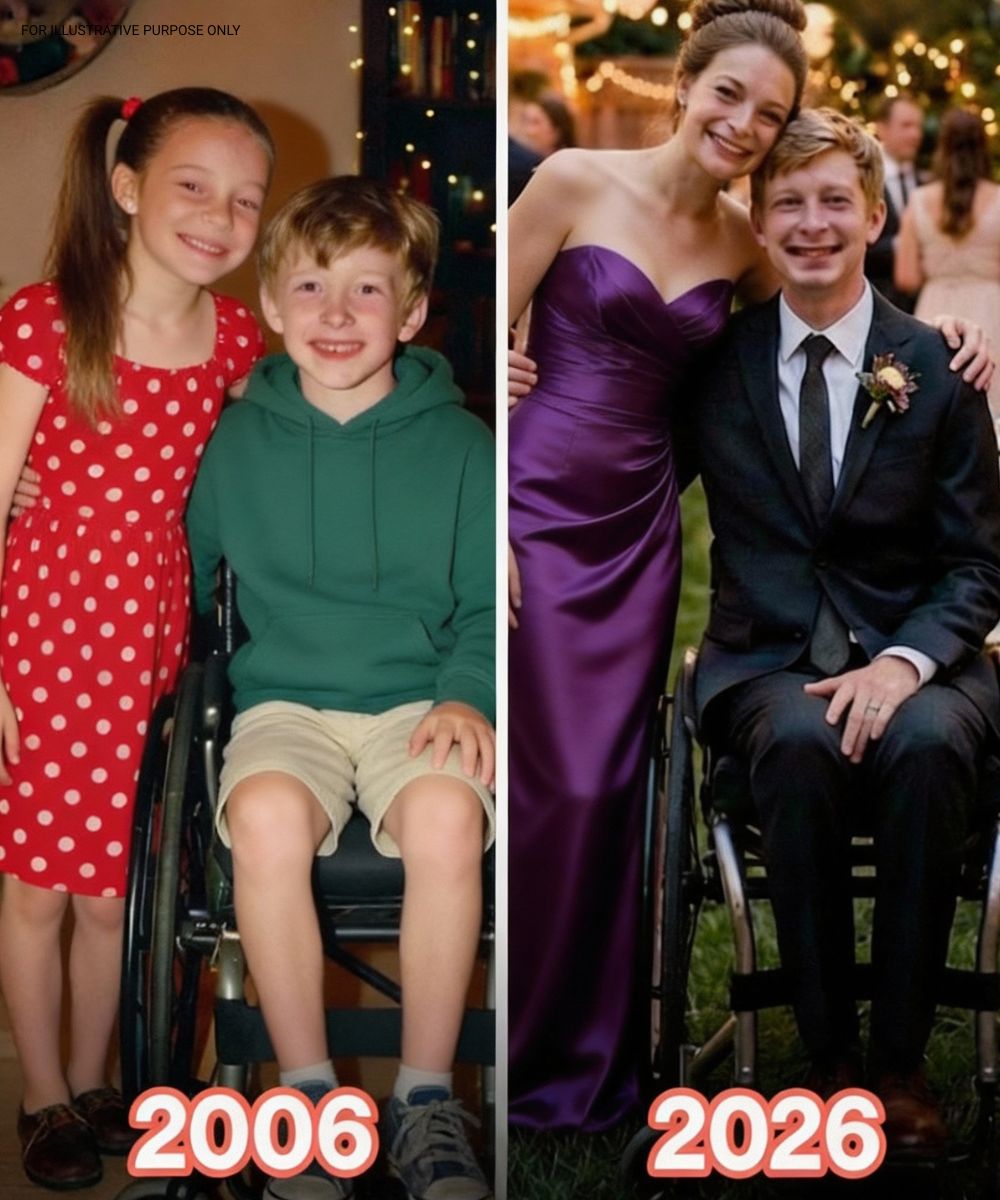
He was nine at the time—quiet, observant, and sitting in a wheelchair that made most people unsure of how to act around him. Adults tended to speak about him instead of to him. Other kids were polite but distant, unsure how to include him.
One afternoon, I sat next to him while reading and joked, “If you’re guarding the window, you should at least share the view.”
He glanced at me and said, simply, “You’re new.”
“Returned,” I replied. “I’m Claire.”
“Noah,” he said.
From that day on, we were rarely apart.
Growing up together meant seeing each other through every version of childhood—anger, disappointment, hope, and quiet determination. When potential adoptive families visited the home, we learned not to hope. We knew they were looking for someone easier. Someone without mobility challenges. Someone without a long file of past placements.
We joked about it to make it easier.
“If you get adopted, I get your headphones.”
“If you do, I get your hoodie.”
We laughed, but we both understood the reality.
When we turned eighteen, the system let us go with paperwork, a bus pass, and a brief goodbye. No celebration. No plan. Just a closed door behind us.
We left together, our belongings packed into plastic bags.
Life afterward wasn’t easy, but it was ours. We enrolled in community college, rented a small apartment above a laundromat, and worked multiple jobs to get by. Noah handled remote IT work and tutoring. I worked early coffee shifts and late-night stocking jobs. The apartment stairs weren’t ideal, but it was affordable—and for the first time, it felt like home.
Somewhere along the way, our lifelong friendship quietly turned into something deeper. There was no dramatic confession—just the realization that life felt steadier when we were together.
One night, exhausted, I said, “We’re basically already a couple, aren’t we?”
He smiled. “I was hoping you thought so too.”
We finished school one semester at a time. When our diplomas arrived, we stared at them like proof that we had made it.
A year later, Noah proposed in our kitchen while I was cooking dinner. It was simple, unexpected, and perfect. I said yes without hesitation.
Our wedding was small, warm, and filled with people who truly knew us.
The morning after, there was a knock at the door.
A man in a dark coat introduced himself as Thomas, an attorney. He explained that there was something important we needed to hear. He handed us a letter written by a man named Harold Peters.
Years earlier, Harold had fallen outside a grocery store. While others passed by, Noah stopped. He helped him up, waited with him, and treated him with kindness and patience.
Harold never forgot that moment.
He had no close family, but he had a home, savings, and deep gratitude. In his will, he chose to leave his estate to Noah—not out of pity, but out of appreciation.
It wasn’t a massive inheritance, but it meant something even more valuable: stability. A home. A future that felt secure.
When we visited the house for the first time, Noah rolled into the living room and slowly looked around.
“I don’t know how to live in a place that doesn’t feel temporary,” he said quietly.
“We’ll learn,” I told him. “We’ve already learned so much.”
Growing up, very few people chose us.
But one person noticed kindness—and decided it mattered.
And that made all the difference.