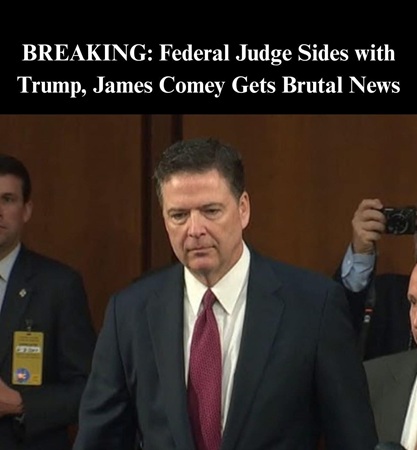
A major legal development shook Washington this week after a federal judge issued a temporary halt to a magistrate’s highly unusual order requiring the U.S. Department of Justice to release confidential grand jury materials to former FBI Director James Comey.
The late-night ruling immediately generated nationwide attention, not only because of the high-profile names involved but also due to the broader legal questions it raises. Observers are now closely watching what many believe could become a defining moment in the ongoing tension between the Justice Department, the courts, and former senior officials.
A Sudden Pause That Sparked Intense Debate
The judge’s decision to delay the disclosure triggered fast-moving discussions among legal experts, who noted that such grand jury materials are traditionally protected with extraordinary care. According to analysts, the order signals that the court intends to take a closer look at the unusual circumstances surrounding the request — a move that could reshape the trajectory of the case.
Within hours, political commentators, former prosecutors, and scholars began weighing in, highlighting how this single ruling could influence conversations about transparency, prosecutorial discretion, and the limits of judicial authority for months to come.
Two Conflicting Narratives at the Center of the Case
As this legal battle unfolds, two sharply contrasting perspectives have come into focus:
Comey’s position argues that the case is clouded by procedural missteps and political undertones. His legal team maintains that access to the grand jury materials is essential for a fair and complete defense. They insist that without these documents, the process risks being skewed and incomplete.
The Justice Department’s stance, however, emphasizes the importance of preserving the secrecy of grand jury proceedings. Federal prosecutors maintain that the underlying prosecution remains appropriate and that releasing confidential material could undermine the integrity of the investigative process. They argue that maintaining strict confidentiality is crucial for upholding public trust in federal investigations.
A Decision With Broader Implications
Legal analysts suggest that this temporary halt may be only the beginning of a much larger judicial confrontation. The judge’s willingness to intervene indicates that the court sees significant questions worth examining — questions that could influence how future political and legal disputes are handled.
The ruling also underscores the long-standing tension between demands for governmental transparency and the need to protect sensitive investigative information. In an era where public trust in institutions is often tested, each new development adds another layer of complexity to the national conversation.
What Comes Next
With the judge’s temporary order now in place, both sides are preparing for the next phase of legal arguments. Additional hearings and filings are expected, and each step forward could have meaningful consequences for the individuals involved as well as for broader legal standards.
As this high-stakes case continues to evolve, the nation awaits further updates — and the outcome may shape discussions about accountability, justice, and the boundaries of federal power for years to come.