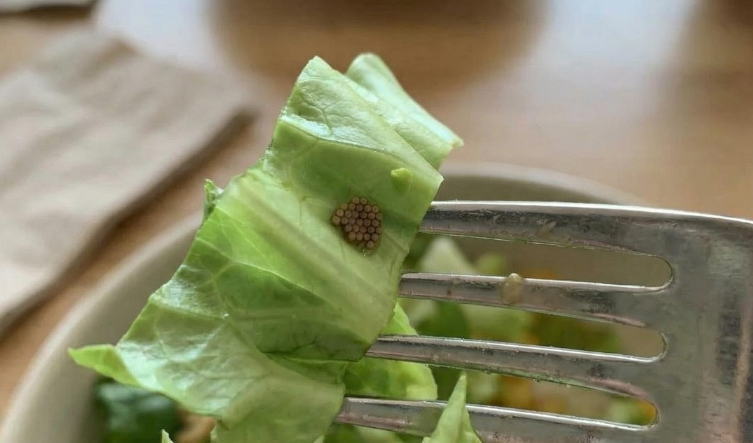
What started as a routine lunch break turned into an unexpected learning moment. With limited time and a familiar habit, she gathered fresh ingredients and began putting together a simple salad—something she had done many times before.
Leafy greens went into the bowl, followed by a few toppings added almost without thought. She sprinkled what she believed was quinoa over the salad. The small, brown grains blended naturally with the greens and looked exactly like a healthy addition to a quick, balanced meal.
Just before taking a bite, she paused. Something about the topping caught her eye. The pieces appeared unusually consistent and evenly placed, prompting her to look more closely. That brief moment of attention made all the difference.
Upon closer inspection, she realized the topping was not quinoa at all. Instead, it appeared to be clusters of tiny insect eggs attached to a single lettuce leaf—something that had gone unnoticed during preparation.
Understandably, her appetite disappeared. She set the bowl aside and took a moment to regroup. While the discovery was unpleasant, food safety experts explain that situations like this can occasionally happen with fresh produce, especially leafy greens grown outdoors.
Vegetables cultivated in open fields are part of natural environments where insects are present. During harvesting and packaging, small remnants can sometimes remain on leaves if washing and inspection are not thorough. This does not necessarily indicate poor farming practices or unsafe food, particularly when the produce has not been consumed.
Fresh foods are not produced in sterile settings, and traces of nature can occasionally remain. While surprising, these moments serve as reminders of where our food comes from and why careful preparation matters.
If a similar issue occurs while eating out, food safety professionals recommend stopping the meal and informing restaurant staff calmly and clearly. Most establishments take such concerns seriously and will respond appropriately, whether by replacing the dish, offering a refund, or reviewing their preparation process. Clear communication helps maintain high hygiene standards and protects other customers as well.
When concerns are not addressed properly, local health authorities can provide guidance and oversight. Their role is to ensure public safety and encourage responsible food handling. In many cases, however, issues are resolved quickly when handled professionally at the source.
At home, prevention begins with mindful food preparation. Even produce labeled as organic or pre-washed can still carry small remnants from the field. These labels reduce handling but do not guarantee complete removal of every natural element.
Taking time to separate leaves, rinse them thoroughly under running water, and inspect them closely can add peace of mind. Some people prefer soaking greens briefly and gently agitating them before rinsing again. Using a salad spinner afterward can help remove excess water while allowing for a final check.
Although these steps add a few extra minutes, they build confidence and encourage a more thoughtful approach to cooking. Over time, such habits become second nature.
Careful preparation also deepens appreciation for the journey food takes before reaching the table. Recognizing that process fosters respect for both nature and the people involved in growing and delivering fresh produce. Awareness doesn’t reduce enjoyment—it enhances it.
That unexpected lunch experience changed how she approached food going forward. What began as an ordinary meal became a reminder of the value of slowing down and paying attention. With a little extra care, everyday meals felt more reassuring, enjoyable, and intentional—proving that small moments of awareness can make a meaningful difference.