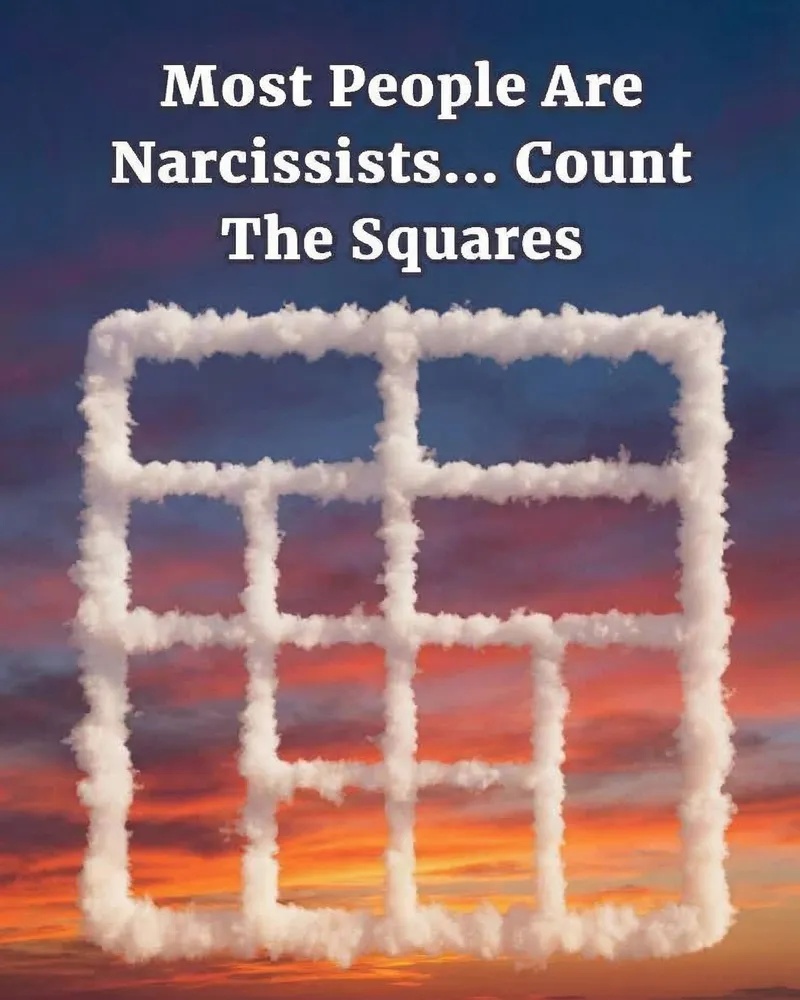
From time to time, a simple image appears online and captures widespread attention. Not because it relies on special effects or advanced design, but because it quietly challenges how people see and interpret what is in front of them. This is exactly what happened with the widely shared square-counting puzzle—a soft, grid-like image paired with a short prompt asking viewers to count the squares.
At first glance, the task feels straightforward. Many people expect to identify the answer within seconds. However, as they continue to look, uncertainty often replaces confidence. What begins as a quick visual exercise gradually becomes a lesson in focus and perception.
As more viewers examine the image, answers begin to vary. Some report a small number of squares, while others arrive at much larger totals. The difference usually comes from noticing additional shapes hidden within the grid. Overlapping forms and combined sections reveal squares that are not immediately obvious.
This discovery changes how the image is approached. Instead of a fast scan, people slow down and examine the lines more carefully. They reconsider what qualifies as a square and begin to look beyond the most visible shapes. The puzzle gently encourages deeper observation, showing how attention can shift understanding.
What keeps the image circulating online is not a single correct answer, but the process of getting there. Comment sections fill with explanations and different counting methods. Some viewers focus only on individual squares, while others include larger shapes formed by combining smaller ones.
Each approach makes sense from a certain perspective. Rather than creating confusion, this variety highlights how differently people process visual information. Some prefer speed and simplicity, while others value detail and structure. The puzzle becomes a shared experience where these approaches coexist without competition.
The popularity of this image also reflects something positive about online interaction. In a digital space often filled with fast reactions, a quiet visual challenge encourages people to pause. Many viewers return to the image multiple times, refining their answers and considering new viewpoints. Instead of emotional responses, the conversation centers on observation and reasoning.
The image itself remains neutral. It does not label responses as right or wrong. It allows each viewer to engage at their own pace. This openness is part of its appeal. The puzzle does not rush anyone toward a conclusion, offering a reminder that clarity often comes from patience rather than speed.
As discussions grow, many people notice their answers changing after reading others’ explanations. Details once overlooked become clear. This shift is not a mistake—it is a natural part of learning. The image stays the same, but perception evolves. That idea extends beyond puzzles and into everyday experiences.
At its core, the square-counting challenge delivers a simple insight. Different people can look at the same image and see different things, and those differences can all hold value. The exercise encourages openness and reflection, showing that first impressions are not always complete.
Ultimately, the puzzle’s appeal lies in its simplicity. It is easy to access, engaging to explore, and thoughtful without being complicated. More than finding the right number, it offers a reminder that taking time to look again can reveal layers we might otherwise miss—not just in images, but in the world around us.