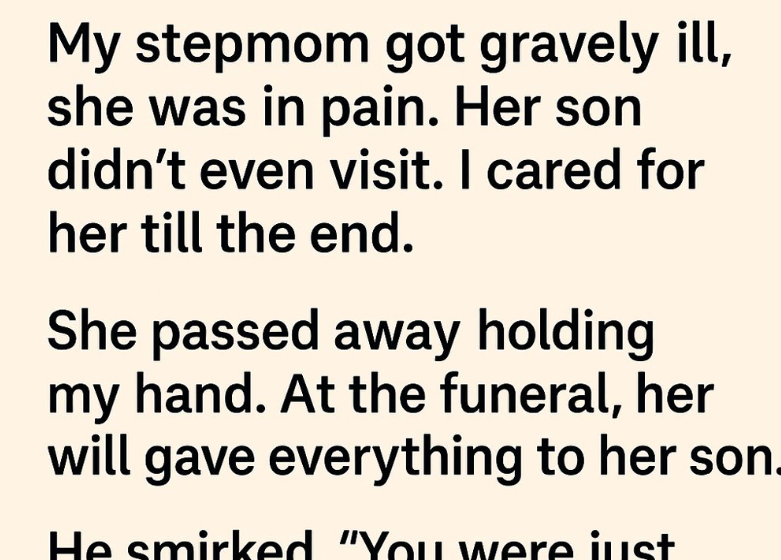
I never expected to receive anything from her estate, so nothing about the situation surprised me—at first. But the morning after the funeral, everything shifted. Her son called me, his voice strained with confusion and frustration, trying to understand what he had just uncovered.
While sorting through a dusty box tucked deep inside his mother’s closet, he found an old envelope hidden beneath layers of forgotten papers. What caught his eye immediately was the handwriting. The envelope wasn’t addressed to him—it was addressed to me.
Later that afternoon, I opened the letter. Her familiar handwriting moved gracefully across the page, filled with the warmth and sincerity she carried throughout her life. She wrote about the many quiet afternoons I spent by her side—reading to her, helping her get comfortable, holding her hand when the pain felt overwhelming. She expressed heartfelt gratitude for the patience, calmness, and kindness that had helped her face her final months with more peace.
She explained that updating her will would have caused tension within the family, something she no longer had the strength to face. But she wanted me to understand that the comfort I offered meant more to her than any material gift. To her, I had been a steady, reassuring presence in a time filled with uncertainty.
Her son’s distress, however, wasn’t rooted in my letter. Alongside it, he found a small bundle of documents—old bank receipts, handwritten notes, and fading childhood photos of him. Among those papers were drafts of legal forms showing that she had once begun setting up a small trust specifically for him. But the documents were never signed. In the months that followed, she tried to reconnect with him through letters and voicemails—messages he hadn’t responded to at the time.
I listened quietly as he let out everything he had been holding inside. When he finally paused, I explained as gently as I could that her letter to me wasn’t meant to hurt him. She simply wanted a private way to express her gratitude without causing conflict or drawing attention.
Nothing she wrote carried blame. Nothing suggested division. Instead, her words reflected a final wish: that her son would understand how important it is to show love while there is still time. She hoped the years that had slipped by between them might inspire him to reach for connection rather than distance.
In the days that followed, I found myself rereading her letter. Slowly, I realized that the greatest gift she left wasn’t something that could be passed down or measured. It was a reminder of the quiet power of compassion—of how small acts of kindness can mean more than anyone ever realizes.
For her son, the discovery of those unfinished trust papers and the letter addressed to me became an unexpected moment of clarity. Life’s most meaningful inheritances aren’t always financial. Sometimes, they arrive as valuable lessons—gentle reminders about what truly matters.
Weeks later, he called again. This time, his voice was calmer. We met for coffee and shared stories about her favorite flowers and her habit of keeping peppermints in her purse. Slowly, the heaviness between us lifted. Her words—written in fading ink—did something remarkable: they helped bridge a gap that had felt impossible to cross.
Now, as both of us move forward, we do so with her memory guiding us. The love she left behind continues to shape our steps, proving that the most lasting legacies often come from the heart, not from a will.