Old photographs have a special way of connecting us to the past. They preserve moments in time, offering a glimpse into the lives, traditions, and values of earlier generations. More than simple images, they often reveal meaningful details about family life and social customs.
When carefully observed, historical photos can tell stories beyond what is immediately visible. Elements such as clothing, posture, and facial expressions reflect the cultural norms of the era. Even the arrangement of people within a portrait can provide insight into family roles and relationships.
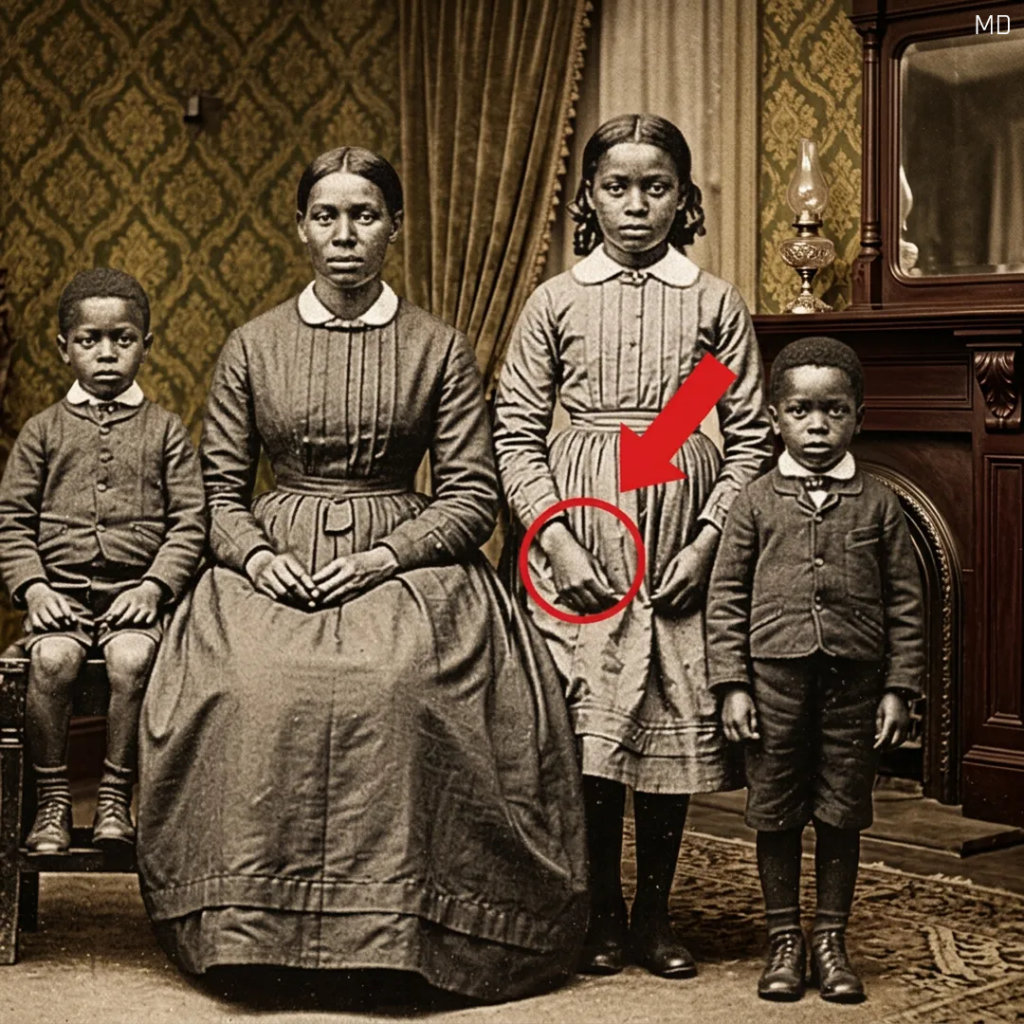
One particular photograph from 1872 has drawn attention for these reasons. At first glance, it appears to be a typical 19th-century family portrait. A mother sits formally in a studio chair, her posture straight and expression composed—consistent with the photographic style of the time.
Standing beside her are her children. Two young boys are neatly dressed, suggesting the care families often took when preparing for portraits. An older daughter stands nearby, completing a balanced and symmetrical composition.
The image reflects the common goal of family portraits during that period: to present unity, dignity, and stability. Everything seems carefully arranged, from positioning to expression.
However, a closer look reveals a subtle but notable detail. The daughter’s right hand appears slightly different in shape compared to the others. This feature may suggest a congenital condition, making the image stand out to modern viewers.
In the 1800s, photography required long exposure times, meaning subjects had to remain still and poses were planned in advance. Because of this, details captured in such portraits were rarely accidental. They were often the result of deliberate choices by both the photographer and the family.
During that era, physical differences were sometimes hidden due to social expectations. This makes the family’s decision in this portrait particularly meaningful. Rather than concealing or adjusting their daughter’s position, they included her naturally within the composition.
This choice adds a deeper layer of interpretation to the image. It reflects a sense of acceptance and inclusion that may not have been widely expressed at the time. The photograph becomes more than a formal portrait—it becomes a quiet statement about family connection and identity.
Today, this image reminds us that every historical photograph holds a human story. Small details, when noticed, can offer powerful insights into the values and decisions of the people captured within the frame.
What may seem like a simple portrait can, over time, become a meaningful reflection of love, belonging, and the enduring bonds of family.