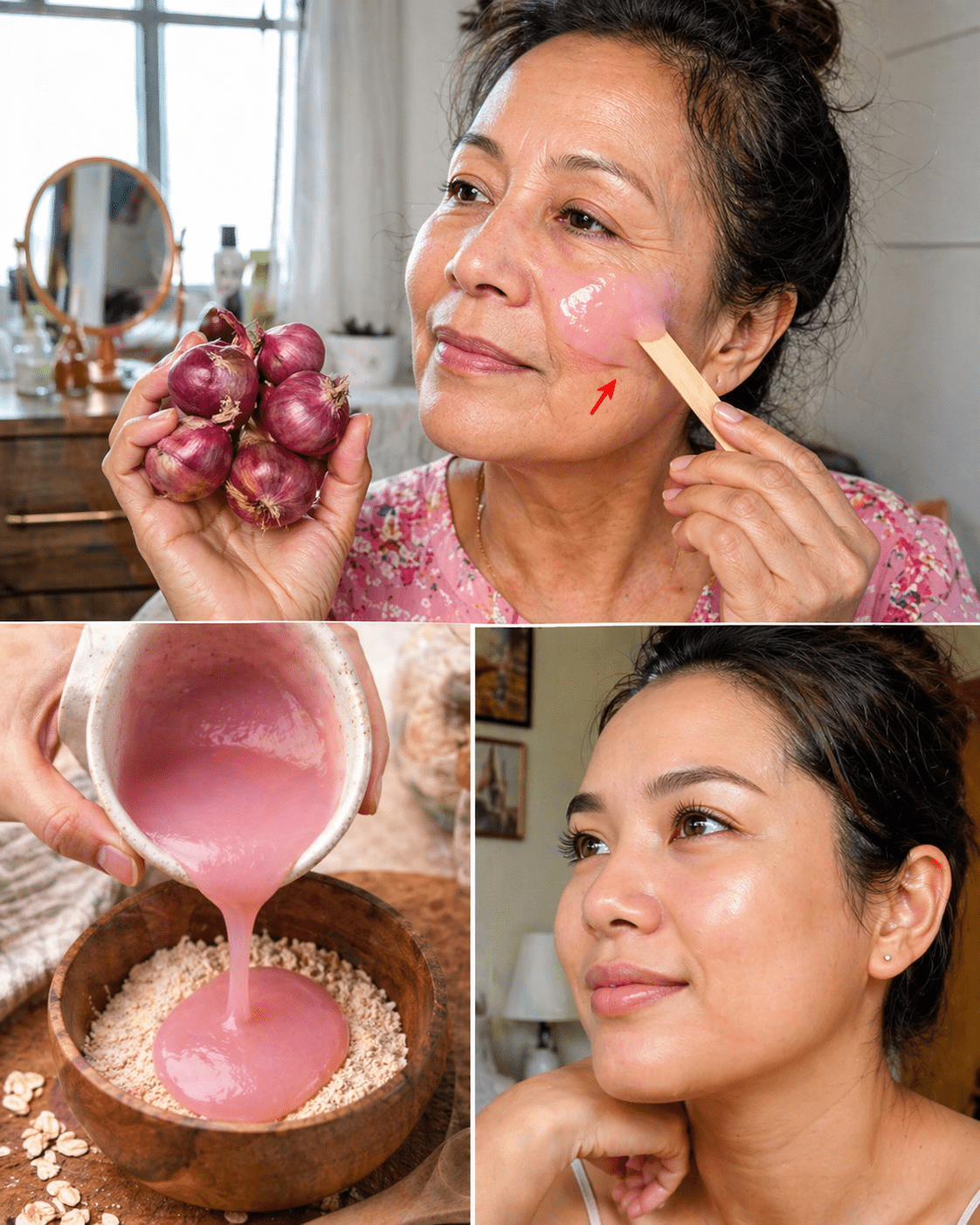
Struggling with uneven skin tone, dark spots, or fine lines can feel frustrating—especially after trying products that don’t deliver the results you hoped for. If you’re looking for a more natural and budget-friendly option, you might be surprised to learn that a common kitchen ingredient—red onion—is gaining attention in skincare routines.
While it’s not a miracle cure, red onion contains compounds that may support healthier-looking skin when used properly and consistently.
Why Red Onion Is Getting Attention in Skincare
Red onions have been used in traditional remedies for years. Today, interest is growing again as people look for simple, natural alternatives to complex skincare products.
What makes red onion stand out is its combination of antioxidants, vitamins, and sulfur compounds—many of which are also found in commercial skincare formulas. The difference is that red onion offers these elements in a more natural form.
What Makes Red Onion Potentially Beneficial for Skin?
Red onion contains several compounds that may contribute to skin health:
- Quercetin: A natural antioxidant that helps protect the skin from environmental stress.
- Vitamin C: Supports brightness and helps improve the appearance of uneven tone.
- Sulfur compounds: Linked to collagen support, which plays a role in skin firmness.
- Anthocyanins: Pigments responsible for the red color, associated with antioxidant activity.
Some research has explored onion extract in skincare, particularly for improving the appearance of scars and overall skin texture over time.
Potential Skin Benefits
With regular and careful use, red onion may help:
- Improve the appearance of dark spots and pigmentation
- Support smoother-looking skin texture
- Enhance overall brightness and even tone
- Reduce the look of fine lines over time
- Provide antioxidant protection against daily stressors
- Help with the appearance of post-acne marks
Keep in mind: results are gradual and vary depending on your skin type and routine.
How to Use Red Onion Safely on Your Face
If you’re curious to try it, proper use is important to avoid irritation.
Simple Red Onion Face Mask
Ingredients:
- 1 tablespoon red onion juice
- 1 tablespoon raw honey or plain yogurt
- Optional: a small amount of aloe vera gel
Steps:
- Extract juice from a fresh red onion (blend or grate, then strain).
- Mix with honey (for hydration) or yogurt (for mild brightening).
- Apply to clean skin, avoiding the eye area.
- Leave on for 5–15 minutes depending on your skin sensitivity.
- Rinse thoroughly and apply a moisturizer.
Frequency: 2–3 times per week
Important Tips
- Always do a patch test before applying to your face
- Start with shorter application times if you have sensitive skin
- Avoid using undiluted onion juice directly
- Use sunscreen daily, as sun exposure affects pigmentation
What Results Can You Expect?
Some people report improvements in skin tone and texture after several weeks of consistent use. For most, visible changes take around 4–6 weeks or longer.
Consistency, gentle care, and overall skincare habits—like hydration and sun protection—play a major role in the results you’ll see.
Common Mistakes to Avoid
- Skipping the patch test
- Using the treatment too frequently
- Applying undiluted onion juice
- Expecting immediate results
Natural methods tend to work gradually rather than instantly.
Final Thoughts
Using red onion in skincare is a simple, low-cost approach that may support your routine—but it works best as part of a balanced skincare plan. It’s not about quick fixes, but about consistent care and realistic expectations.
If you’re interested in natural skincare options, this could be one method worth trying carefully and patiently.
FAQ
Is red onion safe for all skin types?
It can be, if properly diluted. Sensitive skin types should be especially cautious and always patch test first.
How long before I see results?
Subtle changes may appear after a few weeks, with more noticeable improvements over time.
Can it help with acne?
It may support the appearance of post-acne marks, but for active or severe acne, it’s best to consult a professional.
Disclaimer:
This content is for informational purposes only and does not replace professional medical advice. Always consult a qualified dermatologist before trying new skincare treatments, especially if you have sensitive skin or existing conditions.