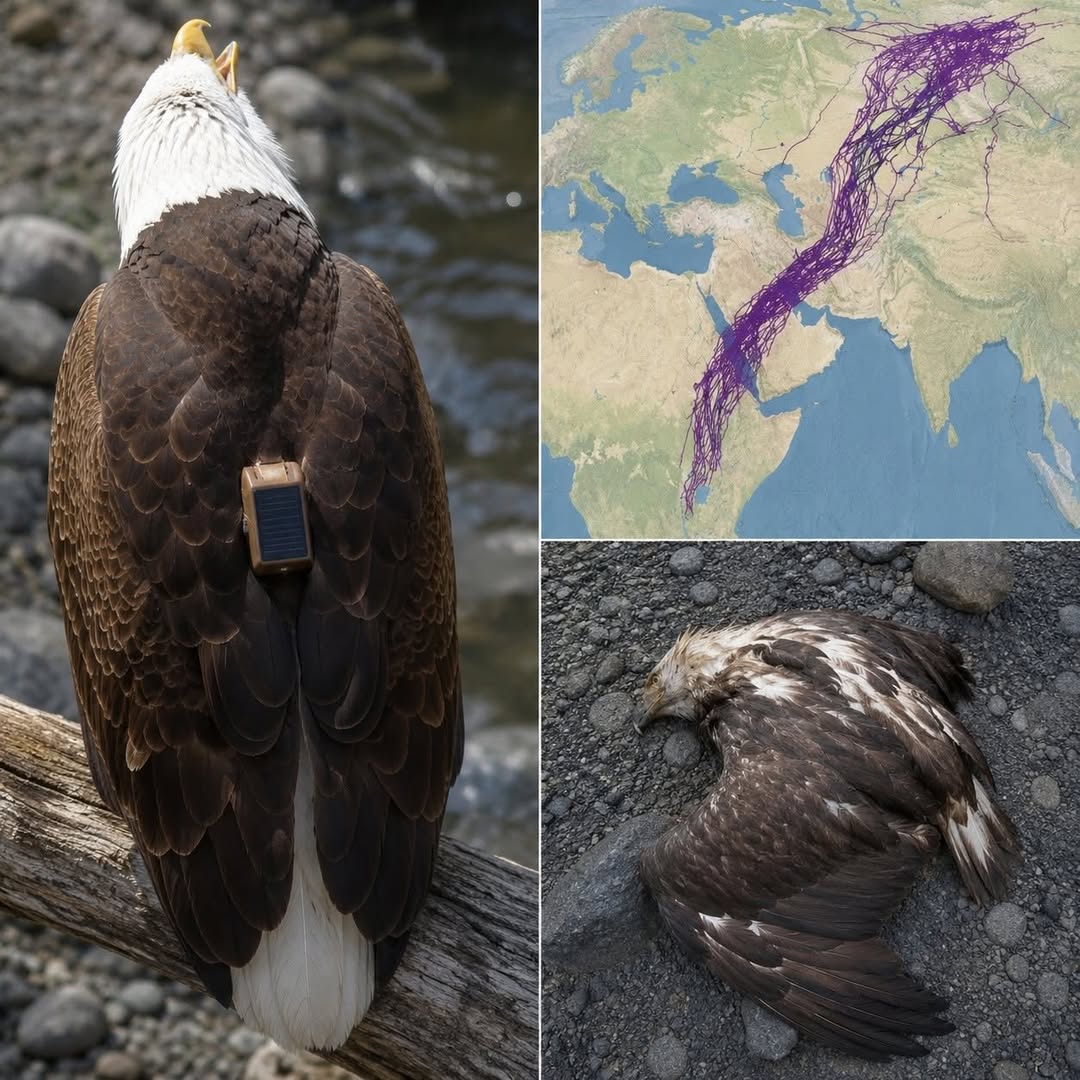
Scientists Tracked an Eagle for 20 Years What They Discovered Changed Their Understanding of Migration

For more than two decades, a team of researchers followed the remarkable journey of an eagle equipped with a GPS tracking device. What they expected to be a routine study of migration patterns soon evolved into a fascinating scientific mystery that challenged long-held assumptions about how birds navigate the world.

At first, the eagle’s movements seemed difficult to explain. Rather than following the well-documented migration routes typically observed in its species, the bird traveled across deserts, mountain ranges, coastlines, and vast stretches of open terrain in ways that appeared unusual and unpredictable.

The tracking data revealed a complex network of routes spanning multiple regions. At times, the eagle revisited areas it had previously crossed, paused in locations that did not seem significant, and then continued its journey in unexpected directions. These behaviors left researchers searching for answers.

Scientists explored several possible explanations. They examined whether changing weather conditions, shifting food sources, habitat changes, or unique behavioral traits could be influencing the eagle’s decisions. Every piece of data was carefully analyzed in an effort to understand the bird’s extraordinary travels.

As the years passed, the growing collection of GPS information painted an increasingly detailed picture. What initially looked like random movement began to reveal subtle patterns. Researchers noticed connections between the eagle’s routes and environmental factors such as seasonal winds, temperature changes, geographic landscapes, and ecological conditions.

The findings suggested that the eagle was making highly adaptive decisions based on information available in its surroundings. Rather than following a fixed path, the bird appeared to adjust its travel strategy in response to changing conditions, allowing it to maximize efficiency and improve its chances of survival.

This discovery provided valuable insight into the complexity of wildlife behavior. It demonstrated that migration is not always a rigid process but can be far more flexible than previously believed. Animals may respond to environmental signals in sophisticated ways that are not immediately obvious to human observers.

The study also highlighted the importance of long-term research. Without decades of tracking data, these patterns might never have been detected. The eagle’s journey offered scientists a rare opportunity to observe how an individual animal interacts with an ever-changing environment over an extended period.

Today, the research serves as a reminder that nature often contains hidden layers of complexity. What may appear confusing or chaotic at first can reveal remarkable order when examined closely. The eagle’s twenty-year journey continues to inspire scientists and wildlife enthusiasts alike, showing that there is still much to learn about the natural world and the creatures that inhabit it.

Leave a Reply

Your email address will not be published. Required fields are marked *