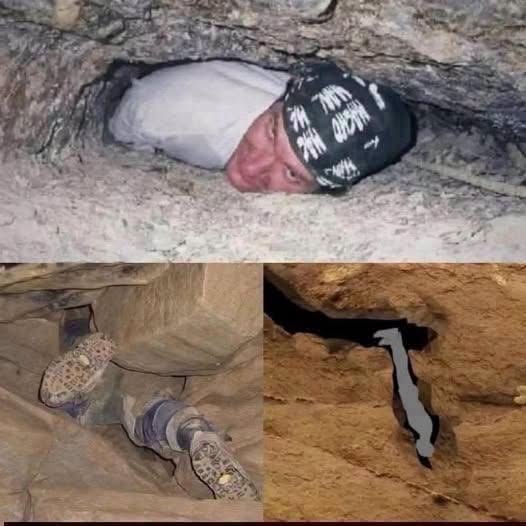
What began as an ordinary Saturday morning walk through a familiar trail quickly became an unexpected rescue situation for a hiker named Daniel.
Daniel had followed the same route through the hills outside town many times. He knew the trail well, including the tall pine trees near the entrance, the small wooden bridge over the stream, and the rocky overlook that offered a view of the valley.
For Daniel, those weekend walks were a chance to step away from the busy rhythm of everyday life. His weekdays were often filled with work, phone calls, deadlines, and responsibilities. The trail offered something quieter.
That morning, the weather was pleasant. The air was cool, birds could be heard among the trees, and a light breeze moved through the branches.
Nothing appeared unusual.
Then Daniel noticed something near a steep ravine.
A Shape That Did Not Look Quite Right
At first, Daniel assumed he was looking at an abandoned backpack or perhaps a pile of clothing.
Then the shape moved.
He stopped walking and looked again.
It was a person.
A man was lying on uneven ground close to the ravine. From Daniel’s position, it was clear that the man was having difficulty and appeared to need assistance.
Daniel also recognized that approaching too quickly could create another problem. The area around the ravine was unstable, and the steep terrain made movement difficult.
Instead of rushing toward the man, Daniel stayed at a safer distance and called emergency services.
He explained where he was and described the trail and nearby landmarks. He also told the dispatcher what he could observe about the man’s condition.
The man appeared conscious, but he seemed extremely weak.
Daniel continued watching him while waiting for professional help.
A Calm Voice in an Uncertain Moment
While the rescue team was being contacted, Daniel tried to keep the man calm.
He spoke to him from a safe position and reassured him that help was on the way.
The man briefly opened his eyes.
His voice was very quiet.
He asked for water.
Daniel understood that the man appeared severely dehydrated, but he also knew that moving someone who might have suffered an injury could potentially make the situation worse.
So he remained nearby without attempting to carry or move him.
That decision allowed trained responders to handle the situation when they arrived.
Waiting for the Rescue Team
The minutes that followed felt much longer than they actually were.
Daniel kept an eye on the man while listening for the arrival of the rescue team.
The peaceful forest had taken on a completely different atmosphere.
The wind moved through the branches. Birds continued calling in the distance. Daniel could hear his own footsteps whenever he shifted his position.
The man appeared exhausted and disoriented.
Daniel did not know exactly what had happened.
Perhaps the man had fallen.
Perhaps he had become lost.
Perhaps an earlier incident along the trail had left him unable to continue.
At that moment, there were many unanswered questions.
The most important thing was making sure professional assistance reached him.
Eventually, rescuers could be heard approaching through the trees.
The Rescue Team Faces Difficult Terrain
When the rescue team reached the location, they quickly realized that getting the man out would require careful planning.
The ravine was steep, and the ground was uneven. Loose rocks and unstable soil made the area difficult to navigate.
The recent weather had also affected the condition of the ground.
Rather than rushing in, the rescuers evaluated the area and planned the safest approach.
They prepared their equipment and established secure positions.
Ropes were checked.
Harnesses were prepared.
Anchor points were assessed.
Team members communicated continuously so that everyone understood what was happening.
The goal was not simply to reach the injured man.
The goal was to reach him while keeping the entire rescue team safe.
A Rescue That Required Patience
Rescue operations can sometimes look dramatic from the outside. People often imagine helicopters, ropes, stretchers, and quick movements.
But difficult rescues often depend on something less dramatic: patience.
The rescuers moved carefully.
One team member approached the man while others monitored the terrain. Another focused on the equipment and safety system.
Every movement was deliberate.
The man was weak and unable to safely make his way out on his own, so the team first worked to stabilize him before beginning the evacuation.
Their careful approach was especially important because the surrounding terrain remained challenging.
Then the Weather Changed
Just as the rescue operation was becoming more manageable, the weather began to shift.
Dark clouds moved across the sky.
The wind became stronger.
Then rain began to fall.
At first, it was only light rain. Within a short time, however, the conditions became more difficult.
The already-unstable ground became slippery.
The rescue team paused and reassessed the situation.
Continuing without considering the changing conditions could have placed both the rescuers and the injured man at greater risk.
The team checked its equipment again, communicated with one another, and adjusted its positions.
There was no reason to rush.
The safest solution was to continue carefully.
Everyone Had an Important Role
One of the clearest lessons from the rescue was the importance of teamwork.
One responder monitored the injured man.
Another focused on the rope system.
Someone else worked with the anchor.
Other team members watched the surrounding terrain for changes that could affect the operation.
Communication connected all of those responsibilities.
Each person had a specific role, and every role contributed to the larger plan.
That coordination was especially important because the environment was changing.
The man needed help.
The rescuers also had to protect themselves.
The weather was becoming less predictable.
The safest way forward was to work together.
The Journey Back to Safer Ground
Once the man had been secured, the rescue team began moving him away from the ravine.
The evacuation was slow and methodical.
The stretcher had to be positioned carefully.
Ropes were adjusted as the team progressed.
Each section of the route was examined before they continued.
At several points, the terrain required the rescuers to stop and reassess their approach.
The operation took considerably longer than an ordinary walk back to the trailhead.
There was a simple reason for that.
Everyone needed to reach safer ground without creating another emergency.
After nearly two hours of careful work, the team finally reached a safer area.
The man was away from the ravine.
For Daniel, it was the moment when the tension of the morning finally began to ease.
The Man Receives Medical Attention
An ambulance transported the man to a hospital for further evaluation.
According to the account, medical professionals found that he was dealing with significant dehydration and exhaustion, along with injuries that required attention.
The rescue had given him the opportunity to receive professional care.
His recovery did not end when he left the forest.
Physical injuries can require time to heal, and severe exhaustion can take time to overcome. An unexpected emergency can also have an emotional impact that lasts beyond the immediate event.
For the man, recovery became a gradual process.
Many Questions Remained Unanswered
One aspect of the situation remained unclear: exactly how the man had ended up near the ravine.
Daniel had discovered him there, but the circumstances leading up to that moment were not immediately known.
The man’s condition also made communication difficult.
Those details could be addressed later.
The immediate priority had been getting him to safety and medical care.
Daniel had done what he could with the information available to him.
He noticed something unusual.
He stopped.
He assessed the situation from a safe location.
And he called people who were trained to respond.
Daniel Did Not See Himself as a Hero
After the rescue, some people described Daniel’s actions as heroic.
Daniel reportedly viewed the situation much more simply.
He had noticed something that did not look right.
Instead of walking past, he stopped to take a closer look.
But he also understood his own limitations.
He did not climb down into the dangerous area.
He did not attempt to carry the injured man.
He did not put himself unnecessarily at risk.
He called for professional help and stayed nearby.
That distinction is important.
Helping someone does not always mean personally performing the rescue.
Sometimes the most responsible thing a person can do is recognize that trained professionals are needed and contact them quickly.
Why Paying Attention Matters
Emergencies can develop quickly, especially in remote areas.
A person who is injured, dehydrated, lost, or extremely exhausted may need assistance that a passing stranger cannot safely provide.
Daniel could have continued along the trail.
Instead, he noticed something unusual and decided to investigate from a safe position.
That small decision changed the direction of his morning.
It also gave the stranded man a better opportunity to receive timely assistance.
The Importance of Avoiding a Second Emergency
There is another lesson in Daniel’s response.
When people see someone in trouble, the natural reaction may be to rush forward.
That instinct comes from wanting to help.
However, the environment itself can be dangerous.
A steep ravine, unstable hillside, fast-moving water, fire, traffic, electrical hazards, or an aggressive animal can place additional people at risk.
A person attempting an unsafe rescue can become another person who needs assistance.
Daniel avoided that situation.
He assessed the surroundings first, contacted emergency services, and followed the safer approach of allowing trained rescuers to handle the difficult part of the operation.
What Hikers Can Learn From the Incident
The story also offers several practical reminders for people who enjoy hiking or spending time outdoors.
Before leaving for a remote trail, it is useful to tell someone where you are going and when you expect to return.
Carrying enough water is also important, particularly during strenuous activity or warm weather.
A charged phone can be valuable during an emergency, although mobile coverage is not guaranteed everywhere. Carrying a portable power bank can provide additional reassurance on longer trips.
Checking the weather before heading into the hills or mountains is another simple precaution. Conditions can change quickly, especially in exposed areas.
Staying on marked trails can also reduce the chances of encountering unexpected terrain.
A basic first-aid kit may be useful for minor problems while waiting for professional assistance.
Preparation cannot eliminate every risk, but it can make it easier to respond calmly when something unexpected happens.
What to Do If You Find Someone in Trouble
If you encounter an injured or unconscious person outdoors, the safest response depends on the circumstances.
The first priority should be personal safety.
Before approaching, look for hazards around you.
If the area appears dangerous, keep a safe distance and contact local emergency services.
Provide as much useful information as possible.
Explain your location.
Describe the trail or route.
Mention nearby landmarks.
Tell the dispatcher whether the person appears conscious.
If you can safely observe their condition, provide that information as well.
Describe any obvious environmental hazards.
If the location is difficult to explain, remain available to answer questions and follow the dispatcher’s instructions.
Professional responders have specialized training and equipment for situations that may be too dangerous for an untrained person to handle.
The Quiet Work Behind a Successful Rescue
People often remember the emotional conclusion of a rescue story.
Someone is found.
The rescue team arrives.
The person is brought to safety.
But behind those moments is often a great deal of careful work.
Equipment must be checked.
Routes must be evaluated.
Weather conditions must be monitored.
Team members must communicate.
Risks must be considered.
Sometimes the safest decision is to slow down or temporarily pause.
That is not a failure.
It is part of responsible rescue work.
The purpose of a rescue is to help someone while avoiding unnecessary danger to everyone involved.
One Incident Can Teach an Entire Community
The rescue also encouraged conversations about outdoor safety.
People in the surrounding community became more interested in emergency preparation and wilderness safety.
Outdoor groups discussed the importance of carrying essential supplies.
Some community members became more interested in first-aid training and supporting local rescue organizations.
An unexpected emergency can reveal areas where preparation could be improved.
People learn from what happened.
They make small changes.
Those changes can make future outings safer.
Sometimes Help Begins With a Simple Phone Call
There is a tendency to think that helping someone in an emergency requires extraordinary bravery or specialized skills.
Often, it begins with something much simpler.
A phone call.
A clear description.
A calm voice.
A willingness to remain nearby.
Daniel did not have rescue equipment.
He did not have the training required to safely remove someone from difficult terrain.
Instead, he recognized the limits of what he could do and contacted people who were equipped to handle the situation.
That was good judgment.
The Man’s Road to Recovery
In the weeks following the incident, the rescued man gradually began regaining his strength.
Recovery required time.
Physical recovery was only part of the process. A frightening experience in a remote area can also leave a person feeling vulnerable after the immediate danger has passed.
The experience reminded him how quickly an ordinary day can change.
It also gave him a reason to appreciate the people who became involved in helping him.
A Meeting Filled With Gratitude
Eventually, the man had an opportunity to meet some of the people involved in his rescue.
He expressed his appreciation to the rescuers and medical professionals who helped him.
He also thanked Daniel.
For Daniel, the moment was meaningful because he had never expected anything in return.
He had simply noticed something unusual and decided not to ignore it.
The man remembered hearing Daniel’s calm voice during those frightening moments.
He remembered being told that help was coming.
He remembered being reminded that he was not alone.
Sometimes, simple words can have a powerful effect during an uncertain moment.
Not Every Hero Wears a Uniform
Daniel’s role in the story is a reminder that emergency situations often involve many different people.
The first person notices something.
Someone makes a phone call.
A dispatcher coordinates assistance.
Rescue personnel reach the location.
Medical professionals continue the treatment.
Family and friends provide support during recovery.
No single person necessarily does everything.
Each person can become an important link in the chain.
Daniel’s contribution began with something as simple as paying attention.
A Reminder to Slow Down and Look Around
Not every unusual sight in the outdoors is an emergency.
A backpack beside a trail may have been left behind.
Someone sitting beneath a tree may simply be resting.
A strange sound may have an ordinary explanation.
But sometimes something that looks insignificant is actually a person who needs help.
Daniel’s willingness to stop and look twice gave him the opportunity to recognize the difference.
In a world where people often move quickly, taking a moment to pay attention can matter.
Final Thoughts
The rescue began on an ordinary Saturday morning.
Daniel was walking along a familiar trail through a quiet forest when he noticed something near a ravine.
At first, he thought it was an abandoned object.
Then he realized it was a person.
Instead of taking unnecessary risks, Daniel stayed in a safer position and contacted emergency services.
The rescue team eventually arrived and faced difficult terrain, changing weather, and an exhausted man who needed assistance.
Through patience, preparation, communication, and teamwork, the rescuers were able to bring him to safer ground and arrange medical care.
The story carries a simple but valuable message.
Helping someone does not always mean doing everything yourself.
Sometimes helping means noticing that something is wrong.
Sometimes it means making the right phone call.
Sometimes it means staying calm.
And sometimes it means knowing when to step back and allow trained professionals to take over.
Daniel did not begin his Saturday expecting anything unusual to happen.
He simply went for a walk.
Because he paid attention and acted responsibly, a stranger received the help he needed.
And sometimes, a life-changing moment begins with nothing more complicated than stopping, looking twice, and choosing to help.