Sometimes the most ordinary discoveries can lead to the biggest questions.
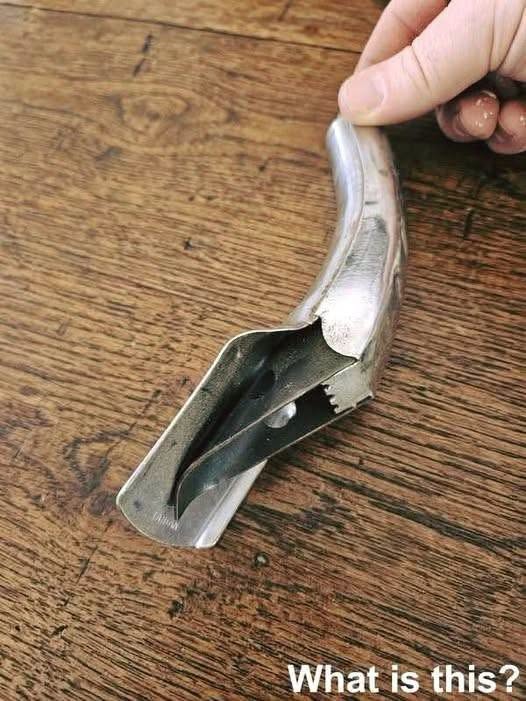
While sorting through an old toolbox, someone came across a small, heavy metal object that immediately stood out. It had no label, no instructions, and no obvious clues about its purpose. Hidden among familiar tools, this mysterious item seemed completely out of place.
At first glance, its design suggested that it had once served an important function. The solid construction, carefully shaped curves, and durable material hinted at a practical use. Yet without context, identifying it proved difficult.
As often happens with unusual finds, curiosity quickly took over. Was it a specialized tool used by mechanics? A piece of industrial equipment? Or perhaps a forgotten accessory from a trade that has become less common over time?
Objects like this remind us how easily everyday items can fade from memory. Tools that were once essential for work and craftsmanship may become unfamiliar as technology advances and industries change. What was once instantly recognizable can eventually become a mystery to future generations.
The true value of discoveries like this isn’t always found in the object’s function. Instead, they offer a glimpse into the past and encourage us to appreciate the history behind the tools and inventions that shaped everyday life.
Whether this particular item turns out to be a clamp, bracket, jig, or another specialized tool, the story behind its rediscovery remains fascinating. Sometimes the most interesting part of an object is not what it does, but the questions it inspires.
Moments like these show that even a forgotten tool tucked away in an old toolbox can spark imagination, conversation, and a renewed appreciation for the craftsmanship of earlier generations.