
A Surprising Discovery in My Egg Turned Out to Be Completely Normal
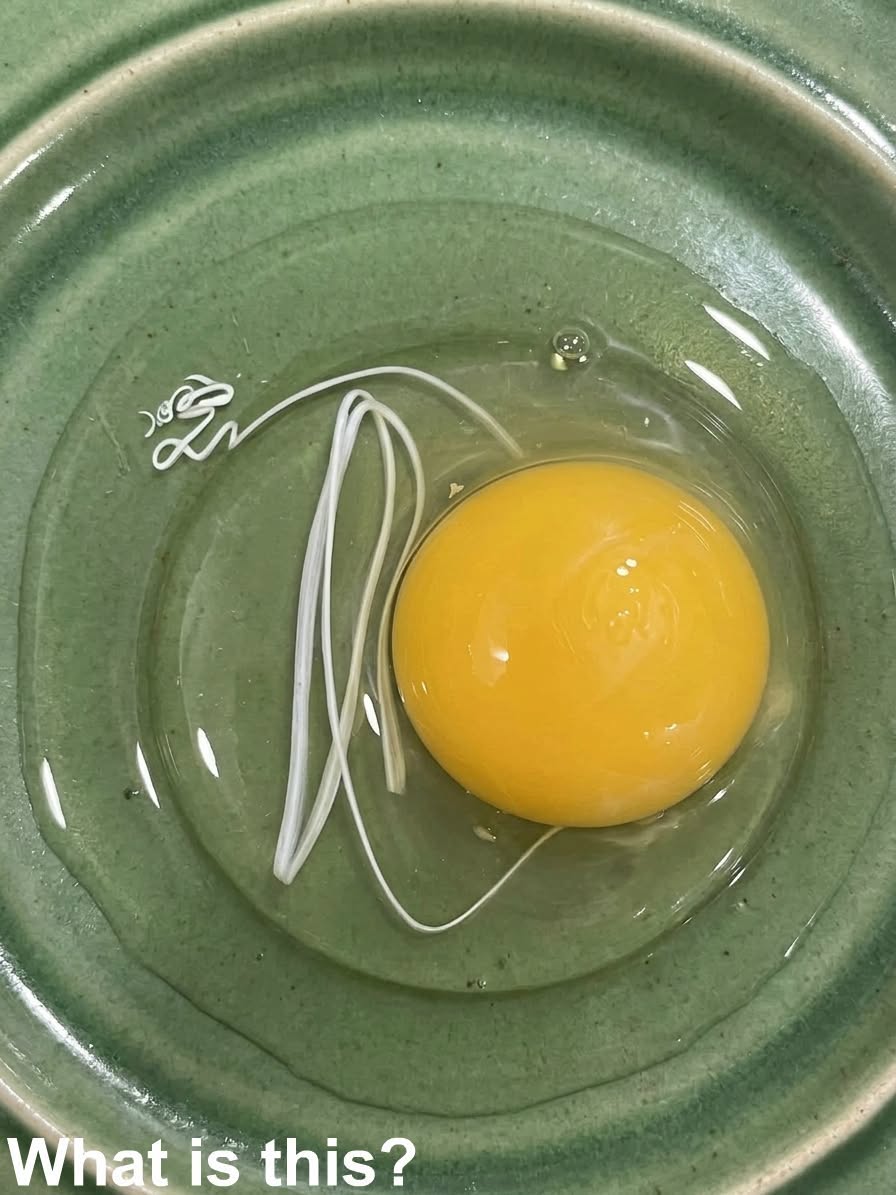
One morning, I woke up and headed to the kitchen to prepare a simple breakfast of fried eggs. As I cracked one of the eggs into the pan, I noticed something unusual floating in the egg white, a thin, white strand attached to the yolk. At first, I was not sure what I was looking at. The unexpected appearance made me pause and inspect the egg more closely.
Curious and slightly concerned, I checked the rest of the eggs in the carton, but they all appeared perfectly normal. Wanting to understand what I had seen, I decided to do some research. After reading information from food safety resources and cooking experts, I discovered that the white strand has a name: the chalaza.
What Is the Chalaza?
The chalaza is a natural part of an egg. Its role is to help keep the yolk centered and stable inside the shell. It is completely harmless and safe to eat. In fact, a more noticeable chalaza is often associated with a fresher egg.
Each egg contains two chalazae, one on either side of the yolk, anchoring it like guy-wires on a tent. They are made of twisted protein strands, and their rope-like structure is what gives them that slightly unfamiliar appearance. When you crack an egg and see those white cords, you are looking at a suspension system engineered by millions of years of evolution.
Why It Looks Strange
The chalaza looks odd for a simple reason: most of us never learned what it is. Eggs arrive in cartons without instruction manuals, and cooking knowledge is passed down informally, which means gaps are common. Many experienced cooks have seen chalazae thousands of times without knowing the name. Many others encounter it once, find it unsettling, and either pick it out or throw the egg away.
The appearance varies. In very fresh eggs, the chalazae are prominent, thick, and clearly visible. As eggs age, they weaken and become less noticeable. This is why the discovery often happens with farm-fresh or recently purchased eggs: the chalaza is at its most conspicuous when the egg is at its best.
Should You Remove It?
This is the practical question, and the answer is reassuringly simple: you do not need to. The chalaza is edible, flavorless in context, and disappears into cooked dishes without a trace. When you whisk, scramble, or fry an egg, the chalazae break down and become indistinguishable from the rest of the white.
Some recipes, particularly delicate custards, strained sauces, and fine pastries, call for straining eggs to achieve a perfectly smooth texture. In those cases, the chalaza gets caught in the strainer along with any other solids. This is about texture refinement, not safety. For everyday cooking, leave it alone.
Other Egg Features People Mistake for Problems
The chalaza is not the only normal egg feature that alarms the uninformed:
- Blood spots. Small red dots occasionally appear in the white or on the yolk. They are harmless, caused by a ruptured vessel during formation, and safe to eat.
- Cloudy whites. Fresh eggs often have cloudy whites due to dissolved carbon dioxide. This is a sign of freshness, not spoilage.
- Double yolks. Two yolks in one shell result from a double ovulation. They are safe and often considered lucky.
- Odd shell textures. Rough patches, ridges, or calcium deposits on shells are cosmetic and do not affect the contents.
- Greenish yolk rings. Hard-boiled yolks develop a green-gray ring when overcooked. It is a harmless iron-sulfur reaction.
In every case, the unsettling appearance has a mundane explanation. Eggs are natural products with natural variation, and that variation is a feature, not a flaw.
What Initially Seemed Unusual
What initially seemed unusual turned out to be a normal feature of a fresh egg. Many people are surprised when they first notice it, but there is no need for concern. The next time you spot a white strand in an egg, you will know that it is simply part of nature's design.
There is a small pleasure in this kind of discovery. The kitchen is full of things we use without understanding, and every so often one of them reveals its logic. The chalaza is a reminder that even the most familiar objects contain hidden engineering, and that curiosity, followed by a quick search, turns alarm into appreciation.
Understanding Small Details
Understanding small details like this can help make cooking less stressful and more enjoyable, especially when encountering something unfamiliar in everyday foods. Food anxiety often comes from the gap between seeing something unexpected and knowing whether it matters. Closing that gap, one chalaza at a time, builds the quiet confidence that makes someone a relaxed, capable cook.
So the next time you crack an egg and see those white strands, smile. You are looking at one of the freshest eggs in the carton, held together by one of nature's neatest tricks.
The Egg as a System
Stepping back, the chalaza is one part of an integrated system that makes the egg one of nature's most impressive packages. The shell provides rigid protection while remaining porous enough for gas exchange. The cuticle seals those pores against bacteria. The membranes add backup barriers. The air cell accommodates expansion. The albumen cushions and nourishes. And the chalazae hold the yolk, the most precious cargo, centered and stable through jostling, transport, and handling.
Every component has a job, and every job serves the same goal: delivering a viable embryo, or in our case a perfect breakfast, intact. The next time you crack an egg, you are not just starting a meal. You are opening a system refined over hundreds of millions of years, and the little white strands are its suspension cables, still doing their job right up until the pan.
Frequently Asked Questions
What is the white strand in my egg?
It is the chalaza, a twisted protein strand that anchors the yolk in the center of the egg. It is completely natural, harmless, and safe to eat.
Should I remove the chalaza before cooking?
No, it is not necessary. It is edible and disappears during cooking. Some delicate recipes strain eggs for texture, which incidentally removes it.
Does a prominent chalaza mean the egg is bad?
The opposite. A noticeable chalaza is associated with fresher eggs. It weakens and becomes less visible as eggs age.
What other egg features look strange but are normal?
Blood spots, cloudy whites, double yolks, rough shell textures, and greenish rings on overcooked yolks are all harmless and normal.



