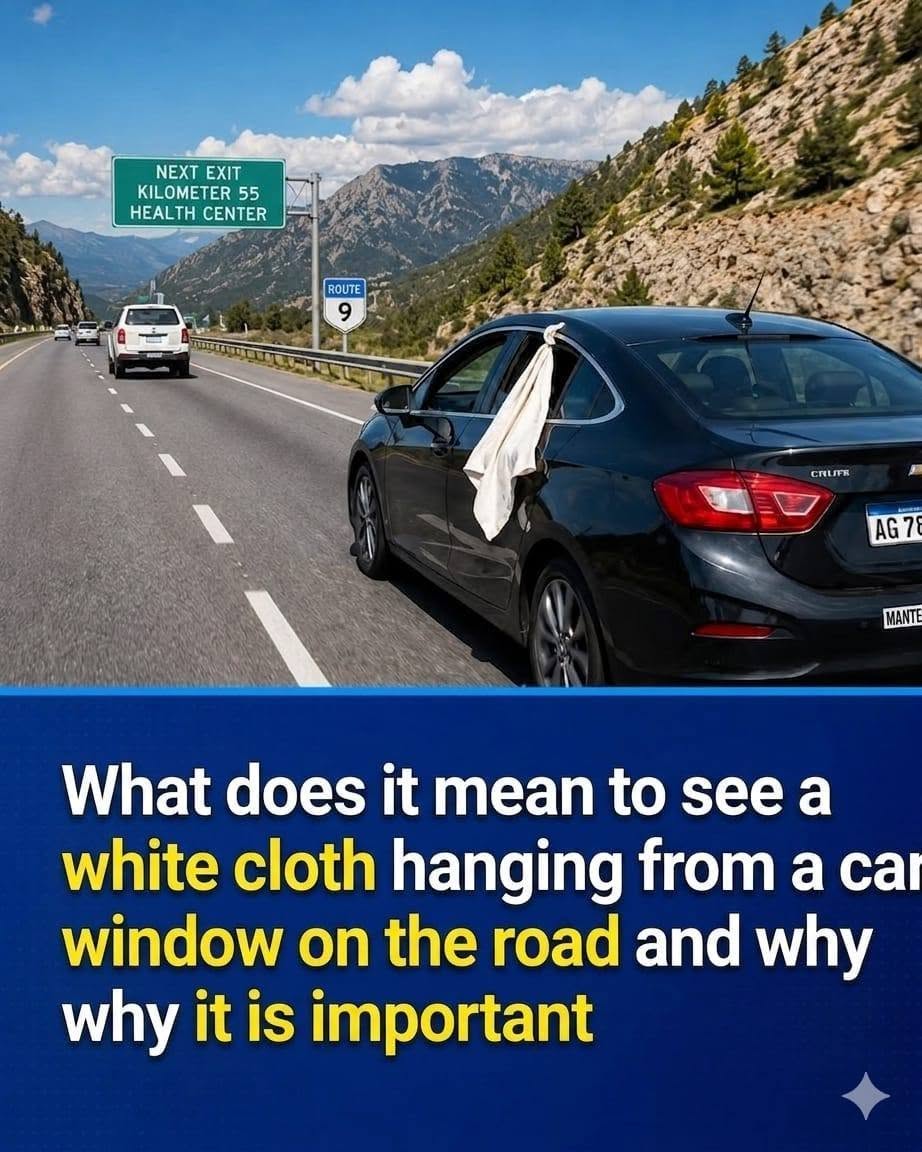
While driving, we rely on many signals to understand what is happening around us. Brake lights, turn signals, road signs, and hazard lights all help motorists communicate with one another. However, there is another signal that occasionally catches drivers’ attention: a white cloth hanging from a car window.
Although it is not part of any official traffic code, this simple gesture has been used in various regions as an informal way to communicate that a vehicle may be experiencing a problem. Understanding its possible meanings can help drivers respond appropriately and safely.
What Does a White Cloth in a Car Window Mean?
A white cloth displayed from a vehicle is generally considered an unofficial sign that the driver or passengers may need assistance. Unlike official warning devices, such as hazard lights or reflective triangles, this practice is based on tradition and shared understanding among motorists.
Because the color white is often associated with peace, surrender, or a request for help, many people interpret it as a signal that the vehicle is facing a difficulty.
Common Reasons Drivers Use a White Cloth
One of the most common reasons is a mechanical problem that has left the vehicle unable to continue. The cloth can serve as a visible indicator that the driver may need assistance or roadside support.
In some circumstances, occupants may use a white cloth to signal that someone inside the vehicle requires urgent medical attention and that help is needed.
During organized travel, such as group tours, memorial processions, or special events, a white cloth may be used to help identify vehicles traveling together.
Some drivers also use a white cloth to indicate that their vehicle has run out of fuel and is temporarily stranded.
Does a White Cloth Give a Vehicle Special Road Privileges?
No. A white cloth does not provide any legal right of way or emergency status.
Traffic laws generally reserve special privileges for authorized emergency vehicles, such as ambulances, police vehicles, and fire services when operating with the required lights and signals.
A private vehicle displaying a white cloth must continue to follow all traffic regulations, including speed limits, traffic lights, and lane restrictions.
How Should Drivers Respond?
If you notice a vehicle displaying a white cloth, it is best to remain cautious and attentive.
Reduce speed gradually if necessary and maintain a safe following distance. Observe the vehicle’s behavior and surroundings before deciding whether assistance may be needed. If the situation appears serious, contacting emergency services may be the most appropriate action.
Safety should always remain the top priority for everyone on the road.
Why Is This Practice Still Used?
Hazard lights can indicate that a vehicle is stopped or experiencing a problem, but they do not explain the reason. Over time, drivers in some areas adopted the use of a white cloth as an additional visual cue to suggest that assistance may be needed.
Although unofficial, the practice continues to be recognized by many motorists and remains part of local driving culture in certain regions.
Final Thoughts
A white cloth hanging from a car window is not an official traffic signal, but it is often used as an informal way to indicate that a vehicle may be facing difficulties. Whether the issue involves a breakdown, a medical concern, or another situation, the best response is to stay alert, drive carefully, and prioritize safety.
By understanding common road signals—both official and informal—drivers can contribute to a safer and more considerate driving environment for everyone.