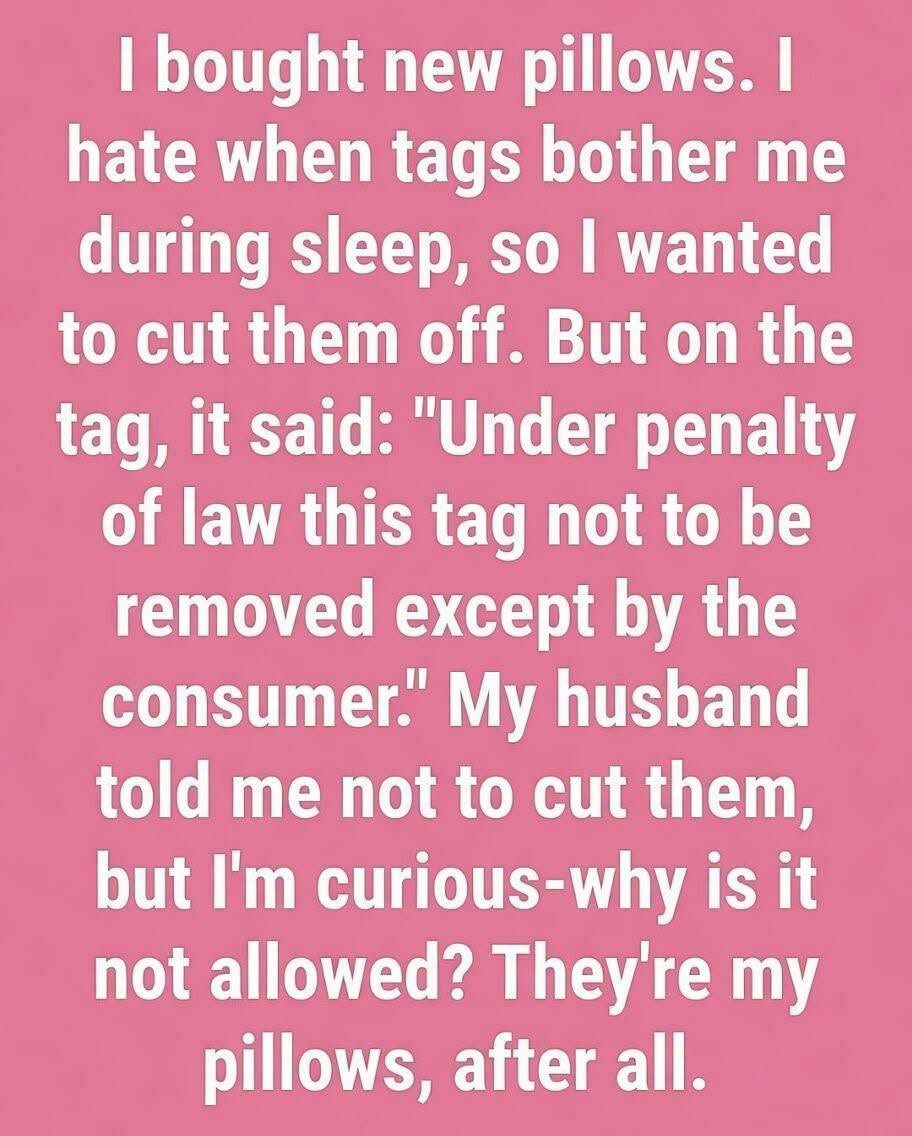
Have you ever noticed the small tag attached to your pillow or mattress with the words “Do Not Remove Under Penalty of Law”? Many people assume removing it is against the law, but that’s actually a common misunderstanding.
The truth is much simpler—and far less alarming.
For decades, these labels have caused unnecessary confusion. While the warning sounds serious, it was never intended for the person who owns the pillow or mattress. Instead, the rule was created to protect consumers before they make a purchase.
Years ago, some manufacturers filled bedding products with low-quality or undisclosed materials. Without clear labeling, shoppers had no reliable way to know what was inside the items they were buying. To improve transparency, regulations required manufacturers and retailers to leave the labels attached until the product was sold.
In other words, the warning primarily applies to manufacturers, distributors, and retailers—not to customers who have already purchased the product.
Once a pillow or mattress becomes your personal property, you can generally remove the tag if you prefer. Many people cut it off because they find it uncomfortable, distracting, or simply don’t like the way it looks.
Keeping the label can still be useful because it often includes information about the materials used inside the product, care and washing instructions, manufacturer details, and information that may help people with allergies or sensitivities.
If you ever decide to donate, sell, or recycle your pillow or mattress, the label can also provide useful information for the next owner.
The next time you see that familiar warning tag, there’s no need to worry. It isn’t there to prevent you from removing it after purchase. Instead, it’s part of a long-standing consumer protection system designed to ensure buyers receive accurate information about the products they bring into their homes.
Understanding the purpose of these labels helps separate fact from fiction and shows how a small piece of fabric has played an important role in promoting transparency and informed shopping decisions for many years.