What Do You Notice First? A Fun Optical Illusion That May Reveal Your Thinking Style
Have you ever looked at a picture and realized someone else noticed something completely different? Optical illusions and visual perception puzzles have become popular because they encourage us to think about how our minds process information.
While these tests are meant for entertainment and self-reflection rather than scientific diagnosis, they can offer an interesting way to explore different thinking styles.
The Pigeon Puzzle
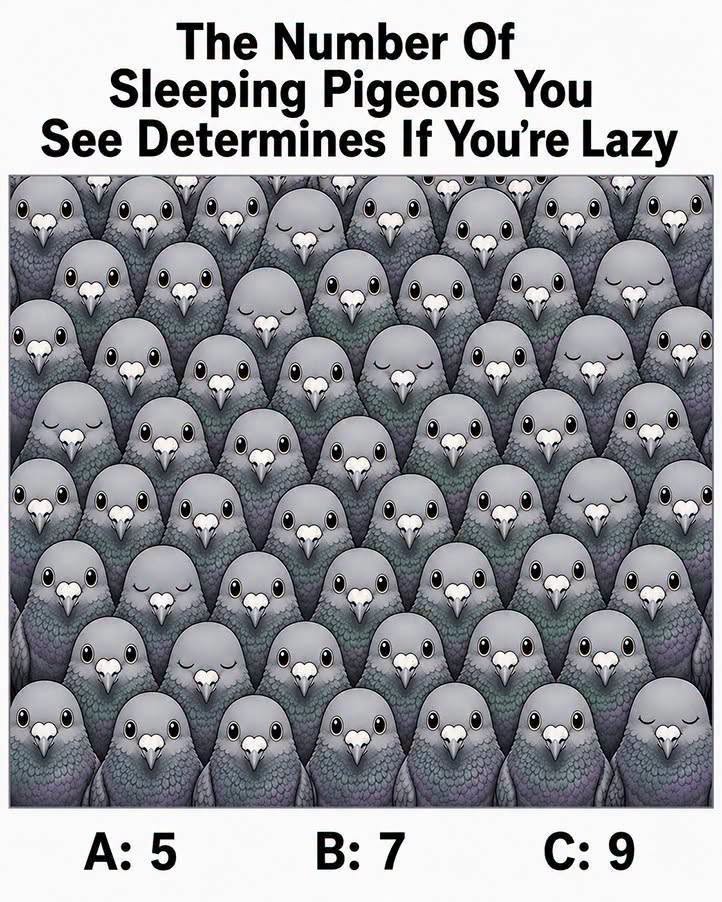
The image below features several pigeons. The question is simple:
How many pigeons did you notice first?
Your first impression may provide a fun glimpse into the way you naturally approach situations and solve problems. Take a moment, look at the image, and note your immediate answer before reading on. The key is your first glance, not a careful count.
If You Saw Five Pigeons First
If your attention immediately went to five pigeons, you may naturally focus on the bigger picture. You often look ahead, concentrating on long-term goals instead of getting caught up in every small detail.
People with this approach tend to remain calm under pressure and enjoy exploring new ideas and possibilities. They often make decisions confidently and keep moving forward. In group settings, they're the ones asking “where are we headed?” while others debate the route.
Strengths of big-picture thinkers:
- Strategic vision and long-term planning
- Comfort with ambiguity and change
- Quick, confident decision-making
- Ability to inspire others with possibilities
The watch-out: it's helpful to occasionally slow down and double-check the smaller details, as they can sometimes make an important difference. The best big-picture thinkers learn to partner with detail-oriented people rather than dismissing their concerns.
If You Saw Seven Pigeons First
Noticing seven pigeons may suggest you have a balanced way of thinking. You can often switch between seeing the overall situation and paying attention to important details.
This balanced perspective can make you practical, patient, and reliable when making decisions. You usually prefer to gather enough information before reaching a conclusion and are comfortable considering different viewpoints. You're neither lost in the clouds nor buried in the weeds.
Friends, family, and coworkers may appreciate your thoughtful approach to solving everyday challenges. Balanced thinkers often become the mediators, the project managers, the ones who translate between the visionaries and the implementers.
Strengths of balanced thinkers:
- Adaptability across different types of problems
- Patience in gathering information
- Skill at seeing multiple perspectives
- Reliability in follow-through
If You Saw Nine Pigeons First
If nine pigeons stood out to you immediately, you may have a strong eye for detail. You tend to notice patterns and small differences that many people overlook.
This careful observation can be especially useful when solving complex problems, reviewing information, or identifying mistakes before they become larger issues. Detail-oriented people are the quality controllers, the proofreaders, the analysts who catch what everyone else missed.
However, paying close attention to every detail can sometimes lead to spending more time analyzing than necessary. In some situations, making a timely decision can be just as valuable as finding every possible detail. Perfectionism has a cost, and knowing when “good enough” is actually good enough is a skill worth developing.
Strengths of detail-oriented thinkers:
- Accuracy and thoroughness
- Pattern recognition
- Quality assurance instincts
- Ability to spot problems early
Why We See Differently: The Science of Perception
The fact that people notice different numbers in the same image isn't random. Visual perception researchers have identified several factors:
- Global vs. local processing. Some brains prioritize the overall pattern (global), others the individual elements (local). This tendency is measurable and relatively stable.
- Attention and expectation. What you're looking for shapes what you find. A birdwatcher and an accountant may literally see different images.
- Cognitive load. When mentally tired, people default to whichever processing style is most automatic for them.
- Cultural factors. Research suggests some cultural backgrounds emphasize holistic perception while others emphasize analytic perception.
None of these make one style better. They're different tools, suited to different tasks. The world needs both the person who sees five pigeons and the person who sees nine.
A Reminder About Personality Tests
Visual perception games like this are designed primarily for entertainment and self-reflection. They are not scientific assessments of personality or intelligence, and everyone may experience the image differently.
Real personality assessment requires validated instruments, large samples, and professional interpretation. A pigeon count is a conversation starter, not a diagnosis. Enjoy the insight, share it with friends, but don't make life decisions based on it.
That said, the exercise has genuine value as a window into cognitive diversity. Whether you saw five, seven, or nine pigeons first, the most interesting part is recognizing that people naturally observe the world in different ways. Understanding your own habits, and appreciating different perspectives, can help you make better decisions and communicate more effectively.
Putting It to Use
- In teams, recognize that your “obvious” observation may be invisible to others, and vice versa. Ask what others see before concluding.
- In problem-solving, deliberately switch modes. If you're a big-picture person, force a detail pass. If you're detail-oriented, step back and ask what it all means.
- In relationships, remember that your partner may genuinely perceive situations differently. It's not stubbornness. It's neurology.
- In learning, match your study style to your strengths while practicing your weaker mode.
So, how many pigeons did you notice first? Share your answer with friends and compare your results. You may be surprised by how differently everyone sees the same image, and that surprise is the whole point.
Frequently Asked Questions
What does it mean if I saw five pigeons first?
It may suggest big-picture thinking: focus on long-term goals, comfort with ambiguity, and confident decision-making. Remember to occasionally check the details.
What does it mean if I saw seven pigeons first?
It may indicate balanced thinking: able to switch between overview and detail, practical, patient, and comfortable with multiple viewpoints.
What does it mean if I saw nine pigeons first?
It may suggest detail-oriented thinking: strong pattern recognition, thoroughness, and an eye for what others miss. Watch for over-analysis.
Are these tests scientifically valid?
No. They're entertainment and self-reflection tools, not validated personality assessments. The value is in recognizing cognitive diversity, not in the specific result.
Why do people see different numbers?
Differences in global vs. local visual processing, attention, expectations, mental state, and cultural background all influence what stands out at first glance.