
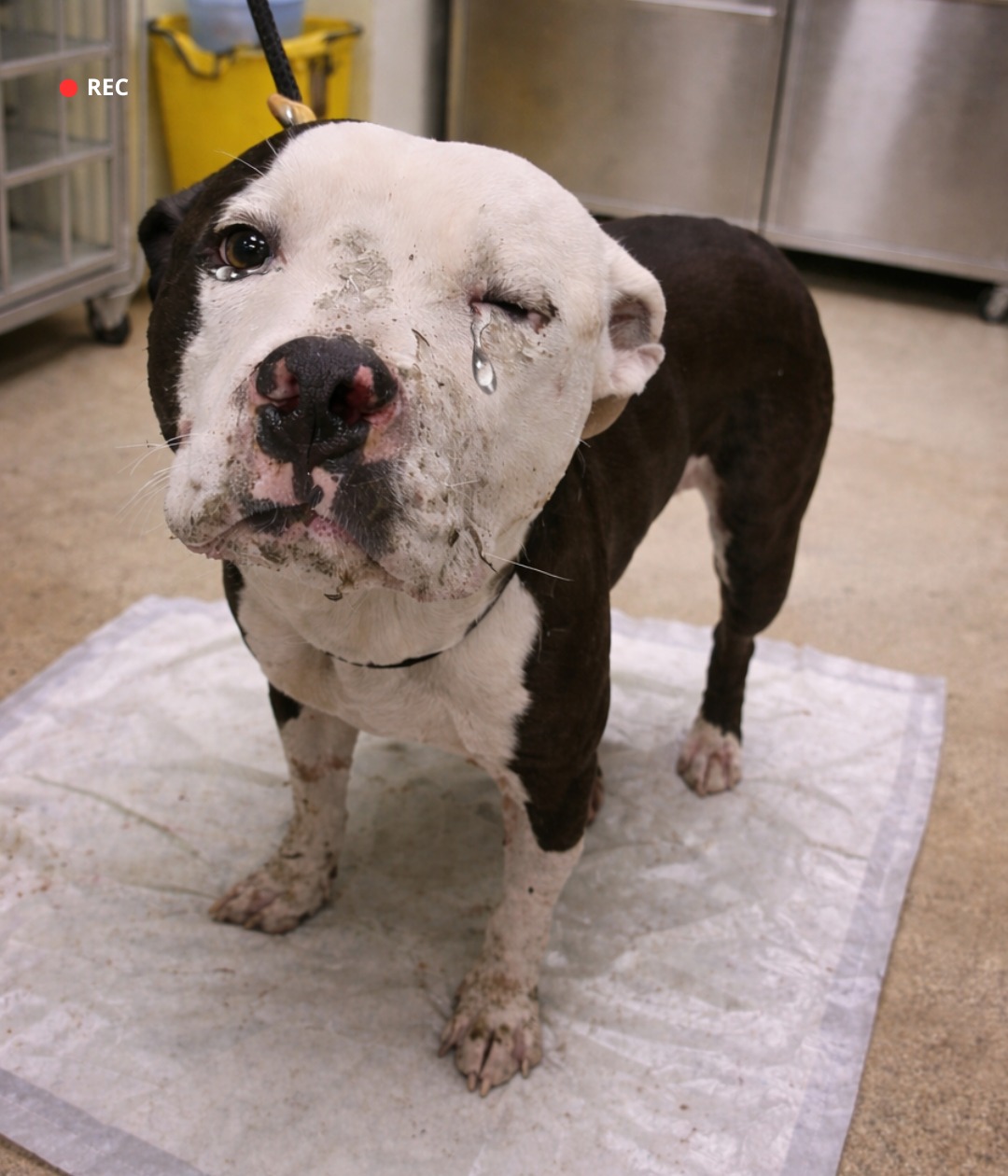
A Christmas Eve Rescue in St. Louis: Wallace's Journey From Fear to Hope
On a freezing Christmas Eve in St. Louis, while many homes glowed with soft lights and families gathered for dinner, a 22-kilogram dog named Wallace lay alone beneath the pale glow of a streetlamp.
From a distance, the city looked warm and festive. Up close, the pavement was icy and unforgiving.
When officers found Wallace, he was not barking or trying to run. He was not even making a sound. His body trembled in small, uncontrollable waves. One side of his face was visibly injured, and he held one leg at an unnatural angle: clear signs that something was very wrong.
Whatever had happened to him had come suddenly. There had been no time to understand it, no chance to escape.
A Dog Who Chose Trust
Yet what struck the responders most was not only the seriousness of his injuries. It was his reaction.
Instead of pulling away, Wallace slowly lowered himself to the ground. He made his body smaller, curling inward as if trying to take up less space. His eyes followed every movement around him, not with aggression, but with confusion. It was as though he was silently asking a simple question: is it safe now?
Animals who have been hurt often protect themselves the only way they know how: by withdrawing, snapping, or running. Wallace did the opposite. In the middle of fear and uncertainty, he reached for the one thing that could save him: connection.
A Careful and Critical Medical Response
Wallace's visible wounds were only part of the concern. Trauma can run deeper than what appears on the surface, and the veterinary team understood that immediate, careful treatment would be essential.
They worked methodically and with great attention to detail. Damaged tissue had to be repaired. His injured leg needed stabilization. Every stitch required patience. Every step demanded precision.
There were no shortcuts in his care.
Throughout the procedures, the team focused not only on treating his injuries but also on minimizing stress and discomfort. Creating a calm, controlled environment was just as important as the medical treatment itself. A frightened animal in pain can panic, which makes everything harder, so quiet voices, gentle handling, and steady routines became part of the medicine.
An Unexpected Gesture of Trust
Despite everything he had endured, Wallace showed a response that no one anticipated.
Rather than withdrawing or resisting, he leaned gently toward the people helping him. Under the bright lights of the exam room, surrounded by unfamiliar hands and voices, he chose connection over fear.
When a technician steadied him, he rested his head softly against her arm. When someone spoke his name in a calm tone, his tail gave the faintest, hesitant movement.
It would have been understandable if he had shut down completely. Many animals, after experiencing trauma, instinctively protect themselves by withdrawing. But Wallace did something different.
He trusted.
In the middle of fear and uncertainty, he held on to something simple yet powerful: the belief that kindness still existed.
Why Winter Is So Dangerous for Stray Animals
Wallace's story is especially moving because of when it happened. Cold weather turns an already hard life on the street into a fight for survival, and the holiday season is one of the most dangerous times of the year for stray and lost animals.
Freezing temperatures cause rapid harm. Dogs can develop hypothermia and frostbite just like people. Short-coated breeds, puppies, senior dogs, and small dogs are the most vulnerable. Wet fur, which happens quickly on icy pavement or in slush, makes heat loss even faster.
Road dangers multiply. Icy roads mean more skidding vehicles, and a frightened dog near traffic is at terrible risk. Salt and chemical de-icers spread on sidewalks can burn paw pads and are toxic if a dog licks them off.
Food and water disappear. In winter, outdoor water sources freeze, and stray animals must burn far more calories just to stay warm. A dog that might survive for days in mild weather can decline very quickly in freezing conditions.
Shelters fill up. The weeks around the holidays are among the busiest for animal shelters. More animals come in from the cold, while adoptions slow down because families are traveling or distracted. That is why a rescue story like Wallace's matters so much: every animal who gets help in winter is one who beat the worst odds of the year.
What to Do If You Find an Injured Dog
You may one day find yourself in the position of those officers on Christmas Eve: face to face with an animal who is hurt and frightened. Here is how to help safely, in general terms.
Stay calm and keep your distance at first. An injured dog may bite out of pain and fear, even one that seems gentle. Speak softly, move slowly, and let the animal see you before you approach.
Do not try to treat serious injuries yourself. A leg held at an unnatural angle, heavy bleeding, or difficulty breathing needs a veterinarian. Moving an injured animal incorrectly can make things worse.
Call for professional help. Contact local animal control, a nearby shelter, or a rescue organization. Many cities have emergency numbers for animal situations. If it is safe to do so, you can keep the dog warm with a blanket or coat while you wait, without restraining it tightly.
Check for identification. Once the immediate danger is handled, look for a collar with tags. A vet or shelter can scan for a microchip, which may reunite the dog with its family quickly.
Keep yourself safe. Never put your face near an injured animal's mouth, and wash your hands and any scratches afterward. If you are bitten, seek medical attention.
The Beginning of a New Chapter
That cold Christmas Eve could have been the end of Wallace's story. Instead, it became the beginning of a new chapter.
Rescue and recovery are rarely instant. Healing takes time, care, and patience. But Wallace's quiet resilience reminded everyone involved why compassion matters, especially during the moments when it is needed most.
What happened next in Wallace's journey would continue to inspire everyone who heard his story.
How Readers Can Help Animals Like Wallace
You do not need to be a veterinarian or a police officer to change an animal's life. Here are meaningful ways to help, in general terms.
Adopt from a shelter or rescue. Millions of animals wait in shelters, and adopting one opens a space for another rescue. If Wallace's story moved you, your local shelter has dogs with their own stories waiting for a second chance.
Foster. Fostering gives a recovering animal a quiet home to heal in, which is often exactly what a traumatized dog needs. Shelters usually cover medical costs; you provide the safe space and the patience.
Donate to local shelters. Money, blankets, food, and towels are always needed, and winter is when shelters feel the shortage most. Even small, regular donations add up.
Volunteer. Shelters need dog walkers, cleaners, transport drivers, and people who simply sit with shy animals to help them learn to trust again.
Spay and neuter. Unplanned litters are one of the biggest sources of stray animals. Spaying and neutering pets is one of the most effective ways to reduce the number of animals who end up on the street.
Share rescue stories. Stories like Wallace's remind people that compassion is a choice we make every day. Sharing them raises awareness and sometimes leads directly to adoptions and donations.
Frequently Asked Questions
Why did Wallace curl up instead of running away?
Curling inward and making the body small is a common stress response in frightened dogs. It is a way of appearing less threatening while protecting vulnerable areas. In Wallace's case, it also signaled that he was too hurt and exhausted to flee.
Can a traumatized dog learn to trust people again?
Yes. With patient, gentle handling and a calm environment, many traumatized dogs recover emotionally as well as physically. Wallace's decision to lean into his caregivers, resting his head on a technician's arm, is a powerful early sign of that kind of recovery.
What should I do if I see a stray dog in winter?
Do not chase it. Note the location, and contact local animal control or a rescue group. If the dog approaches you and seems friendly, you can offer shelter from the wind and call for help. Never put yourself in danger around traffic or an aggressive animal.



