
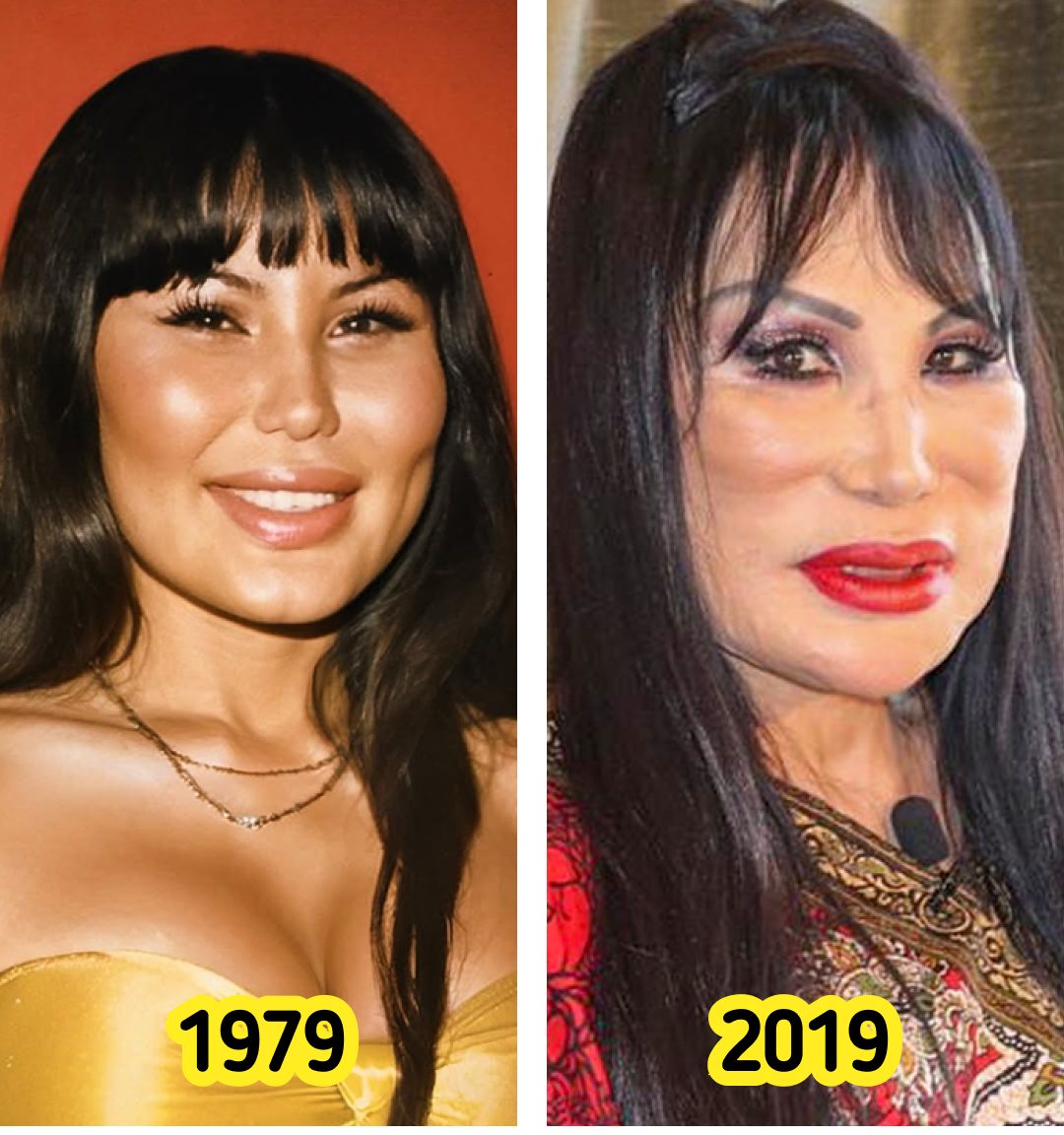
A Jealous Friend Ruined Mexican Star's Beauty, Now She's Reclaiming It
Lyn May, a renowned Mexican actress and cabaret star, was once admired not only for her talent but for her breathtaking beauty. She became a prominent figure in the 1980s and 1990s, capturing the hearts of many with her stunning looks and captivating performances. However, Lyn's story took a tragic turn when, in her pursuit of maintaining her youthful appearance, she fell victim to poor advice from a close friend.
Her experience has since become one of the most widely discussed cautionary tales in the world of cosmetic procedures: a stark reminder that the pursuit of beauty, when guided by unqualified hands, can carry devastating consequences.
A Star at the Height of Her Fame
To understand the weight of Lyn May's story, it helps to understand who she was at her peak. In the 1980s and 1990s, she was a fixture of Mexican entertainment, celebrated for both her performances and her striking appearance. Cabaret stars of that era occupied a unique cultural space: glamorous, bold, and beloved by audiences who admired their charisma as much as their talent.
For performers, appearance is intertwined with livelihood. The pressure to maintain a youthful look is intense in entertainment industries worldwide, and it was no different for Lyn. As the years passed, she, like many others in the industry, wanted to preserve her beauty for as long as possible.
The Fateful Decision
In the 1990s, Lyn sought a cosmetic enhancement that could help her look as youthful as possible. Rather than consulting a licensed medical professional, she relied on a friend's recommendation to undergo a cosmetic procedure.
Expecting to receive professional dermal fillers, Lyn was instead injected with a dangerous concoction that included cooking oil, baby oil, and water. This was not a medical treatment. It was an unregulated, unsafe injection performed outside any legitimate clinical setting, using substances never intended for use in the human body.
What followed was nothing short of devastating. Rather than the smooth, rejuvenated skin she had hoped for, Lyn experienced severe facial swelling, painful abscesses, and disfigurement that left lasting scars. Her face was permanently altered by this botched procedure, and despite undergoing multiple surgeries to correct the damage, the effects could not be fully reversed.
The Medical Reality of Unregulated Injections
Lyn's injuries illustrate why unlicensed cosmetic injections are so dangerous. Medical professionals warn about several serious risks:
- Foreign body reactions. Substances like cooking oil and baby oil are not biocompatible. The body treats them as invaders, triggering chronic inflammation, painful lumps, and abscesses.
- Infection. Procedures performed outside sterile clinical environments carry a high risk of bacterial infection, which can spread rapidly in facial tissue.
- Tissue damage. Oils injected into the face can migrate, harden, and destroy surrounding tissue, causing permanent disfigurement.
- Irreversibility. Unlike approved dermal fillers, which the body can gradually absorb or which can sometimes be dissolved, household oils cannot be safely removed once injected. Multiple corrective surgeries may improve the appearance but rarely restore it fully.
- Systemic risks. In severe cases, injected foreign substances can enter the bloodstream, leading to life-threatening complications.
Lyn endured multiple surgeries in an attempt to repair the damage. While surgeons could address some of the harm, the effects could not be fully reversed. Her face, once her most celebrated asset, would never be the same.
The Emotional Toll
Lyn's tragic journey didn't just end with physical pain. The emotional toll of her disfigurement was immense. She became a shadow of her former self, grappling with the public's scrutiny and the irreversible effects on her health and appearance.
For a woman whose career was built on her presence and beauty, the psychological impact was profound. Public figures who experience disfigurement face a cruel double burden: the private grief of losing their appearance and the public spectacle of commentary, speculation, and sometimes mockery. Lyn faced both, and she faced them in an era before social media offered the support networks that exist today.
The Photos That Shocked the World
Recently, before-and-after photos of Lyn resurfaced and quickly went viral. The shocking images sparked an outpouring of sympathy from fans and even raised questions about the authenticity of the photos. Many were left in disbelief, struggling to comprehend how such a beautiful and iconic figure could be left with such irreversible damage.
However, Lyn's story is all too real and serves as a stark reminder of the dangers that can come from unqualified advice and unregulated cosmetic treatments.
The viral spread of her images, while painful, gave her story new reach. A new generation learned her name not as a cabaret star but as a warning, and many were moved to share messages of support and admiration for her courage.
Turning Pain Into Purpose
Today, Lyn has bravely spoken out about her ordeal, using her experience to educate others about the dangers of unregulated cosmetic procedures. She hopes that her tragic journey will prevent others from making the same mistake and help them realize the importance of safety and expertise when it comes to cosmetic enhancements.
Her advocacy carries weight precisely because it comes from lived experience. When Lyn warns about unlicensed practitioners, she is not speaking in abstractions. She is describing what happened to her own face.
How to Protect Yourself: Choosing Safe Cosmetic Care
Lyn May's story offers lessons that remain urgent today, as unregulated cosmetic services continue to operate in many places. If you are considering any cosmetic procedure, keep these guidelines in mind:
- Verify credentials. Only allow injections or procedures from licensed, board-certified medical professionals. Check their qualifications independently.
- Be suspicious of bargain prices. Legitimate treatments have real costs. Prices that seem too good to be true usually are.
- Never accept treatment in non-clinical settings. Homes, hotel rooms, and back rooms of salons are not safe places for injections.
- Ask what is being injected. You have the right to know the exact product, its brand, and its approval status. Approved fillers come in sealed, labeled packaging.
- Do not rely on friend referrals alone. A friend's recommendation is not a substitute for professional credentials and a proper consultation.
- Research red flags. Practitioners who cannot show a medical license, who pressure you to decide quickly, or who cannot explain risks should be avoided.
The Takeaway
In a world where the pressure to maintain youthful looks is ever-present, Lyn May's story stands as a stark reminder that beauty should never come at the cost of one's health and well-being. Her willingness to speak openly about her ordeal has likely saved others from similar fates.
Lyn set out to preserve her beauty and lost it to a betrayal of trust. What she reclaimed, in the years since, is something arguably more powerful: a voice, a purpose, and the respect of everyone who understands what it cost her to speak up.
Frequently Asked Questions
Who is Lyn May?
Lyn May is a Mexican actress and cabaret star who rose to prominence in the 1980s and 1990s, celebrated for her performances and her striking beauty.
What happened to Lyn May's face?
In the 1990s, following a friend's recommendation, she received injections she believed were professional dermal fillers. Instead, she was injected with a mixture including cooking oil, baby oil, and water, causing severe swelling, abscesses, and permanent disfigurement.
Can the damage from unregulated injections be reversed?
Lyn underwent multiple corrective surgeries, but the damage could not be fully reversed. Foreign substances like oils are extremely difficult to remove once injected, which is why prevention is so critical.
How can I tell if a cosmetic practitioner is legitimate?
Legitimate practitioners hold medical licenses, work in clinical settings, use approved products in sealed packaging, provide consultations that cover risks, and welcome questions about their credentials.
What should I do if I have already received an unregulated injection?
Seek evaluation from a qualified dermatologist or plastic surgeon as soon as possible. Do not attempt to treat complications yourself, and report the practitioner to local health authorities.



