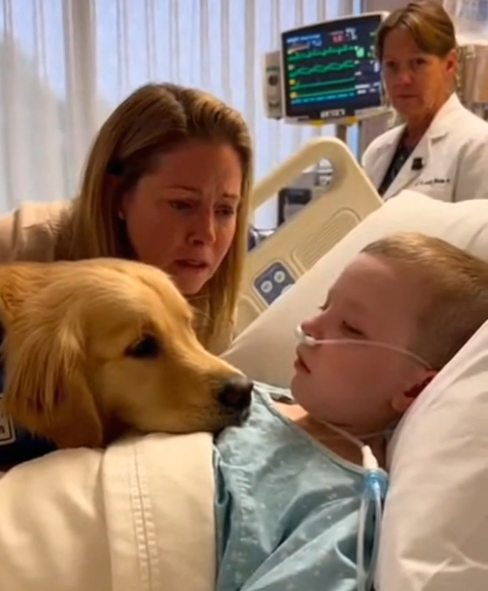
The moment felt almost unreal.
As the golden retriever gently rested his head on the young boy’s stomach, the steady beeping of the heart monitor shifted. The rhythm smoothed. The sharp peaks softened into a calmer pattern. Mid-sentence, the doctor stopped speaking.
No one in the room moved.
The hospital room—bright, quiet, and filled with the low hum of medical equipment—seemed to pause. A nurse stood frozen, syringe still in hand. Another slowly lowered a clipboard, eyes fixed on the screen. Even the ventilator’s sound felt less urgent, settling into a steady, reassuring pace.
On the bed lay Noah, just nine years old, battling bone marrow failure. His skin was pale against the white sheets, his small frame surrounded by wires and monitors that tracked every breath and heartbeat. Even at rest, his hands trembled slightly, fingers opening and closing as if reaching for comfort.
That comfort came in an unexpected form.
Beside him stood Caleb, a seven-year-old golden retriever certified as a therapy dog. His vest showed signs of years of service, the fabric worn soft at the edges. With slow, careful steps, Caleb had climbed onto a small stool near the bed. He lowered his head gently onto Noah’s abdomen and became completely still.
Almost immediately, Noah’s breathing began to slow.
The doctor glanced at the monitor once more, then leaned closer, studying the numbers. After a moment, she looked up at the others in the room.
“Is that accurate?” she asked quietly.
No one answered right away.
While therapy animals are often known for providing emotional comfort, moments like this remind caregivers why animal-assisted therapy has become part of many pediatric care programs. Dogs like Caleb are trained to remain calm, sense emotional shifts, and offer steady companionship—especially to children facing long hospital stays.
Noah’s eyes fluttered open briefly. His breathing remained slow and even. For the first time that day, his body appeared to relax.
Nothing dramatic happened. There were no sudden cures or medical miracles. But something meaningful changed in that room: the tension eased, the fear softened, and for a few minutes, everyone simply watched a child rest peacefully with a loyal companion by his side.
Sometimes healing doesn’t arrive with alarms or announcements. Sometimes it comes quietly—warm fur, gentle presence, and a moment of calm when it’s needed most.