Meta description: A dramatic bridge photo and a breaking news headline are circulating online. Here is what the report actually claims, what the photo can and cannot prove, and how emergency teams and investigators assess a bridge failure.
A normal day can change in a matter of seconds. Vehicles cross a bridge, workers carry out their daily routines, and people travel to their destinations. Then a sudden structural failure can turn a familiar route into a dangerous scene, leaving surrounding communities waiting for answers.
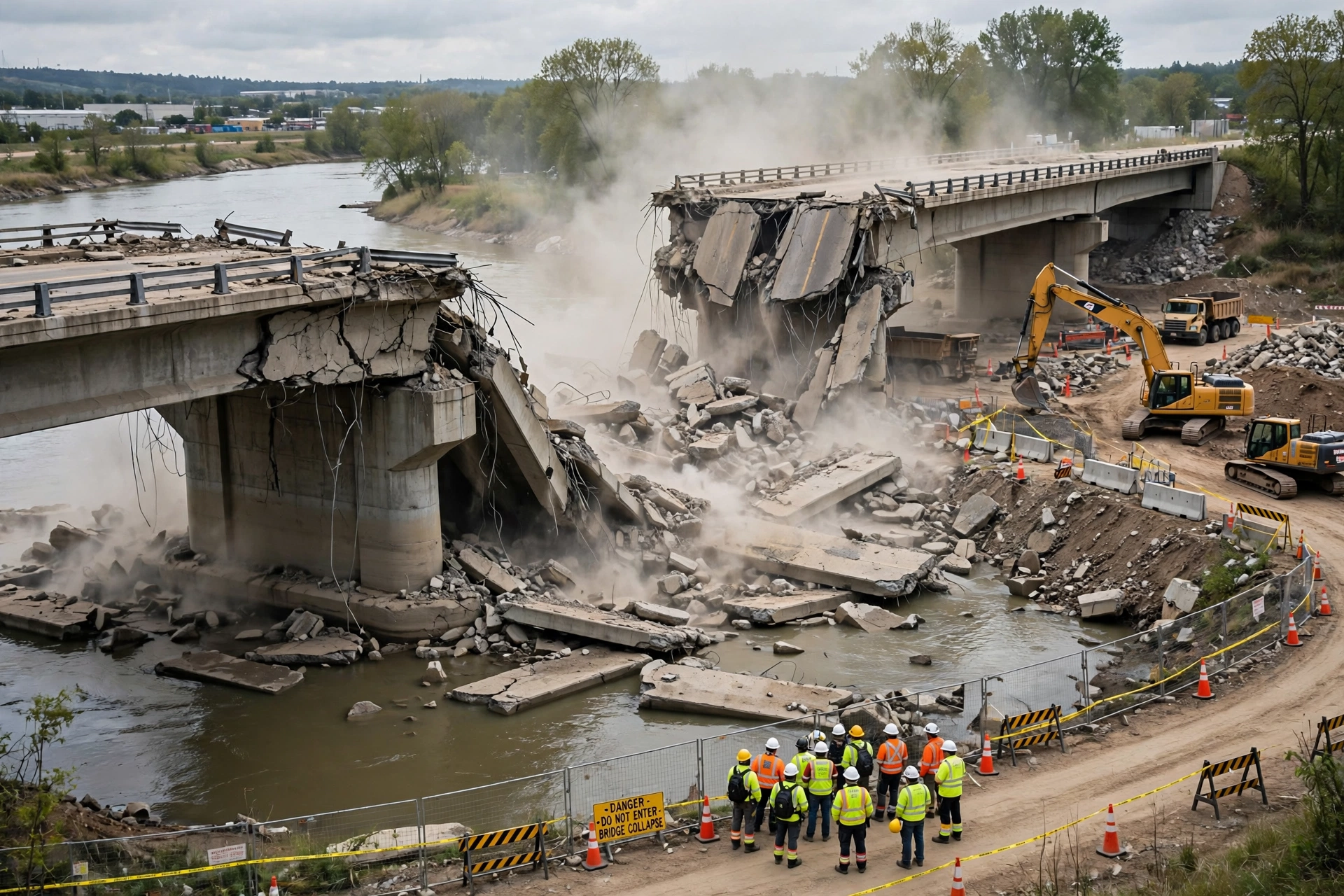
That is the situation described in a breaking news post now circulating online. It claims that a massive bridge collapse happened just minutes earlier. A dramatic photo attached to the post shows a large concrete structure with a visibly damaged section, dust rising around the supports, construction equipment nearby, and workers gathered close to the affected area.
The image raises serious questions. How could such a large structure suffer a failure? Were vehicles or construction workers in the affected area? Did emergency teams reach the scene in time? And most importantly, is the circulating report describing a confirmed real-world disaster, or an incident that has not yet been independently verified?
This article looks at what the report actually says, what the photo shows, what remains unconfirmed, and how a real bridge emergency is normally handled.
What the Circulating Report Claims
According to the original report, emergency vehicles arrived at the scene, authorities secured the area, residents were advised to remain indoors, and several agencies coordinated their response.
The report also says that eyewitnesses noticed signs of trouble before authorities were alerted. Police, fire crews, and medical responders were reportedly dispatched to the area. Some witnesses allegedly noticed helicopters overhead, while others described heavy traffic congestion as emergency vehicles arrived.
The report further claims that medical responders were seen assisting several individuals. At the same time, it acknowledges that the extent of injuries, if any, had not been officially confirmed.
That qualification matters. Seeing an ambulance or a medical team at an emergency scene does not automatically establish that people have been seriously injured. Medical responders may be present to evaluate workers, assist people experiencing shock, prepare for possible casualties, or provide precautionary support.
What the Photo Shows, and What It Cannot Prove
The photo circulating with the headline shows a substantial concrete bridge structure with a section that appears severely damaged. Dust or debris can be seen around the affected area, while workers in high-visibility clothing are positioned near the structure. A crane and other construction equipment are also visible.
The composition suggests a serious structural emergency. However, the photograph alone cannot establish whether it depicts an actual collapse, a controlled demolition, a construction accident, or an illustrative scene.
A dramatic photograph can show the appearance of a structural failure, but it cannot independently establish when or where the photograph was taken. It also cannot identify the bridge, confirm the cause, or confirm whether anyone was injured.
That distinction is central to understanding this story.
What Is Not Confirmed
At this stage, the available material does not establish the exact location, the identity of the bridge, the time of the alleged event, or the number of people affected.
The original report does not identify the bridge, provide a precise location, or establish an official casualty figure. It also does not provide a verified statement identifying the cause of the alleged failure.
Consequently, mechanical damage, construction problems, environmental conditions, and other possible explanations should not be presented as established facts.
The most responsible interpretation is therefore that the post presents a reported bridge-collapse emergency, while the central details remain unverified.
Why Bridge Failures Can Happen
Bridge failures can happen in different circumstances, and each possibility requires a different investigation.
A structure may experience a sudden failure during normal traffic operations. A partially completed bridge may become unstable during construction. A support may be damaged by a vehicle collision, flooding, erosion, or another external event.
Age, maintenance history, material fatigue, design limits, and extreme weather can also play a role. In many cases, investigators find that more than one factor contributed to the failure.
Until official statements identify the location, confirm the time of the event, and release verified information about injuries or traffic impacts, the circulating images and reports remain accounts of a reported emergency rather than a fully documented disaster.
What Emergency Crews Normally Do First
When a major bridge failure is reported, the first priority is safety, not investigation.
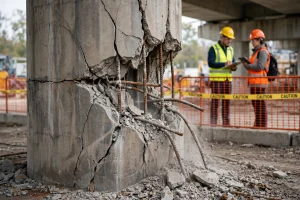
Construction crews and investigators must first ensure that the remaining sections are stable before any assessment of the cause can begin. Dust, falling debris, and unstable supports create hazards that require specialized equipment and careful coordination among police, fire, and engineering teams.
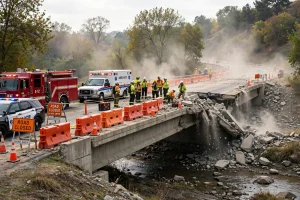
Emergency teams typically secure the area, stop traffic from entering the bridge, check for people who may be trapped or injured, and establish a safe perimeter. Engineers then assess whether nearby sections are at risk of further collapse.
The presence of cranes and heavy machinery in the circulating photograph is consistent with the early stages of such a response, whether the damage resulted from an unexpected failure or from planned demolition work.
Only after the scene is stable do investigators begin the detailed work of determining what happened. That work can include inspecting the damaged supports, reviewing maintenance and inspection records, examining construction plans, and analyzing photos, video, and witness accounts.
The Wider Impact of a Bridge Failure
Bridges are among the most important pieces of infrastructure in modern communities. When a major crossing fails, the effects can extend far beyond the immediate structure.
Traffic patterns shift, emergency routes change, and communities on either side of a waterway or roadway can become temporarily separated. Deliveries, commutes, school routes, and access to hospitals can all be disrupted while an alternative route is arranged.
That is why officials usually issue clear travel guidance quickly after a confirmed incident, including road closures, detours, and instructions for residents nearby.
In this case, no such official guidance has been verified in the source material. Readers should therefore rely on local authorities for guidance and avoid approaching any damaged infrastructure until it has been declared safe.
How to Stay Safe Near a Damaged Bridge
For residents who may be near a genuinely damaged bridge, the immediate safety message remains important: stay away from the structure, follow official instructions, and do not attempt to inspect the damage yourself.
Do not cross a bridge that shows visible cracks, tilting, falling debris, or unusual movement. Do not drive around barriers or road closures. If you are in a vehicle and you notice a bridge deck shifting or debris falling, move away from the structure if it is safe to do so and call emergency services.
If you are near a construction site where a structure appears unstable, leave the area and alert workers or authorities. Do not enter the site to take photos or video.
How to Verify a Breaking News Report Before Sharing It
Breaking news headlines spread fast, especially when they include a dramatic photo and a claim that the event happened only minutes ago. Before sharing such a post, it helps to check a few basic points.
First, look for the location. A credible report should name the city, the road, or the bridge involved.
Second, look for an official source. Police, fire departments, transport authorities, or local government agencies usually confirm a major incident and provide updates.
Third, look for a time and a date that can be checked. A claim of “just five minutes ago” without a time stamp or a location is difficult to verify.
Fourth, compare the report with other sources. If only one post is circulating the claim, and no local news outlet or authority has confirmed it, the details should be treated as unconfirmed.
Finally, be careful with photos. A photo can be real but old, taken in a different place, or taken during demolition or construction work. A reverse image search and a check of the original source can often show whether the image has appeared before in a different context.
Sharing an unconfirmed report as fact can cause unnecessary fear, spread incorrect information, and make it harder for people in the affected area to get accurate guidance.
Conclusion
The circulating post describes a dramatic and worrying scene: a damaged bridge, dust and debris, emergency vehicles, and workers responding to a possible collapse. The photo is striking, and the headline is urgent.
But the report itself leaves the most important questions unanswered. It does not name the bridge, confirm the location or time, identify the cause, or provide an official casualty figure.
Until those details are confirmed by an official source, the correct way to describe this story is as a reported bridge-collapse emergency with central details still unverified. Readers should wait for verified updates from local authorities, avoid the area if a real incident is confirmed nearby, and avoid sharing the claim as a confirmed disaster.