Growing up in a presidential family can create an unusual childhood. For Chelsea Clinton, much of her early life unfolded under public attention, with journalists, cameras, and political discussion often surrounding her family.
Despite that environment, Chelsea has spoken about experiences that were much more personal and familiar. Her recollections have focused on family relationships, the guidance she received from her parents, and the importance of developing her own identity while growing up in a highly visible household.
Her reflections offer a different perspective on her childhood, one that goes beyond politics and focuses on the everyday relationship between a daughter and her father, former President Bill Clinton.
Growing Up in the Public Eye
Chelsea Clinton entered the White House during a period when the presidential family received extensive media attention. Political developments were closely followed, and members of the Clinton family were frequently discussed in newspapers and on television.
For a child, that level of attention can make ordinary experiences feel very different.
School, friendships, family outings, and other parts of everyday life could attract public interest simply because of her family background. Maintaining a sense of normalcy therefore became an important part of her upbringing.
Behind the public image, however, Chelsea still experienced many of the same things as other children. She had school responsibilities, personal interests, friendships, and the process of discovering what she wanted to do with her life.
Her recollections suggest that her family tried to preserve those ordinary aspects of childhood even while dealing with the demands of public life.
Seeing Her Father as a Parent
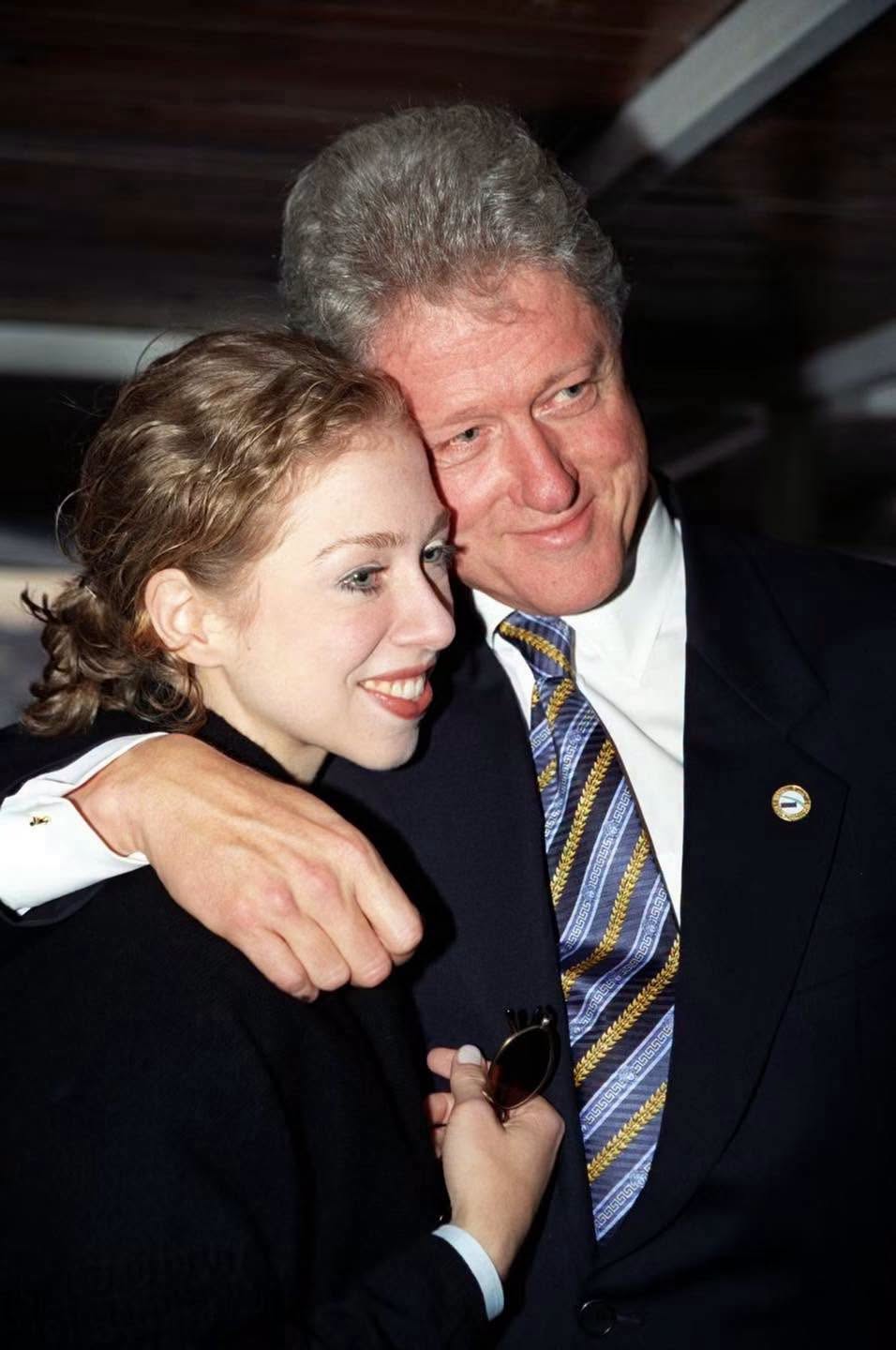
For millions of Americans, Bill Clinton was known primarily as a political leader and former president. For Chelsea, he was first and foremost her father.
That distinction is central to the way she has described her childhood.
According to the material provided, Chelsea remembered her father making an effort to remain involved in her life despite the demanding responsibilities that came with his position. Conversations about school, personal interests, future plans, and everyday concerns helped maintain a sense of connection.
Those moments offered something different from the political world surrounding the family.
While the country was focused on presidential duties and political developments, family life continued with many of the same conversations that take place in households everywhere.
The Importance of Family
One of the main themes in Chelsea’s recollections is the importance of maintaining strong family relationships during periods of intense public attention.
Political families can face a unique challenge because private matters may become subjects of public discussion. Events that would normally remain within a household can sometimes become part of broader conversations.
For Chelsea, that meant growing up while people around the country were forming opinions about her family.
At the same time, she still had to experience childhood on a personal level. She had to attend school, build friendships, pursue her interests, and develop confidence in her own decisions.
The family environment described in the material emphasized the idea that public attention did not have to determine her identity.
Developing an Independent Identity
Growing up as the daughter of a president naturally brought expectations and assumptions.
People could recognize Chelsea because of her family name before knowing anything about her personally. Some viewed her primarily as the child of a political leader, while others connected her identity to the broader Clinton family.
Developing an independent sense of self could therefore be particularly important.
The guidance described in the material encouraged Chelsea to focus on her education, interests, goals, and personal values. Rather than allowing her father’s public career to define her, she was encouraged to develop a path of her own.
That process is relevant to many families, although Chelsea experienced it under circumstances that were far from ordinary.
When Family Life Becomes Public
Being part of a well-known political family can make privacy difficult.
For most people, family disagreements, difficult conversations, and personal challenges remain private. For highly visible families, similar subjects can sometimes become topics of public discussion.
Chelsea’s childhood unfolded within that environment.
As she became older, maintaining personal boundaries became an important part of how she approached public attention. Her willingness to keep aspects of her personal life private also reflected the distinction between being a public figure and having a private identity.
Her reflections provide an opportunity to look beyond the headlines and consider the ordinary experiences that can shape a person over time.
The Everyday Moments of Childhood
When adults look back on their childhoods, the most meaningful memories are not always connected to major historical events.
Sometimes they involve much smaller moments: conversations with a parent, discussions about school, family meals, encouragement after a difficult day, or simply knowing that someone was there to listen.
For Chelsea, growing up in the White House meant that history was happening around her. Yet her personal memories could still be shaped by everyday family experiences.
That contrast is an important part of understanding what life can be like for children who grow up in highly visible families.
The public may remember major political events, while the people who lived through them may also remember much quieter moments.
The Experience of Being a President’s Daughter
Being the child of a president can bring opportunities and privileges, but it can also create pressures that most children never experience.
There can be expectations about behavior, appearance, and public conduct. There can also be curiosity from people who have never met the family personally.
Chelsea grew up during a period when television news remained highly influential and the internet was becoming an increasingly important part of public communication. This contributed to an environment in which information and opinions could spread quickly.
Yet the basic needs of a child remained unchanged.
Children need encouragement, stability, boundaries, and opportunities to develop their own interests. They also need to know that they are valued for who they are rather than simply for their family’s public position.
Those principles appear repeatedly in the way Chelsea’s childhood experiences have been described.
Encouragement to Build Her Own Future
Another important theme in the material is independence.
Rather than remaining defined by her father’s political career, Chelsea was encouraged to pursue her own education, interests, and professional goals.
Building an independent identity can be challenging for anyone who grows up in a famous family. Public expectations can sometimes make it difficult for an individual to separate their own achievements from the reputation of their relatives.
Chelsea’s journey illustrates the importance of developing personal goals and interests beyond a family’s public history.
The support of parents can play an important role in helping young people gain confidence and make decisions about their future.
Looking Back as an Adult
Childhood experiences can look different with the passage of time.
As people become adults, they often gain a better understanding of the circumstances surrounding their early years. Experiences that once seemed confusing or overwhelming may become easier to understand from a different perspective.
Chelsea’s reflections, as described in the provided material, carry some of that perspective.
She is no longer simply the young girl who grew up in the White House. She is an adult looking back at an unusual childhood and considering how family relationships, public attention, and parental guidance influenced her development.
That perspective adds another dimension to the story.
Beyond Politics
The Clinton family has played a significant role in American political life for decades. Because of that history, it can be easy to view every member of the family primarily through a political lens.
Chelsea’s recollections offer a more personal way of looking at those years.
Before Bill Clinton was president, he was a father. Before Chelsea was known as the daughter of a political leader, she was a child growing up with her parents.
Politics remained an important part of her surroundings, but it did not represent the entirety of her family life.
Her experiences demonstrate how public history and private family life can exist alongside each other.
Why These Reflections Connect With Readers
Stories about family relationships often resonate because the underlying themes are familiar.
Parents want to support their children. Children want reassurance and encouragement. Families try to maintain strong relationships even when circumstances become complicated.
Chelsea’s childhood was certainly unusual, but those basic elements are universal.
Her experience also highlights the importance of allowing children to develop their own identities. A family’s reputation, career, or social position does not necessarily determine who a child will become.
Personal interests, education, values, relationships, and individual choices all contribute to that process.
A Different Kind of Legacy
Political legacies are often measured through elections, policies, speeches, major events, and historical achievements.
Family legacies are usually much quieter.
They can be found in lessons passed from parents to children, conversations remembered years later, encouragement during difficult moments, and the confidence a parent gives a child to pursue an independent future.
That quieter form of legacy is an important part of Chelsea Clinton’s reflections on her childhood.
The public may remember Bill Clinton primarily through his presidency and political career. Chelsea’s memories also include the experiences of having him as a father.
Those two perspectives can exist together without being contradictory.
The Human Side of a Public Family
Chelsea Clinton’s recollections provide a reminder that public figures also have private family relationships.
Behind political headlines are parents and children navigating everyday life. Behind public responsibilities are family conversations and personal experiences that may never appear in history books.
For Chelsea, growing up in the White House meant experiencing an extraordinary level of public attention. At the same time, her family worked to maintain familiar routines and relationships.
Her reflections place particular importance on encouragement, family connection, personal development, and the freedom to build an identity beyond a famous family name.
Ultimately, her story is not only about politics or the presidency. It is also about the ordinary relationship between a parent and a child and the lasting influence that family guidance can have.
Looking back from adulthood, those quieter experiences can become some of the most meaningful parts of a childhood spent in the public eye.