
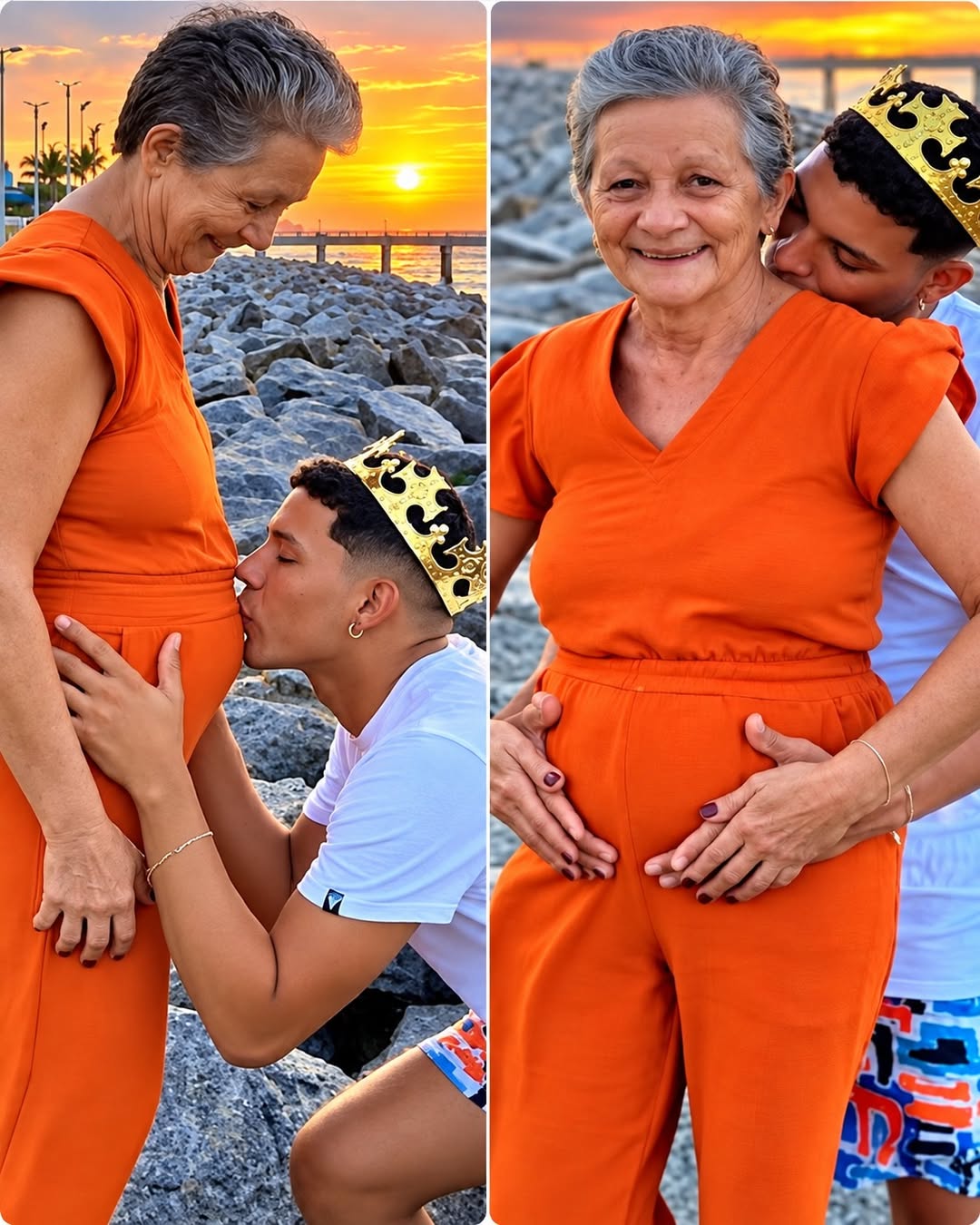
When the 61-year-old woman first told her family that she was pregnant, the reaction was anything but simple.
Some relatives struggled to believe her. Others questioned whether she had misunderstood what the doctors had told her. The situation quickly became emotional, especially because the pregnancy came at an age when many people would not expect someone to be preparing for a newborn.
But after medical examinations confirmed the pregnancy, the conversation changed.
For the couple, the most important thing was no longer convincing skeptical relatives. Their attention turned toward the health of the mother and baby and the months of preparation ahead.
Medical Confirmation Changed Everything
The pregnancy had initially been met with disbelief.
For months, the woman had listened to people question whether her pregnancy was genuine. Those comments were difficult to hear, but she continued attending her medical appointments and following the advice of her healthcare team.
Eventually, another examination provided the reassurance she and her partner had been hoping for.
The pregnancy appeared to be progressing normally at that stage.
For the couple, the news brought enormous relief.
They did not treat the medical confirmation as a victory over the people who had doubted them. Instead, they focused on what really mattered: continuing to monitor the pregnancy and preparing for the arrival of their baby.
The moment transformed the situation from something people debated into a very real responsibility.
Suddenly, there were practical questions to answer.
Where would the baby sleep?
What supplies would they need?
How would medical appointments be organized?
Who would be available to help after delivery?
And perhaps most importantly, how could they make sure they were prepared for the challenges ahead?
“Now They Know It’s Real”
After the examination, the woman reportedly experienced several emotions at once.
There was relief, because she finally had medical reassurance.
There was also exhaustion after months of dealing with questions and criticism.
Her partner shared that sense of relief.
He had watched her navigate the emotional pressure surrounding the pregnancy while also dealing with the normal physical and emotional changes that accompany pregnancy.
Now they could concentrate on something much more important.
They began making plans.
The couple discussed the baby’s sleeping arrangements, medical care, clothing and other necessities. They also started thinking about what life would look like after the birth.
Pregnancy can make future plans feel very different.
Before confirmation, having a baby can seem like a distant possibility. Once the pregnancy progresses, however, the idea becomes much more immediate.
The couple realized that every decision they made would eventually affect their new family.
Why Doctors Wanted to Monitor the Pregnancy Closely
In the story, doctors explained that the woman’s age meant the pregnancy required careful medical supervision.
Pregnancy at an advanced maternal age can involve additional health considerations, which is why healthcare professionals may recommend closer monitoring.
For the woman, that meant regular appointments and careful attention to her health.
She needed to follow medical instructions, attend examinations and communicate with her doctors if something unusual occurred.
At times, the additional monitoring became frustrating.
She wanted to enjoy the experience without constantly thinking about potential complications.
Still, she understood why her doctors were being cautious.
The purpose of careful monitoring was to identify possible concerns early and give the medical team the best opportunity to respond if something changed.
Her partner tried to support her throughout the process.
Whenever possible, he accompanied her to appointments and helped keep track of questions they wanted to discuss with the medical team.
When she became nervous before an examination, he reminded her that they did not have to think about everything at once.
They could simply take the pregnancy one step at a time.
The Emotional Side of an Unexpected Pregnancy
The medical side of pregnancy often receives the most attention.
But for the woman, the emotional experience was equally significant.
She was dealing with excitement and happiness, but also uncertainty and fear.
At 61, she knew her experience was different from that of many people around her.
Some of her friends were already grandparents.
Others were enjoying retirement, traveling or spending more time on hobbies.
Meanwhile, she was preparing for a completely different chapter of life.
She was thinking about feeding schedules, diapers, pediatric appointments and sleepless nights.
That contrast sometimes made her wonder whether other people would ever understand her decision.
But she did not believe everyone needed to understand.
What mattered most was having people close to her who respected her choices and supported her during the pregnancy.
Her partner became especially important during those moments.
The couple discovered that major life changes are not always difficult because of one dramatic event.
Sometimes the real challenges come from smaller moments.
A stressful appointment.
An unexpected question from a relative.
A night when sleep was difficult.
A disagreement about preparations.
A sudden moment of worry.
Those experiences tested their ability to communicate and support each other.
Their Significant Age Difference Became Part of the Conversation
Another aspect of the couple’s story attracted attention: their substantial age difference.
A difference of four decades naturally meant that they had grown up in different generations.
They had different childhood experiences, cultural references and memories.
The couple acknowledged that their age difference could create challenges, particularly when planning for the future.
The woman understood that she was entering parenthood at an age when many people were already thinking about retirement.
Her partner also understood that raising a child would require long-term planning.
Instead of ignoring those realities, they discussed them openly.
They considered what their lives might look like five, ten or twenty years into the future.
They talked about childcare, finances, medical care and the support they might need from relatives.
Some of those conversations were uncomfortable.
But they believed that discussing difficult subjects was better than pretending they did not exist.
The pregnancy encouraged them to think beyond the excitement of becoming parents.
They had to consider the responsibilities that would come with raising a child.
Preparing for the Baby
As the due date moved closer, preparations became more serious.
The couple began organizing the baby’s sleeping area and gathering essential supplies.
They discussed possible names and thought about the kind of environment they wanted to create for their child.
They also considered what kind of help they might need after delivery.
For the woman, preparing for the baby was about more than purchasing clothes or arranging furniture.
It was also emotional preparation.
For months, the pregnancy had been surrounded by uncertainty and questions.
Now, the couple could finally imagine the moment when they would meet their baby.
Her partner described the anticipation as difficult to put into words.
He had never expected fatherhood to arrive under such unusual circumstances.
Yet as the due date approached, the unusual aspects of the story became less important.
There was simply a baby on the way.
And they wanted to be ready.
The Final Weeks Brought New Challenges
As the pregnancy entered its later stages, the couple remained focused on medical appointments and preparation.
The woman’s doctors continued monitoring her health and the baby’s development.
Every appointment brought a mixture of reassurance and nervousness.
Reaching the final weeks was an important milestone, but the couple knew that pregnancy could change quickly.
The woman began experiencing some of the physical discomfort commonly associated with late pregnancy.
Moving around became more difficult.
Sleeping comfortably was harder.
Fatigue became more noticeable.
Simple daily tasks sometimes required additional effort.
Her partner tried to make things easier whenever possible.
He helped with household responsibilities, accompanied her to appointments and made sure transportation was available when needed.
He also stayed close when she felt anxious.
After months of questions from people around them, the couple were now approaching the moment they had been waiting for.
Soon, they would know whether their preparations were enough.
Doctors Discussed the Delivery Plan
Eventually, the medical team began discussing how the delivery should be handled.
Because of the woman’s age and the additional considerations surrounding the pregnancy, the doctors wanted the delivery to take place in a hospital where appropriate medical support would be available.
The plan was not presented as a guarantee that everything would go perfectly.
Instead, it was designed around preparation and safety.
A hospital environment would allow medical professionals to respond quickly if an unexpected situation developed.
The couple accepted the plan.
They understood that childbirth could never be completely predictable, but they wanted to be prepared for different possibilities.
In the days leading up to the delivery, the woman experienced a complicated mixture of emotions.
She was excited.
She was nervous.
She was tired.
And she was eager to finally meet the baby she had spent months preparing for.
After all the questions, doubts and emotional conversations, the moment they had been waiting for was finally approaching.
A New Chapter Was About to Begin
The story had started with disbelief.
When the woman first announced that she was pregnant at 61, some people struggled to accept what they were hearing.
But medical confirmation changed the conversation.
The months that followed were no longer about proving anything to other people.
They were about preparation, medical care, emotional support and the responsibilities that come with bringing a child into the world.
The couple knew their situation was unusual.
They also knew that becoming parents would bring challenges they could not predict.
Still, they continued moving forward together.
As the delivery date approached, the attention that had once been focused on whether the pregnancy was real began shifting toward a much simpler question:
Would everything go according to plan?
For the couple, there was only one thing they could do.
Prepare as carefully as possible, trust their medical team and wait for the moment when they would finally meet their baby.
And after months of uncertainty, that moment was getting closer.
