Federal Investigation Escalates as Minnesota Governor Tim Walz Receives Subpoena in Massive Child Nutrition Fraud Case
An Unprecedented Spotlight on Minnesota
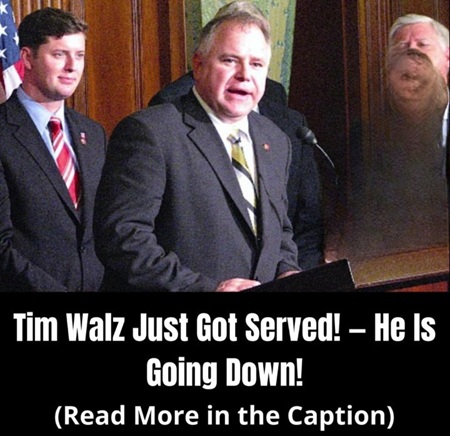
Minnesota's state government is under an unprecedented spotlight as federal investigators expand their probe into one of the largest fraud cases in the state's history. Governor Tim Walz, long regarded as a pragmatic and steady political figure, has now been formally subpoenaed in connection with a sweeping investigation that has drawn national attention.
A subpoena of a sitting governor is a rare and significant event. It signals that federal investigators believe the governor may possess information relevant to their probe, though it is important to note what a subpoena is and is not. It is a legal demand for testimony or documents. It is not a charge, an indictment, or a finding of wrongdoing. Governor Walz has not been charged with any crime in connection with this investigation.
The Feeding Our Future Program
At the center of the controversy is the Feeding Our Future (FOF) program, a state initiative designed to provide meals to children during the COVID-19 pandemic. When schools closed and families faced sudden food insecurity, federal child nutrition programs expanded dramatically to fill the gap. States administered these funds through networks of nonprofit sponsors, vendors, and meal distribution sites.
The concept was straightforward and urgent: make sure children did not go hungry during an unprecedented crisis. Federal money flowed to states, states partnered with nonprofits, and nonprofits were supposed to deliver meals to children in need. In Minnesota, Feeding Our Future was one of the nonprofits participating in this effort.
According to federal authorities, an estimated $250 million in federal child-nutrition funds were misappropriated through an elaborate scheme involving nonprofits, vendors, and individuals. Investigators allege that some parties falsely claimed reimbursements for meals that were never actually delivered to children in need.
The Scale of the Alleged Fraud
If the allegations are proven, the Feeding Our Future case would rank among the largest pandemic-era fraud schemes in the nation. The figure at the center of the case, $250 million, represents funds intended to feed vulnerable children during a global emergency. That context is what makes the allegations particularly shocking: the money was meant for hungry children.
This sprawling investigation has already resulted in more than 50 criminal convictions, underscoring the magnitude of the alleged fraud. Dozens of individuals have faced federal charges including wire fraud, money laundering, conspiracy, and bribery. The convictions span a range of roles, from nonprofit operators to vendors to individuals accused of facilitating the scheme.
Authorities say the case not only represents a major misuse of taxpayer funds but also highlights vulnerabilities in state oversight of federally funded programs. When emergency programs expand rapidly, oversight mechanisms often struggle to keep pace, creating openings that bad actors can exploit.
Why the Governor Was Subpoenaed
Governor Walz's subpoena marks a significant escalation in the investigation. While he has not been charged with wrongdoing, federal officials are reportedly seeking information about what state officials knew about the alleged fraud and when they knew it, as well as how the state's oversight systems functioned during the pandemic.
Key questions investigators are likely examining include:
- Oversight systems: What monitoring did the state have in place for nonprofits receiving federal nutrition funds?
- Warning signs: Were there red flags about Feeding Our Future's claims that should have triggered earlier intervention?
- Response timeline: When did state officials become aware of potential problems, and what actions did they take?
- Regulatory authority: What powers did the state have to audit, suspend, or investigate participating organizations?
- Communication: How did state agencies coordinate with federal authorities as concerns emerged?
These questions go to the heart of governmental accountability. Even when a governor is not personally implicated in wrongdoing, investigators need to understand how state systems operated, or failed to operate, to prevent misuse of public funds.
The Challenge of Pandemic-Era Oversight
The Feeding Our Future case illustrates a broader national challenge. During the pandemic, the federal government deployed trillions of dollars in emergency relief with unprecedented speed. Speed saved lives and livelihoods, but it also created historic opportunities for fraud.
Across the country, pandemic programs faced similar vulnerabilities:
- Paycheck Protection Program fraud: Billions in allegedly fraudulent loans led to thousands of prosecutions nationwide.
- Unemployment insurance fraud: Organized schemes exploited overwhelmed state systems.
- Emergency rental assistance: Rapid deployment outpaced verification in many jurisdictions.
- Nutrition program fraud: The Minnesota case is the largest, but not the only, example.
The pattern is consistent: emergency conditions demanded fast action, normal verification procedures were relaxed or overwhelmed, and criminals adapted quickly. Policymakers now face the difficult task of designing future emergency programs that can move fast without abandoning accountability.
Political Implications
For Governor Walz, the subpoena arrives with significant political weight. Having served as Minnesota's governor since 2019 and gained national prominence, Walz's handling of the investigation's fallout will be closely watched. His supporters point to his record of steady governance and argue that pandemic-era fraud was a national phenomenon, not a Minnesota-specific failure. His critics argue that the scale of the alleged fraud reflects serious lapses in state oversight under his administration.
The political dynamics are complicated by the nature of the allegations. Child nutrition fraud carries a particular moral sting. These were funds for hungry children during a crisis. Regardless of where ultimate responsibility lies, the case is a political liability for anyone associated with the administration that oversaw it.
How Walz responds to the subpoena, with transparency and cooperation or with resistance, will shape public perception. Legal experts note that compliance with a subpoena is generally the wisest course, and that the distinction between being subpoenaed as a witness and being targeted as a suspect is critical for the public to understand.
Lessons for Government Accountability
Beyond the politics, the case offers important lessons for how governments manage public funds:
- Emergency speed requires emergency oversight. Rapid deployment of funds must be paired with rapid monitoring, not followed by it.
- Data analytics can catch fraud early. Unusual patterns in reimbursement claims, such as explosive growth in meal counts, should trigger automatic review.
- Whistleblower protections matter. Insiders often see fraud first. Safe reporting channels are essential.
- State-federal coordination needs strengthening. Gaps between state administration and federal oversight created blind spots.
- Accountability must reach the top. When massive fraud occurs under a government's watch, leaders must answer hard questions about systemic failures.
What Happens Next
Federal investigations of this magnitude move deliberately. The subpoena of Governor Walz suggests investigators are building a comprehensive picture of the state's role, but it does not necessarily indicate where the probe will lead. Possible outcomes range from a full accounting that clears state leadership of wrongdoing to findings of systemic negligence that prompt reforms, or in the most serious scenario, charges against additional individuals.
For Minnesotans, the case is a test of institutional trust. For the nation, it is a case study in the costs of inadequate oversight during emergencies. And for the children the funds were meant to feed, it is a reminder that the true victims of fraud are often the most vulnerable, the ones who never appear in court filings but who went without the meals they were promised.
Frequently Asked Questions
What is the Feeding Our Future case about?
Feeding Our Future was a Minnesota nonprofit participating in federal child nutrition programs during the COVID-19 pandemic. Federal authorities allege that approximately $250 million in funds were misappropriated through false claims for meals that were never delivered to children.
Why was Governor Tim Walz subpoenaed?
Federal investigators subpoenaed Governor Walz as the probe escalated, likely seeking information about state oversight systems, what officials knew about the alleged fraud, and how the state responded. He has not been charged with any wrongdoing.
Does a subpoena mean the governor is guilty of something?
No. A subpoena is a legal demand for testimony or documents, not a charge or finding of wrongdoing. It indicates investigators believe the person may have relevant information.
How many convictions have resulted from the investigation?
According to federal authorities, the investigation has already produced more than 50 criminal convictions, with charges including wire fraud, money laundering, conspiracy, and bribery.
What are the broader lessons of this case?
The case highlights vulnerabilities in emergency program oversight nationwide. It underscores the need for rapid monitoring alongside rapid fund deployment, better data analytics for fraud detection, stronger whistleblower protections, and improved state-federal coordination.