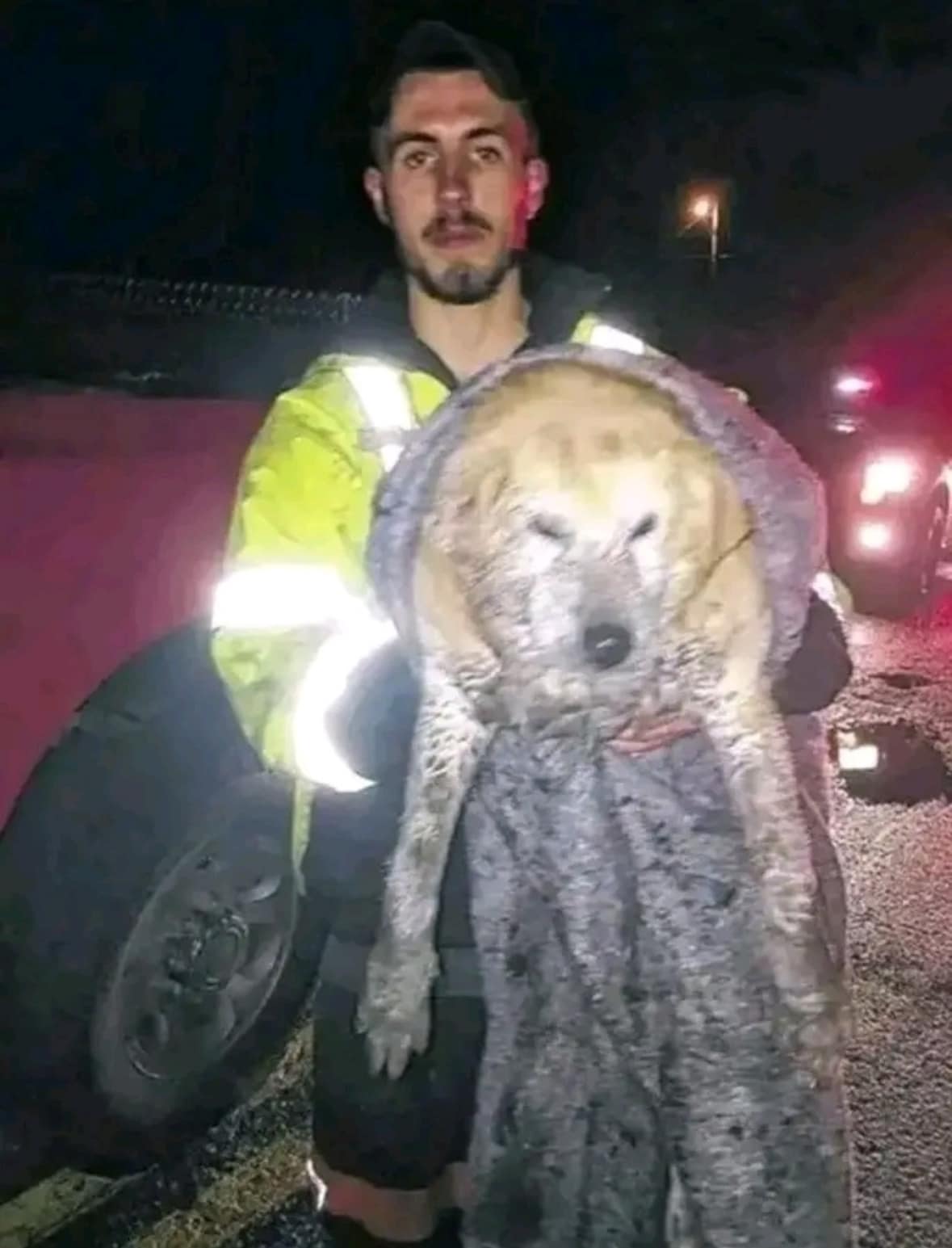
Fire Chief Risks His Life in Freezing Waters to Save Trapped Dog, Leaves Town in Awe
In the quiet town of Bardo, Kentucky, an extraordinary act of courage unfolded that residents will never forget. What began as a chilling winter day soon turned into a dramatic rescue mission, one that pushed a local fire chief to his limits in order to save a life.
A Cry for Help in the Ice
It all started when neighbors heard faint, heartbreaking whimpers echoing from a drainage culvert. Upon closer inspection, they discovered a dog trapped in waist-deep, freezing water. The animal's fur was soaked, her small body shivering uncontrollably as she fought to keep her head above the frigid current. The culvert's slippery, icy walls made it impossible for her to climb out, and every attempt by locals to reach her ended in failure.
Time was running out, and the bitter cold was stealing the dog's strength with every passing minute. A dog trapped in icy water faces a double threat: the immediate danger of drowning if exhaustion sets in, and the rapid onset of hypothermia as body heat drains away far faster in water than in air. Even a strong, healthy animal can lose the ability to keep its head above water within a short time.
The Call That Changed Everything
Recognizing the danger, residents quickly dialed for help. Within minutes, the Sunshine Volunteer Fire Department arrived on scene, led by Fire Chief Steven Hatfield, a man known in the community for his dedication and quick thinking.
Chief Hatfield took one look at the situation and knew there was no time for elaborate rescue setups. The icy water was a death trap, and hesitation could cost the animal her life.
A Dive Into Danger
Without a moment's pause, Hatfield plunged into the frigid culvert. The shock of the cold was instant, the kind that steals your breath and numbs your limbs in seconds. Still, he pressed on, wading through the waist-deep water as the current pushed against him.
For over thirty relentless minutes, the Chief battled not only the water but also the tight, confined space of the culvert. Every movement was slow, deliberate, and exhausting. The dog, terrified yet trusting, watched as he worked to loosen the debris pinning her in place.
Cold water immersion is one of the most punishing things a rescuer can face. Water pulls heat from the human body roughly 25 times faster than air at the same temperature. Within minutes, fingers and toes lose dexterity, muscles stiffen, and thinking becomes foggy. Rescue professionals train extensively for these conditions, because the cold does not just threaten the victim, it threatens the rescuer too. Thirty minutes in freezing water is an extraordinary feat of endurance by any measure.
The Cost of Heroism
Finally, with one last effort, the Chief freed the animal and cradled her to safety. The crowd erupted into applause as the dog was quickly wrapped in blankets and rushed to warmth.
But as relief washed over the onlookers, it became clear that Hatfield himself was in trouble. Exposure to freezing water had taken its toll. His hands trembled uncontrollably, his speech slurred, clear signs of hypothermia. Fellow firefighters and EMTs moved quickly, wrapping him in thermal blankets and rushing him for treatment.
Hypothermia sets in when the body loses heat faster than it can produce it, and the symptoms Hatfield showed are textbook warning signs. Uncontrollable shivering is the body's desperate attempt to generate warmth. Slurred speech, confusion, and clumsiness signal that the cold has begun affecting the brain and nervous system. In severe cases, hypothermia can slow the heart to dangerous levels. Rapid rewarming with thermal blankets and professional medical care, exactly what the EMTs provided, is the correct response.
A Town's Gratitude
Thankfully, both hero and dog survived the ordeal. The pup is now recovering with warmth, food, and plenty of love. As for Chief Hatfield, he remains humble, insisting that he simply did what needed to be done. But for the residents of Bardo, his actions went far beyond the call of duty.
In a world where acts of selflessness often go unnoticed, this rescue stands as a powerful reminder that real heroes walk among us, sometimes in fire helmets, willing to dive into icy waters for a life that cannot thank them in words.
Volunteer fire departments like the Sunshine Volunteer Fire Department form the backbone of emergency response in small towns across America. Their members train for fires, vehicle accidents, medical emergencies, and rescues of every kind, often while holding down full-time jobs elsewhere. Chief Hatfield's actions reflect the ethos that drives these departments: when someone, human or animal, is in danger, you go.
Why Ice and Water Rescues Are So Dangerous
This rescue highlights risks that safety experts warn about every winter. Cold water can incapacitate a person far faster than most people expect, which is why fire departments advise bystanders never to enter icy water themselves. The recommended approach is "reach, throw, row, go": reach with a pole or branch, throw a rope or flotation device, row out in a boat if one is available, and only go into the water as a last resort with proper training and equipment.
A drainage culvert adds extra hazards. The confined space limits movement, the current can pin a person against debris or grates, and the slippery walls make self-rescue nearly impossible. What Hatfield did was precisely the kind of operation that rescue teams drill for, and precisely the kind no untrained person should attempt.
What To Do If You Find a Trapped Animal
The neighbors in Bardo did exactly the right thing: they tried to help, recognized when the situation was beyond them, and called for professional rescuers. If you ever encounter an animal trapped in water, ice, or another dangerous spot, general safety guidance suggests the following:
- Do not enter the water yourself. Cold, moving, or deep water can kill a would-be rescuer in minutes.
- Call emergency services or animal control. Fire departments and animal control officers have training and equipment for exactly these situations.
- Keep the animal in sight. Stay at a safe distance and watch so you can guide rescuers to the exact location.
- Keep others, especially children and pets, back from the edge. Crowds near icy banks or fast water create more risk.
- Have blankets and towels ready. If rescuers bring the animal out, warm, dry coverings help fight the early stages of hypothermia.
How Readers Can Help Animals in Their Own Communities
You don't need to dive into an icy culvert to save lives. Here are general ways to support animals in need:
- Adopt or foster. Local shelters always need homes, and fostering saves lives by freeing up kennel space.
- Volunteer. Shelters need dog walkers, cat socializers, transport drivers, and event helpers.
- Donate. Money, food, blankets, and supplies all help rescues keep operating, especially in winter when heating and medical costs rise.
- Spay or neuter your pets. Fewer unplanned litters means fewer animals ending up in dangerous situations.
- Report stray or suffering animals. A quick call to animal control can be the difference between life and death for a lost or injured animal.
Chief Hatfield went into freezing water for a dog he had never met. Most of us will never face that choice, but every one of us can choose, in smaller ways, to be the person who acts instead of walking past.