Firefighter Safety Warning: Why You Should Never Use Power Strips with Space Heaters
As winter sets in and temperatures plummet, millions of households reach for the same quick solution: the portable space heater. It is affordable, effective, and easy to move from room to room. But firefighters across the country, including crews from the Umatilla County Fire District in Oregon, are issuing an urgent warning about a common mistake that turns this cozy appliance into a serious fire hazard: plugging a space heater into a power strip or extension cord.
It sounds harmless. The power strip has open outlets, the heater needs power, and everything seems to work fine, until it does not. Fire departments respond to thousands of heating-related fires every winter, and overloaded power strips are among the most preventable causes.
Why Power Strips Cannot Handle Space Heaters
The core problem is electrical load. A typical portable space heater draws between 1,200 and 1,500 watts, which translates to roughly 10 to 13 amps on a standard household circuit. That is nearly the entire capacity of a 15-amp circuit all by itself.
Power strips and most extension cords, by contrast, are designed for low-power electronics: phone chargers, lamps, televisions, computer equipment. They are simply not built to carry the sustained, intense current a space heater demands. When forced to do so, several dangerous things can happen:
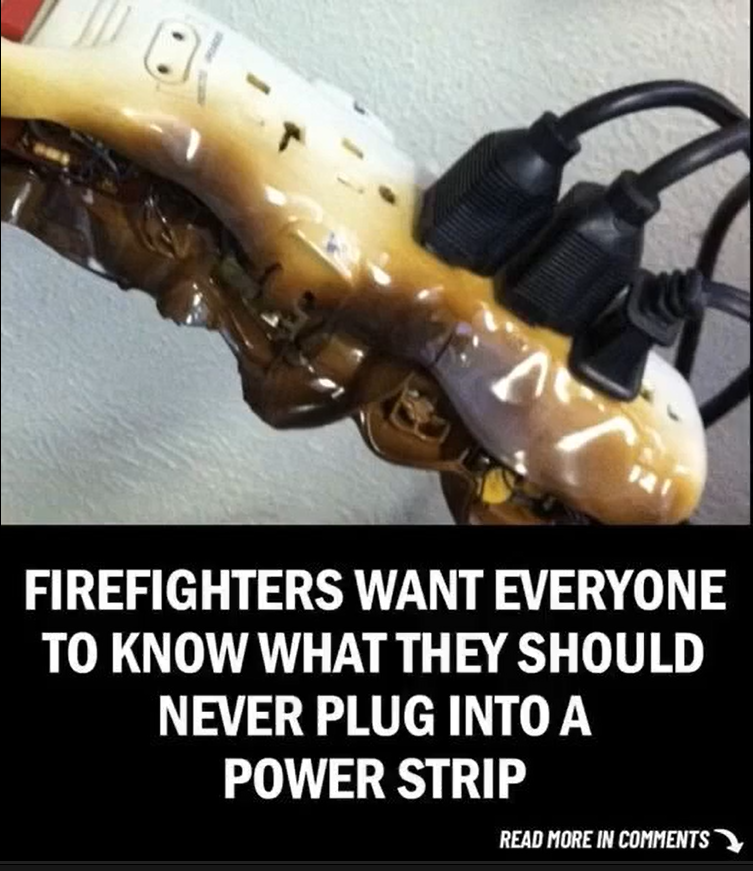
- Overheating: The strip's internal wiring and components heat up beyond their rated capacity, softening insulation and melting plastic housings.
- Sparks and arcing: Overloaded connections can spark, especially at worn or loose plug contacts, igniting nearby curtains, bedding, or carpet.
- Silent failure: Unlike a tripped breaker, an overheating power strip may show no obvious warning signs until smoke or flames appear.
- Daisy-chaining danger: Plugging one power strip into another, a practice firefighters call daisy chaining, multiplies the risk dramatically.
Firefighters emphasize that this is not a theoretical concern. Real homes have burned because of exactly this setup, and investigators routinely trace winter fires back to a melted power strip behind a couch or under a desk.
The Right Way to Power a Space Heater
The rule is simple and absolute: plug space heaters directly into a wall outlet, and nothing else.
- Use a dedicated wall outlet with no other high-draw appliances on the same circuit.
- Never use extension cords, even heavy-duty ones, unless the heater manufacturer explicitly permits a specific type, and even then, direct wall connection is safer.
- Check the cord regularly for fraying, cracking, or warmth. If the plug or cord feels hot during use, unplug the heater immediately and stop using it.
- Keep the three-foot rule: maintain at least three feet of clearance around the heater, away from bedding, curtains, furniture, and papers.
- Turn heaters off when leaving the room or going to sleep. Never leave one running unattended.
If your home's outlets are far from where you need heat, the safe answer is not a longer cord but a different heating strategy, or an electrician's assessment of your wiring.
Choosing a Safer Space Heater
Not all heaters are equally risky. When shopping, look for models with modern safety features:
- Tip-over shutoff: Automatically turns the heater off if it is knocked over.
- Overheat protection: Sensors that cut power if internal temperatures climb too high.
- Certification marks: Look for testing laboratory marks such as UL or ETL, which indicate the product met recognized safety standards.
- Appropriate size: Match the heater's wattage to the room. An oversized heater cycling constantly in a small room wastes energy and increases risk.
Older heaters, especially those without automatic shutoffs, deserve retirement. If yours is more than a decade old, replacing it is one of the cheapest fire-prevention investments you can make.
Warning Signs Your Setup Is Unsafe
Firefighters urge homeowners to watch for these red flags:
- A power strip, outlet, or plug that feels warm or hot to the touch
- Discolored, melted, or scorched plastic around outlets
- A burning or unusual smell near the heater
- Lights dimming or flickering when the heater cycles on
- Breakers tripping repeatedly, a sign the circuit is overloaded
Any of these means stop, unplug, and reassess. A tripping breaker is doing its job; do not defeat it by moving the heater to another strip.
What To Do If a Fire Starts
Even with precautions, emergencies happen. Every household using space heaters should have a plan:
- Keep a working smoke alarm in every bedroom, hallway, and on each floor, and test them monthly.
- Keep a fire extinguisher accessible and know how to use it, but never risk your safety fighting a spreading fire.
- If flames appear, get out, close doors behind you to slow the spread, and call emergency services from outside.
- Never use water on an electrical fire. If you must act and it is safe, unplug the device or cut power at the breaker first.
Fire departments also recommend a quick winter safety walkthrough of your home each year: check alarms, inspect cords, and confirm that every space heater in the house is plugged directly into the wall.
The Bottom Line
Space heaters are not inherently dangerous. Used correctly, plugged straight into a wall outlet, kept clear of flammables, and never left unattended, they are a reasonable way to stay warm. The danger comes from the shortcut: the power strip that seems convenient but cannot handle the load.
Firefighters do not issue warnings like this lightly. When they say never plug a space heater into a power strip, it is because they have stood in the ashes of homes where someone did. This winter, take sixty seconds to check every heater in your home. That small habit could be the one that keeps your family safe.
Frequently Asked Questions
Can I use a heavy-duty extension cord with a space heater?
Firefighters and manufacturers strongly advise against it. Even heavy-duty cords add resistance and connection points where heat builds up. Always plug the heater directly into a wall outlet.
Why does my power strip feel warm when the heater runs?
Warmth means the strip is struggling with the electrical load. That heat can melt insulation and start a fire. Unplug the heater immediately and do not use that setup again.
Is it safe to run a space heater while sleeping?
No. Heaters should be turned off when you sleep or leave the room. Most fatal heating fires start when occupants are asleep and cannot react to early warning signs.
How far should a space heater be from flammable materials?
Keep at least three feet of clearance on all sides, away from bedding, curtains, furniture, papers, and clothing.
Do newer space heaters make power strips safe?
No. The problem is the power strip's capacity, not the heater's age. Even the safest modern heater draws too much current for a standard power strip.