
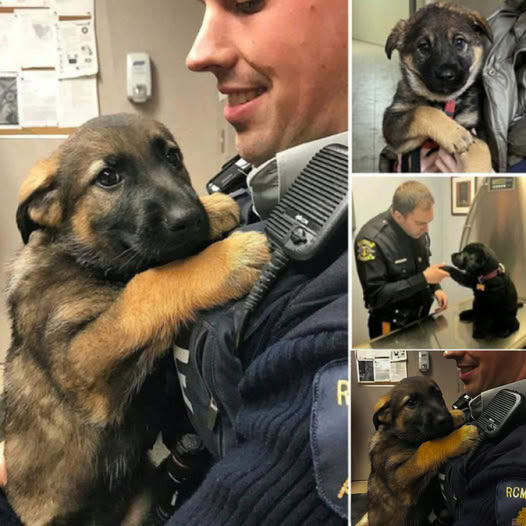
From Lonely Streets to Loving Arms: Stray Dog's Life Changes After Meeting a Kind-Hearted Officer
For countless days, a small stray dog wandered the city streets with no destination in mind. Thin, tired, and uncertain of where its next meal would come from, it avoided crowds yet couldn't hide the quiet longing in its eyes. Every step seemed to be a search, not just for food or shelter, but for something far more precious: love and safety.
One ordinary afternoon turned extraordinary when the stray spotted a uniformed figure standing at a street corner: a police officer on duty. The moment their eyes met, the dog seemed to pause, as if sensing kindness behind the stern uniform. In that instant, its cautious gaze shifted into one of hope, silently pleading for help.
The officer, noticing the dog's hesitant but trusting expression, knelt down and extended a hand. To the surprise of many who witnessed the moment, the dog slowly approached, tail wagging weakly, as though it had finally found someone who would understand its silent cry for care.
What followed was more than just an act of kindness. It was the beginning of a second chance. The officer gave the stray fresh water, a gentle pat, and eventually arranged for it to be taken to a local shelter. There, the dog received food, medical attention, and a warm bed for the first time in what seemed like forever.
Word of the meeting spread quickly among the community, with many praising the officer for taking the time to notice and respond to the unspoken plea of a homeless animal. The shelter has since shared that the dog's personality has blossomed. It now greets visitors with bright eyes and a wagging tail, eagerly awaiting the day it will be welcomed into a forever home.
This touching story is a reminder that sometimes, all it takes to change a life, whether human or animal, is a moment of compassion. For one stray dog, a single glance at the right person turned despair into hope, and loneliness into the promise of love.
The Hidden Life of a Street Dog
It is easy to walk past a stray without thinking about what its days actually look like. A dog living on city streets faces a long list of daily dangers:
- Hunger and thirst. Strays survive on scraps, garbage, and occasional handouts. Clean water can be just as hard to find as food.
- Traffic. Roads are one of the leading dangers for loose animals, especially at night.
- Disease and parasites. Without vaccinations or flea and tick prevention, strays are exposed to infections, mange, and intestinal parasites.
- Weather. Extreme heat, freezing cold, and heavy rain are brutal without shelter.
- Other animals. Territorial dogs and wildlife can injure a stray that wanders into the wrong area.
- Human cruelty. Not every encounter with a person ends kindly, which is why many strays learn to avoid crowds.
The dog in this story carried all of that in its thin frame and tired eyes. The fact that it still approached a stranger, tail wagging weakly, says everything about how much trust dogs are willing to offer, even after the world has given them little reason to.
Why the Officer's Response Mattered So Much
Police officers encounter stray animals regularly in the course of their work. What set this moment apart was not the uniform but the choice: to stop, kneel, and offer a hand instead of moving on. That small pause did three important things.
First, it gave the dog immediate relief: water, a gentle touch, and safety. Second, it connected the animal to the rescue system by getting it to a shelter, where professionals could provide food, medical care, and a path to adoption. Third, it showed the community watching that compassion is always an option, even in the middle of a busy shift. Stories like this one ripple outward, inspiring other people to notice the strays in their own neighborhoods.
What To Do If You Meet a Stray Dog
You do not need a badge to help a stray. If you encounter one, these general guidelines keep both you and the animal safe:
- Stay calm and move slowly. Sudden movements frighten strays. Crouch or kneel to appear less threatening.
- Avoid direct staring. In dog body language, a hard stare can feel confrontational. Soft eyes and a sideways posture are friendlier.
- Offer water and a small amount of food if you have any, placing it nearby rather than reaching toward the dog.
- Do not chase. A scared dog may run into traffic. If it will not approach, note the location and call animal control or a rescue.
- Check for tags and a microchip. A vet or shelter can scan for a chip that may lead back to an owner.
- Call the professionals. Animal control, local shelters, and rescue groups have the equipment and experience to capture and care for strays safely.
From Shelter to Forever Home: How Adoption Works
Once a stray reaches a shelter, a structured process begins. Understanding it helps future adopters know what to expect:
- Intake and stray hold. The shelter records the animal and typically holds it for a set number of days so a possible owner can claim it.
- Medical care. The dog receives a health exam, vaccinations, parasite treatment, and spay or neuter surgery.
- Behavioral assessment. Staff observe how the dog responds to people, other animals, and new situations to understand its needs.
- Listing and promotion. The dog is photographed and listed for adoption, sometimes with foster placement to help it decompress.
- Matching and homecoming. Adopters meet the dog, ask questions, and, if it is a good fit, bring it home with guidance on the adjustment period.
The dog in this story blossomed in shelter care, greeting visitors with bright eyes and a wagging tail. That transformation is exactly what the process is designed to produce: a healthy, social animal ready for a family.
Frequently Asked Questions
Should I try to catch a stray dog myself?
Only if the dog approaches you willingly and the situation is safe. Otherwise, keep your distance and call animal control or a local rescue. Professionals have the right tools and training.
How can I tell if a stray is aggressive?
Signs of fear include cowering, tucked tail, growling, and bared teeth. A fearful dog is not necessarily aggressive, but it should be given space. Never corner a frightened animal.
What does a shelter do with a stray that nobody claims?
After the legal hold period, the shelter evaluates the animal for adoption, places it with a foster, or transfers it to a rescue partner. Healthy, social dogs like the one in this story are strong adoption candidates.
Can I adopt a specific stray I found?
Often, yes. Many shelters let the finder place a hold or get first priority to adopt once the stray hold period ends. Ask the shelter about its policy when you bring the animal in.
How You Can Help
One officer's kindness gave this dog a future. Here are general ways you can do the same for animals in your community:
- Adopt from a shelter or rescue and give a stray the forever home it is waiting for.
- Foster a dog to free up shelter space and help the animal adjust to home life.
- Donate money or supplies, such as food, blankets, and toys, to local shelters.
- Volunteer to walk dogs, assist at adoption events, or help with transport.
- Support spay and neuter programs to reduce the number of animals ending up on the streets.
This article is for informational purposes only. If your pet shows concerning symptoms, please consult a licensed veterinarian.

