
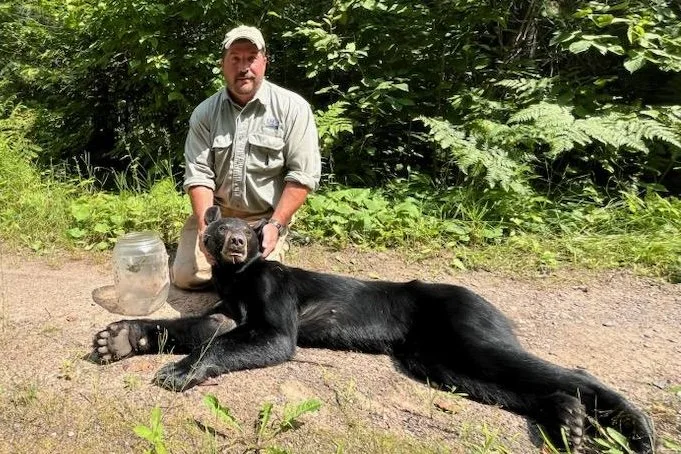
Heroic Rescue: 70-Pound Female Bear Saved After Spending 12 Days with Her Head Stuck in a Plastic Jar
In a remarkable story of survival and compassion, a young female black bear has been given a second chance at life after enduring nearly two weeks with a large plastic jar wedged tightly over her head.
The two-year-old bear, weighing around 70 pounds, was first spotted wandering through forests and rural roads with the container firmly lodged in place. Unable to eat solid food and with only limited access to water, her situation was becoming increasingly dire. Yet, against all odds, she kept moving, covering miles of rough terrain in a desperate search for relief.
For days, wildlife officials received scattered reports from concerned residents who had seen the struggling bear. Live traps were set up, and patrols were organized, but catching her proved nearly impossible. She seemed to vanish into the woods each time rescuers drew near, always one step ahead of help.
Then, on the twelfth day, hope finally arrived. A family vacationing at their cabin spotted the bear emerging from the trees. Thin, weak, and clearly exhausted, she cautiously approached the property. While maintaining a safe distance, one of the family members quickly called wildlife authorities. In a stroke of quick thinking, they decided to keep her in sight. Speaking in calm tones and waving their arms gently to guide her away from danger, they followed her at a steady pace until the rescue team arrived.
When wildlife officers finally managed to tranquilize the bear, they carefully removed the jar, revealing the young animal's face for the first time in nearly two weeks. Despite her ordeal, she was in surprisingly stable condition and is now recovering under the watchful care of wildlife rehabilitators.
This heartwarming rescue serves as a powerful reminder of the importance of protecting our wild neighbors and keeping plastic waste out of natural habitats. Thanks to the persistence of the rescuers and the compassion of an observant family, this brave little bear now has a chance to roam free once again.
How Does a Bear End Up Trapped in a Jar?
It sounds almost impossible, but container entrapments happen to wildlife more often than people think. Bears are driven by an extraordinary sense of smell, and a plastic jar that once held food still carries a powerful scent. A curious young bear investigating the smell pushes its head inside, and the container's opening can act like a one-way trap. The bear's ears and the shape of its skull make it easy to slide in but very hard to pull back out, especially once the animal panics.
Once trapped, the bear's problems multiply quickly. It cannot eat solid food. It may find only small amounts of water by dipping the jar's opening into streams. Its vision and hearing are muffled, making it vulnerable to traffic, predators, and injury. The jar can also cut into the skin around the neck as the animal struggles. That this young bear survived twelve days in this condition, traveling miles through rough terrain, speaks to an incredible will to live.
How Wildlife Rescues Actually Work
Rescuing a trapped wild animal is a careful, methodical process, not the dramatic rush people might imagine from movies. Here is how operations like this one generally unfold:
- Sightings are reported. Residents, hikers, and drivers call wildlife agencies with locations and descriptions. Each report helps officials map the animal's range and habits.
- A plan is formed. Wildlife officers study the terrain and the animal's likely patterns. They may set live traps baited with strong-smelling food, or they may track the animal on foot or by vehicle.
- The animal is located and contained. In this case, a cabin family kept the bear in sight and gently guided her, which gave the rescue team the window they needed. Keeping a safe distance is essential: a frightened bear is unpredictable.
- Tranquilization is used. A wildlife officer sedates the animal with a dart so the team can work safely. Dosage is calculated carefully based on the animal's estimated weight and condition.
- The object is removed and the animal is assessed. Once the jar was off, the team could check the bear's breathing, skin, hydration, and overall condition before deciding on next steps.
- Rehabilitation follows. Injured or weakened animals go to licensed wildlife rehabilitators, who provide food, medical care, and a low-stress environment with minimal human contact, so the animal stays wild and can eventually be released.
What To Do If You Spot Trapped or Distressed Wildlife
If you ever encounter an animal in a situation like this one, your actions in the first minutes matter. Follow these general guidelines:
- Keep your distance. A trapped animal is terrified and may bite, scratch, or charge. Do not try to free it yourself.
- Call wildlife authorities immediately. Look up your local wildlife agency, animal control, or a wildlife rescue hotline and give them the exact location.
- Stay where you can safely keep the animal in sight, as the cabin family did, so officers can find it quickly.
- Do not feed the animal or try to lure it closer. Well-meaning food can complicate a rescue or put you in danger.
- Keep pets and children away from the area until professionals arrive.
The Plastic Problem in Natural Habitats
This bear's story is also a story about waste. Plastic containers, bags, fishing line, and discarded packaging injure wildlife around the world every day. Animals get tangled, trapped, or swallow pieces of plastic they mistake for food.
Everyone can help reduce this danger in simple ways:
- Rinse and crush food containers before recycling them, and never leave open jars, cans, or buckets where animals can reach them.
- Secure trash bins and outdoor garbage so animals cannot tip them over or climb inside.
- Cut up plastic rings and straps before discarding them.
- Participate in local litter cleanups, especially near woods, rivers, and rural roads.
- Choose reusable containers and bags when possible to reduce single-use plastic overall.
Frequently Asked Questions
Why didn't rescuers catch the bear sooner?
Wild animals in distress are extremely hard to approach. They hear and smell people from far away, move mostly at dawn and dusk, and cover large areas. Even with traps and patrols, a frightened bear can evade capture for days, which is why the family's role in keeping her in sight was so important.
Is it safe to tranquilize a wild bear?
Tranquilization is a standard wildlife management tool performed by trained officers using calculated doses. The animal is monitored throughout, and once the procedure is complete, it is given time and a quiet space to recover fully before any further handling.
Will the bear be released back into the wild?
Rehabilitators generally aim to release recovered animals near where they were found, once they can feed themselves and behave normally. Keeping human contact minimal during rehabilitation helps the bear stay wild rather than becoming dependent on people.
Why is it dangerous to approach a bear with a jar on its head?
A bear that cannot see or hear well is more unpredictable, not less. It may lash out in panic. Only trained wildlife officers with proper equipment should attempt a capture.
How You Can Help
If this rescue moved you, there are general ways to support wildlife and the people who protect them:
- Donate to licensed wildlife rehabilitation centers, which run largely on donations and volunteers.
- Volunteer for habitat cleanups or citizen-science wildlife monitoring in your area.
- Report injured or trapped wildlife to the proper authorities promptly instead of handling it yourself.
- Reduce plastic waste and secure your trash so animals cannot reach containers.
- Support spay and neuter programs for pets, which helps reduce pressure on all animal welfare resources in your community.
This article is for informational purposes only. If your pet shows concerning symptoms, please consult a licensed veterinarian.



