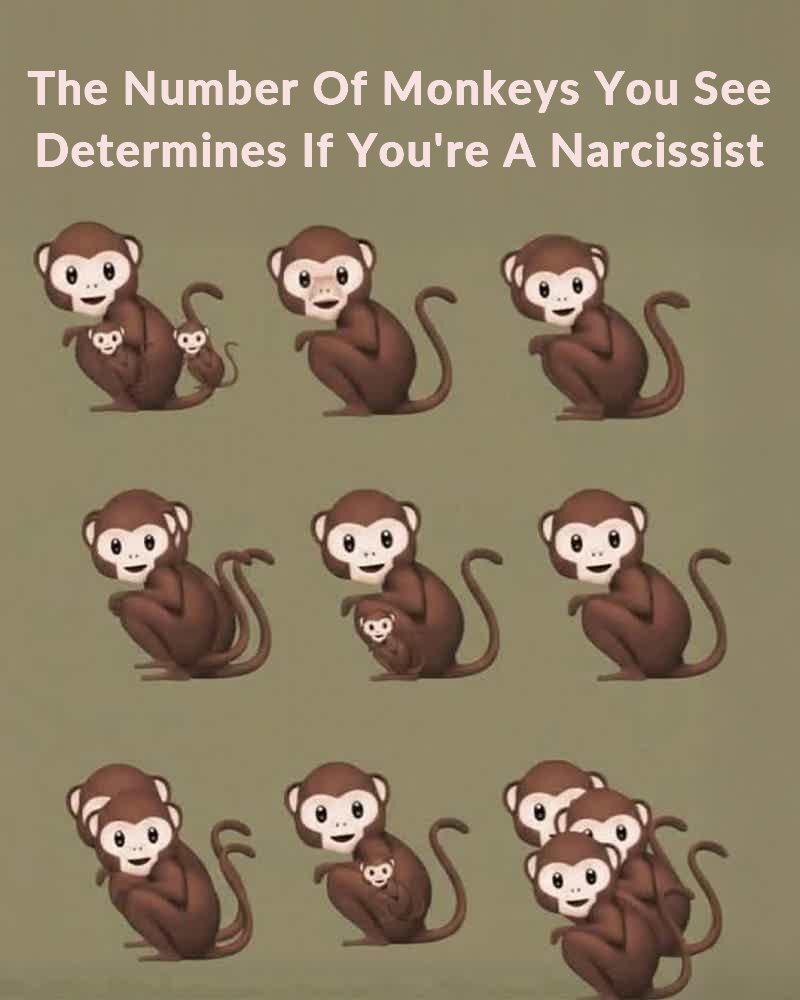
At first glance, the image looks simple rows of cartoon monkeys placed neatly on a plain background. But the headline often attached to it makes a bold claim: “The number of monkeys you see determines if you’re a narcissist.”
It’s the kind of statement that instantly grabs attention. Most people pause and start counting right away.
But there’s more going on here than just counting monkeys.
Looking Beyond the Obvious
Some viewers quickly settle on a number, counting only the most visible monkeys. Others take a closer look and begin to notice hidden shapes—smaller monkeys within larger ones, subtle overlaps, or details that weren’t obvious at first.
As a result, the total number can change depending on how carefully you observe.
This naturally leads to an interesting question: why do people see different things in the same image?
How Perception Works
Human vision isn’t just about what’s in front of us—it’s about how our brain interprets it. The mind constantly organizes and filters information based on things like past experiences, expectations, and attention to detail.
In images like this, some people focus on the bigger picture, while others are more likely to notice fine details. Neither approach is right or wrong—it’s simply how different minds process visual information.
Is It Really Linked to Personality?
Despite the popular claim, there is no scientific evidence that counting more or fewer monkeys has anything to do with narcissism or any personality trait.
This type of statement is often used in viral content to spark curiosity and encourage people to engage. While it may not diagnose anything, it does highlight how easily our attention can be guided by a simple idea.
What It Can Tell You
Even though it’s not a personality test, your observation style can reflect how you approach visual tasks:
-
If you notice fewer monkeys, you may naturally focus on the overall image rather than small details.
-
If you find more monkeys, you might pay closer attention to subtle patterns and hidden elements.
Both styles are useful in different situations and simply reflect different ways of thinking.
Why These Images Go Viral
Visual puzzles like this are popular because they trigger curiosity and invite self-reflection. People enjoy comparing answers and wondering if they missed something.
They turn a simple image into a shared experience that encourages discussion and a second look.
Final Thought
The real takeaway isn’t about labels—it’s about awareness. Sometimes, what we see at first glance isn’t the complete picture. Taking a moment to look again can reveal details we didn’t notice before.
So take another look.
How many monkeys do you see now?