
I Whispered Goodbye in My Prayers and Found Hope on the Other Side
I whispered a quiet goodbye in my prayers the day the doctors spoke the word cancer. I was 57 years old, sitting in a room that suddenly felt smaller than it had just moments before. My thoughts rushed ahead of me, to my children, my home, and the plans I still believed I had time to live out.
I never said it out loud, but deep inside, I feared that everything familiar was about to change, that my world might become smaller and filled with uncertainty.
What I didn't know then was that this journey, as frightening as it was, would teach me more about hope, courage, and the quiet presence of grace than all the easy years before it combined.
The Weight of a Single Word
There are words that change everything the moment you hear them. Cancer is one of them. In the seconds after the doctor said it, the room seemed to shrink. Sounds became distant. My mind raced through a thousand thoughts at once: my children, my home, the future I had imagined, all suddenly uncertain.
I didn't cry in that room. I just sat very still, trying to absorb what I had heard. It was later, alone, that I whispered that quiet goodbye in my prayers. Not a goodbye to life, exactly, but a goodbye to the life I had assumed I would have. A goodbye to certainty. A goodbye to the illusion that I controlled what came next.
That whispered prayer was the most honest moment I had experienced in a long time. Stripped of pretense, I was simply a person facing the unknown, reaching for something bigger than my fear.
The Long Months of Waiting
The months that followed were heavy in ways I hadn't known before. Hospital rooms became familiar. Waiting areas felt endless. Fear arrived in waves, then slowly retreated, leaving behind a quiet that was hard to carry.
Each appointment brought new questions, and each answer seemed to lead to more waiting. This is one of the hardest parts of a serious diagnosis that people don't talk about enough: the waiting. Waiting for test results. Waiting for treatment plans. Waiting to see if the treatment worked. Waiting becomes its own kind of suffering, a suspended state where life feels paused.
Some days, I surprised myself with strength. I found moments of calm and courage I didn't know I had. Other days, I felt hollow, sitting alone with my thoughts, quietly asking God if hope was still meant for me, or if faith was simply about holding on through the unknown.
Both kinds of days were part of the journey. I've learned that courage isn't the absence of hard days. It's showing up for the next appointment even when the last one left you shaken.
The People Who Carried Me
Yet even in the uncertainty, something steady kept pulling me forward. One appointment led to another. One day followed the next. The routine became familiar, even when the outcome remained unclear.
Nurses offered gentle smiles and kind words when my energy felt gone. There is a special kind of grace in the people who care for the sick: they witness fear every day and respond with steady compassion. I will never forget their kindness.
Friends showed up in unexpected ways, reminding me that support often arrives exactly when it's needed. A meal left on the doorstep. A text message at just the right moment. A friend who sat with me in silence when words felt inadequate. These small acts became lifelines.
And through it all, there was prayer. Not always confident prayer. Sometimes just whispered, desperate, honest prayer. But I began to sense that I was not as alone as I felt. Whether through people, through moments of unexpected peace, or through a strength that didn't feel like my own, I was being carried.
Learning to Measure Progress Differently
Over time, I learned to measure progress differently. Not by timelines or guarantees, but by small moments: a reassuring update, a shared laugh, a good night's rest.
This shift in perspective was one of the greatest gifts of the journey. Before cancer, I measured life in achievements and milestones. During treatment, I learned to treasure what I had overlooked: a morning without nausea, an afternoon with enough energy for a walk, an evening laughing with my children.
I learned that courage didn't always look bold or confident. Sometimes, it simply looked like showing up again. Showing up for another appointment. Showing up for another day. Showing up for the people who loved me, even when I felt like I had nothing to give.
The Bell
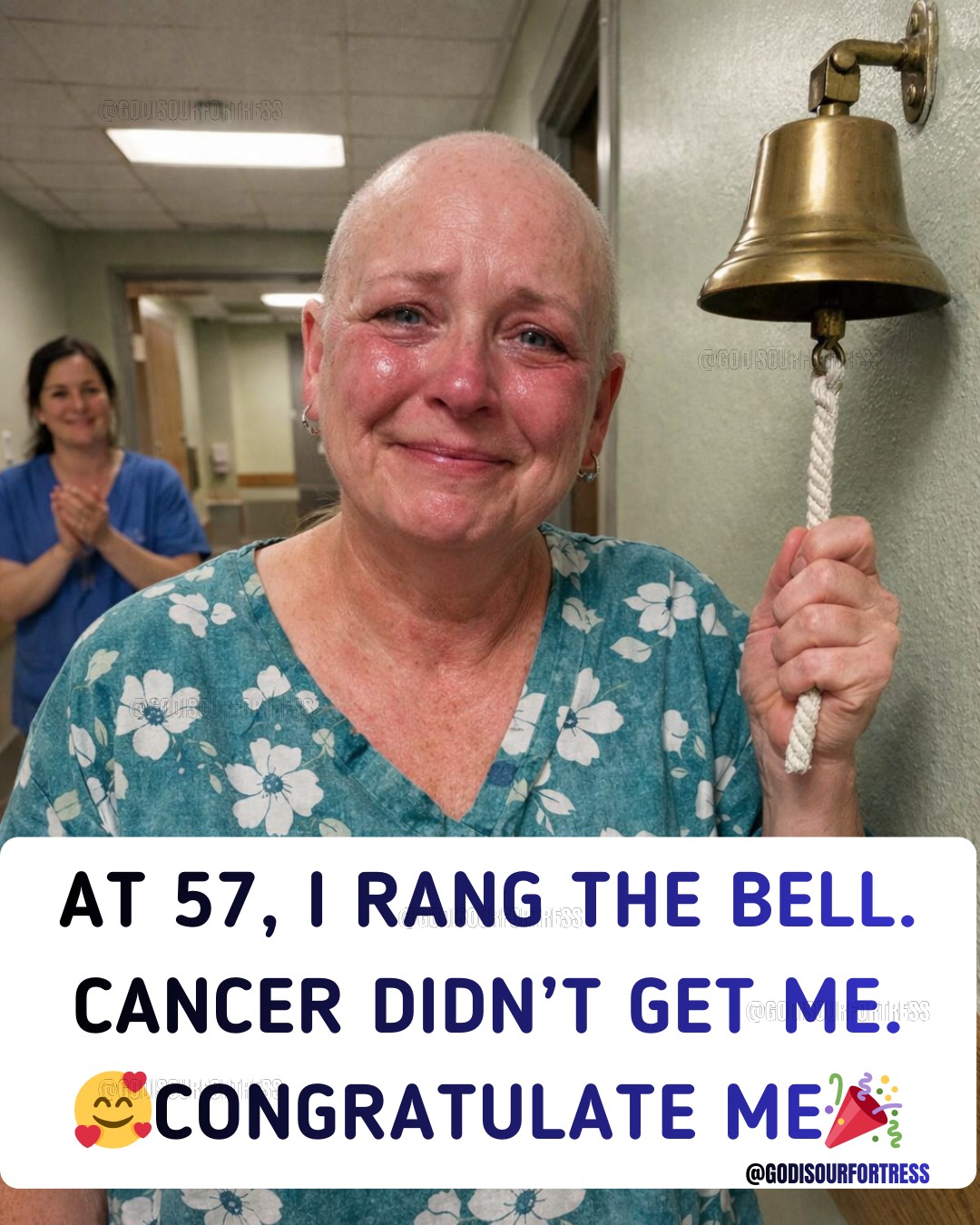
Then came the day I was walked down the hallway toward the bell. In many treatment centers, ringing the bell signifies the end of a course of treatment, a ritual that marks both an ending and a beginning.
The hallway felt longer than usual, filled with memories of every step that had led me there. My hands were shaking as I lifted my arms. My chest felt tight, and I paused before ringing it.
When I finally did, the sound echoed through the space in a way I'll never forget. Tears came quickly, not from fear this time, but from gratitude. Gratitude for the care I received. Gratitude for the people who stood beside me. Gratitude for the strength I discovered along the way.
That bell didn't just mark the end of treatment. It marked the moment I understood that the goodbye I had whispered in my prayers had been transformed. I hadn't said goodbye to life. I had said goodbye to fear's control over it.
Hope on the Other Side
I am still here. And now I understand something that took time to learn: through every appointment, every long wait, every quiet prayer, and every uncertain step, I was never walking alone.
Hope, I discovered, isn't the absence of fear. It's the decision to keep moving forward despite it. It's the whispered prayer in the dark. It's the hand of a nurse, the text from a friend, the laugh shared on a hard day. It's the bell ringing at the end of a long hallway.
If you are facing your own frightening diagnosis, I want you to know what I wish someone had told me at the beginning: you are stronger than you know, you are more supported than you feel, and the goodbye you fear may become the beginning of a deeper, richer understanding of what it means to be alive.
Frequently Asked Questions
What happened when the author received her diagnosis?
At 57, she was diagnosed with cancer. In the shock of the moment, she whispered a quiet goodbye in her prayers, fearing her familiar world was about to change completely.
What was the hardest part of the journey?
Beyond the treatments themselves, the waiting was profoundly difficult: waiting for results, for plans, for answers. She also faced waves of fear, exhaustion, and moments of feeling hollow and alone with her thoughts.
What helped her through treatment?
The kindness of nurses, unexpected support from friends, the routine of showing up day after day, honest prayer, and learning to measure progress in small moments rather than timelines or guarantees.
What is the significance of ringing the bell?
In many treatment centers, ringing a bell marks the end of a course of cancer treatment. For the author, it was an emotional moment of gratitude, symbolizing both an ending and a new beginning.
What did she learn about hope?
That hope isn't the absence of fear but the decision to keep moving forward despite it. She learned she was never walking alone, and that courage often looks like simply showing up again.



