
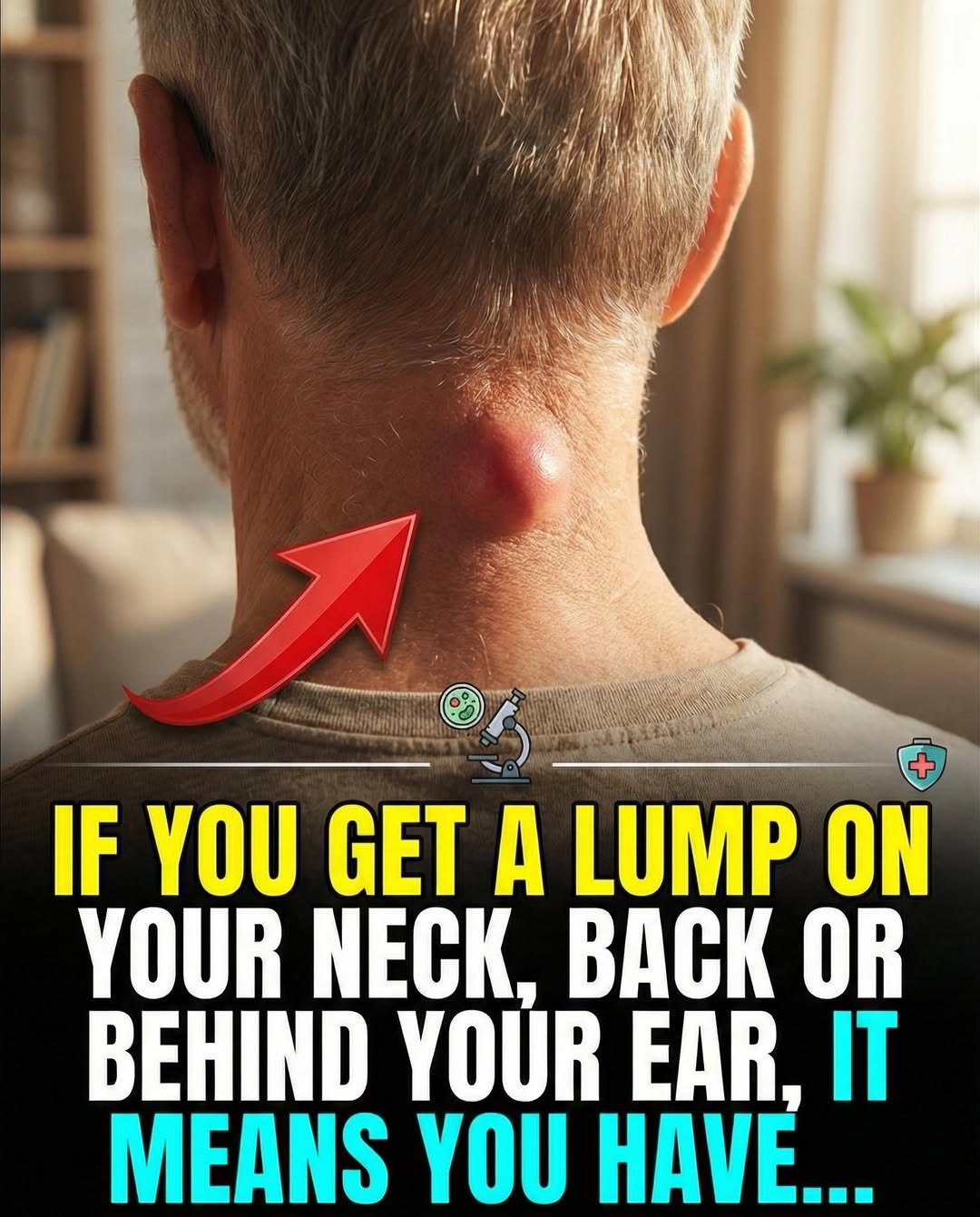
If You Notice a Lump on Your Neck or Back, Here Are Some Possible Reasons
Discovering a small lump on your neck, back, or behind your ear can be unsettling, especially if you weren't expecting it. Many people first notice these bumps during everyday activities like showering, brushing their hair, or looking in the mirror. Your heart skips a beat, your mind races to worst-case scenarios, and suddenly a tiny bump feels like a crisis.
While it's natural to feel concerned, it's important to know that many lumps under the skin are common and often harmless. That said, a new or changing lump can sometimes be your body's way of signaling that something needs attention. Understanding the most common causes can help you decide when to monitor it and when to seek professional advice.
The Most Common Cause: Epidermoid Cysts
One of the most frequent explanations for a lump in these areas is an epidermoid cyst. This is a non-cancerous growth that forms just beneath the skin and is commonly found on the neck, back, face, or behind the ears.
These cysts usually develop slowly and may remain the same size for long periods. They form when skin cells do not shed normally and instead become trapped under the surface, creating a small sac filled with keratin, a natural protein also found in hair and nails.
In most cases, epidermoid cysts are painless and do not cause discomfort. They feel like small, firm, movable bumps under the skin. Many people live with them for years without any issues, and they often go unnoticed until discovered accidentally.
However, if a cyst becomes irritated or infected, it may appear red, swollen, warm, or tender. In some situations, it can release fluid with an unpleasant odor. An infected cyst needs medical attention, as it may require treatment to resolve the infection and prevent complications.
Factors such as clogged pores, acne-prone skin, minor skin injuries, and rare genetic conditions may increase the likelihood of developing these cysts, which are more commonly seen in adults.
Other Common Causes of Lumps
While epidermoid cysts are frequent culprits, several other benign conditions can cause lumps on the neck or back:
- Lipomas. Soft, fatty growths that feel doughy and move easily under the skin. They're almost always harmless and grow very slowly.
- Swollen lymph nodes. The neck contains many lymph nodes that can swell in response to infections like colds, sore throats, or ear infections. These usually shrink once the infection resolves.
- Sebaceous cysts. Similar to epidermoid cysts, these form from blocked oil glands and are typically harmless.
- Boils or abscesses. Painful, red, warm lumps caused by bacterial infection of hair follicles. These usually need medical treatment.
- Dermatofibromas. Small, firm, reddish-brown bumps that commonly appear after minor skin injuries like insect bites.
Most of these are benign and manageable. The key is knowing which characteristics deserve a closer look.
What You Should Never Do
Although it may be tempting to squeeze or try to remove a lump at home, doing so can increase the risk of infection and scarring. Squeezing can push infected material deeper into the tissue, turning a minor issue into a serious one. It can also cause permanent scarring and make professional treatment more difficult later.
If a lump is bothering you cosmetically or physically, a healthcare professional can evaluate it safely and discuss removal options if appropriate. Many cysts and lipomas can be removed with simple in-office procedures when necessary.
When to See a Doctor
It is best to have a healthcare professional evaluate a lump if it:
- Grows quickly or changes noticeably in size
- Becomes painful, red, swollen, or warm
- Changes in color or shape
- Feels unusually hard or fixed in place rather than movable
- Is accompanied by symptoms like fever, ongoing fatigue, or unexplained weight changes
- Persists for more than a few weeks without improvement
- Appears after an illness and doesn't shrink as you recover
Most lumps turn out to be harmless, but early evaluation can provide reassurance and help rule out more serious concerns. There's no need to feel embarrassed about asking a doctor to look at something that turns out to be nothing. That's literally what they're there for.
What to Expect at the Appointment
If you see a healthcare provider about a lump, they'll typically start with a physical examination: feeling the lump's size, texture, mobility, and tenderness, and asking when you first noticed it and whether it's changed.
In most cases, this examination is enough to identify common benign causes. If there's any uncertainty, the provider might order an ultrasound to get a clearer picture, or refer you to a dermatologist for specialized evaluation. Biopsies are occasionally recommended for lumps with concerning features, but this is the exception rather than the rule.
The Bottom Line
Finding a lump on your neck or back is scary, but the odds are strongly in your favor. The vast majority of these lumps are benign conditions like epidermoid cysts, lipomas, or temporarily swollen lymph nodes. Understanding what's normal, avoiding the temptation to squeeze, and knowing when to seek professional advice will help you handle the situation calmly and wisely.
Your body deserves attention, not panic. Notice changes, take them seriously, and let a professional guide you from there.
This article is intended for informational purposes only and should not replace professional medical advice, diagnosis, or treatment.
Frequently Asked Questions
What is an epidermoid cyst?
An epidermoid cyst is a non-cancerous growth under the skin, commonly found on the neck, back, face, or behind the ears. It forms when skin cells become trapped beneath the surface, creating a sac filled with keratin. They're usually painless and slow-growing.
Is it safe to squeeze a lump at home?
No. Squeezing can cause infection, scarring, and push material deeper into tissue. Always have a healthcare professional evaluate and treat lumps.
When should I worry about a lump on my neck?
See a doctor if the lump grows quickly, becomes painful, changes color or shape, feels hard or fixed, or comes with fever, fatigue, or unexplained weight changes. Most lumps are harmless, but evaluation provides reassurance.
Can swollen lymph nodes cause neck lumps?
Yes. Lymph nodes in the neck often swell during infections like colds or sore throats. These typically shrink once the infection clears. Persistent swelling without illness deserves medical evaluation.
What will a doctor do about a lump?
Usually a physical exam is enough to identify benign causes. If needed, they may order an ultrasound or refer you to a dermatologist. Most harmless lumps require no treatment unless they're bothersome, in which case simple removal procedures are available.

