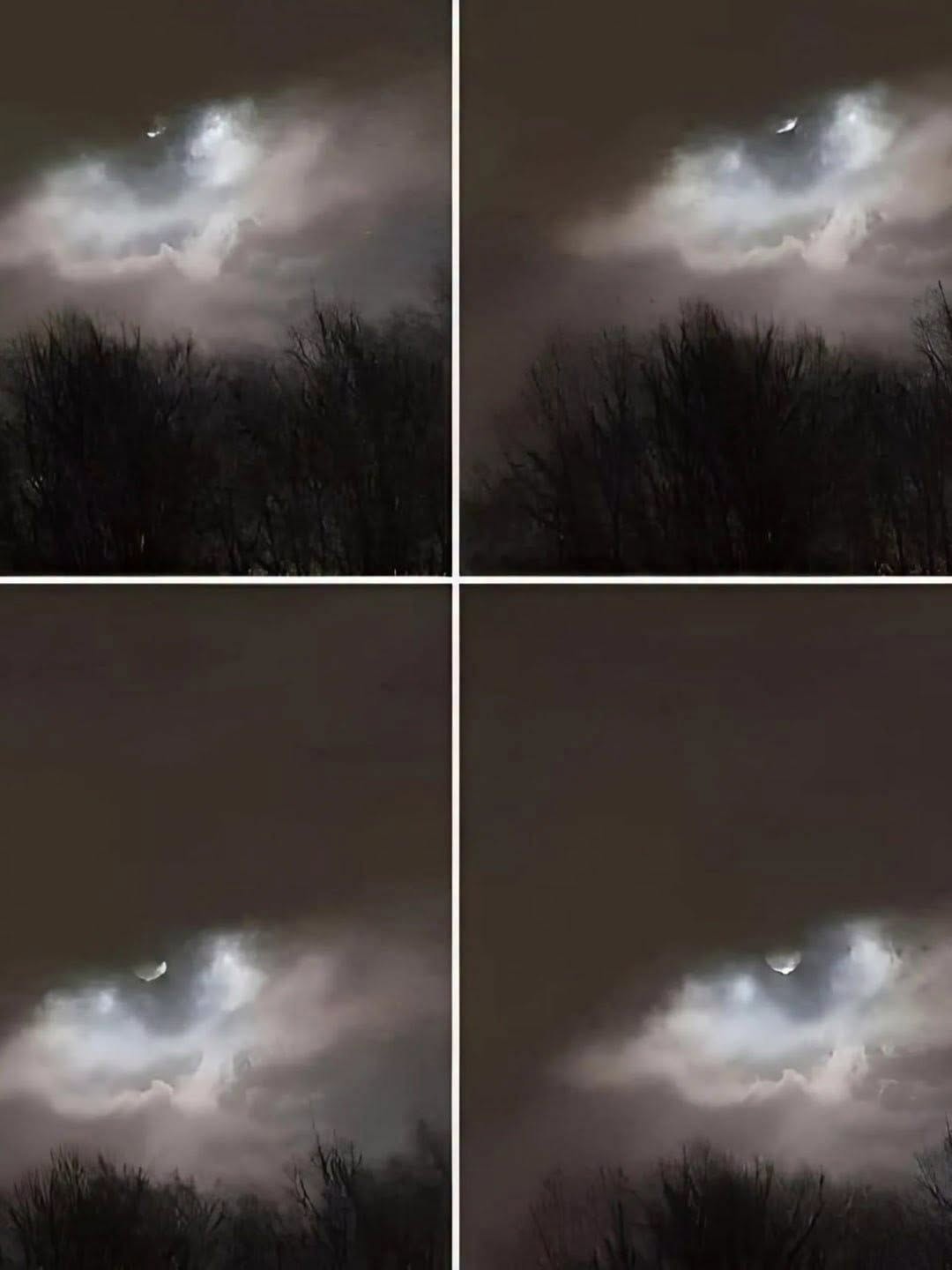
Sometimes, an ordinary walk or drive can lead to an unforgettable photograph. That is exactly what happened when my brother captured an unusual cloud formation just 21 kilometers from our home.
At first glance, the shape appears surprisingly familiar. Some people may see a person with outstretched arms, while others might notice an entirely different figure.
So what could explain such an unusual image?
Why Do We See Familiar Shapes in Clouds?
One possible explanation is pareidolia, a psychological phenomenon in which the brain recognizes familiar shapes or patterns in random visual information.
This happens more often than many people realize.
We may see faces in clouds, animals in rock formations, or familiar objects in shadows. The brain is naturally designed to search for patterns, and this ability can influence the way we interpret unusual images.
That may explain why one person sees a human-like figure while another sees only an interesting cloud.
Could It Simply Be a Rare Cloud Formation?
The shape may look unusual, but the cloud itself can still be completely natural.
Different atmospheric conditions can create remarkable cloud formations. Wind, temperature, humidity, and air pressure all influence how clouds develop and change.
Some types of clouds are particularly striking.
Lenticular clouds can develop near mountains and often have smooth, unusual shapes.
Mammatus clouds contain rounded, pouch-like formations that can create dramatic patterns across the sky.
Other cloud formations can develop when atmospheric waves interact with layers of moist air.
These conditions can sometimes produce temporary shapes that look surprisingly recognizable from the ground.
Light and Shadow Can Change What We See
Lighting may also play an important role.
The position of the sun can dramatically affect the appearance of clouds. When sunlight comes from a low angle, some areas of a cloud may appear bright while others become much darker.
The contrast can create the impression of outlines, faces, limbs, or other recognizable forms.
Water droplets and ice crystals within clouds also interact with sunlight. Depending on the viewing angle, the same cloud can look very different to different observers.
That means two people standing in different locations might not interpret the formation in exactly the same way.
Could There Be Another Explanation?
Unusual photographs often encourage people to come up with different theories.
Some viewers may interpret a mysterious-looking cloud as a spiritual or symbolic image. Others may simply regard it as an unusual natural event.
There is also another possibility worth considering: the photograph itself may have been altered.
Modern photo-editing tools make it relatively easy to adjust contrast, brightness, shadows, and other details. However, without examining the original image and its metadata, it would be impossible to determine whether a particular photograph has been edited.
For that reason, an unusual appearance should not automatically be treated as evidence of something extraordinary.
What Do You See?
That is perhaps the most interesting part of the photograph.
One viewer might see a person with open arms.
Another might see an animal, a statue, or simply a collection of clouds.
Someone else may not see a recognizable figure at all.
Our personal experiences, expectations, and cultural backgrounds can influence how we interpret the same image.
There does not necessarily have to be one universal answer.
The Science Behind the Wonder
There is something fascinating about the way the human brain interacts with the natural world.
Pattern recognition helps us make sense of what we see. In everyday life, this ability allows us to quickly identify objects, people, and potential hazards.
The same mental process can also make random shapes appear meaningful.
Clouds are particularly good examples because they constantly change shape. Their edges can briefly resemble familiar objects before wind and atmospheric movement transform them again.
In that sense, the photograph captures more than an unusual cloud. It also captures a moment when atmospheric conditions and human perception happened to meet.
A Moment Worth Looking At
Whether you see a figure in the cloud or simply an impressive natural formation, the photograph offers a good reminder to pay attention to the world around us.
Clouds can create extraordinary patterns without any unusual explanation. Sometimes the most interesting images are produced by ordinary natural processes at exactly the right moment.
The formation may eventually disappear as the wind changes and the clouds move across the sky. But the photograph preserves that brief moment and allows others to interpret it for themselves.
The Bottom Line
There is no need to assume that an unusual cloud is evidence of a supernatural event.
A combination of atmospheric conditions, lighting, perspective, and pareidolia can explain why ordinary clouds sometimes appear to form recognizable figures.
Still, that scientific explanation does not make the photograph any less fascinating.
The next time you look toward the sky, take a closer look. You might discover a shape that makes you stop, wonder, and ask yourself: