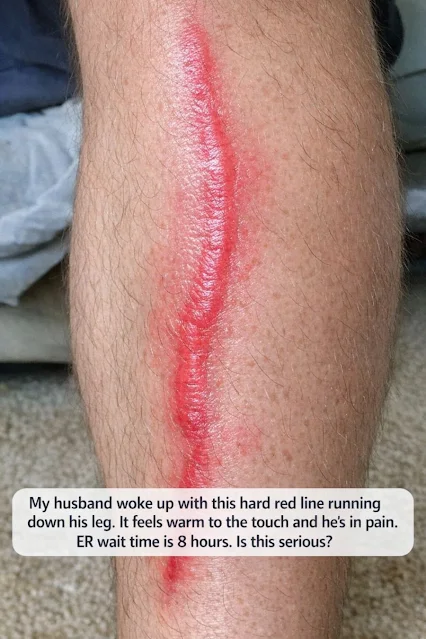
Waking up and noticing a sudden change in your partner’s health can be frightening. A hard, red line running down the leg—especially one that feels warm and painful to the touch—is not something most people expect to see. When symptoms appear suddenly and seem unusual, it’s natural to feel concerned.
While only a qualified healthcare professional can determine the exact cause, certain combinations of symptoms deserve prompt medical attention. Understanding what could be happening can help you make informed and timely decisions.
Why a Red, Warm, Painful Line Shouldn’t Be Ignored
Skin changes often provide important clues about what’s happening inside the body. When redness appears in a streak or line and is accompanied by warmth, firmness, and tenderness, it may indicate inflammation, infection, or an issue involving blood vessels beneath the skin.
In some situations, symptoms like these can progress quickly. The redness may spread, pain may intensify, or swelling may increase over hours. Because of this potential for rapid change, healthcare providers typically recommend urgent evaluation rather than waiting to “see if it goes away.”
Possible Causes a Doctor May Consider
There are several medical conditions that can cause redness and pain in the leg. Some are mild and treatable, while others require immediate care. A healthcare professional might evaluate for conditions such as:
1. Skin or Soft Tissue Infection
Bacterial infections affecting the skin and underlying tissue can cause redness, warmth, swelling, and pain. In some cases, red streaks can appear as the infection spreads along lymphatic vessels. Prompt treatment is important to prevent complications.
2. Inflammation of a Vein
Inflammation in superficial veins can create a firm, tender, cord-like line under the skin. The area may feel warm and look red. Medical evaluation is necessary to determine the severity and appropriate treatment.
3. Blood Clot in a Deeper Vein
Pain, swelling, warmth, and redness in one leg may sometimes signal a deeper circulation problem. Because circulation-related conditions can carry serious risks, doctors typically treat these symptoms as urgent until ruled out.
It’s important to note that only medical imaging, physical examination, and laboratory testing can confirm the cause.
Warning Signs That Require Immediate Care
Seek urgent medical attention if any of the following accompany the red line:
Fever or chills
Rapid spreading of redness
Significant swelling in one leg
Increasing pain
Shortness of breath
Chest pain
Feeling faint or unusually weak
Symptoms affecting breathing or causing chest discomfort require emergency services immediately.
What To Do If ER Wait Times Are Long
Emergency room wait times can be frustrating, especially when someone you love is uncomfortable. However, triage systems are designed to prioritize patients based on severity.
If you go to the emergency department:
Clearly describe all symptoms, including warmth, pain, firmness, and the red line.
Mention when the symptoms started.
Inform staff if symptoms are worsening.
If another urgent care center or hospital is within reasonable distance and can evaluate circulation issues, that may be worth considering. However, not all urgent care facilities can perform imaging tests like ultrasounds, so confirm capabilities beforehand if possible.
When in doubt, choosing immediate evaluation is the safest option.
What Not To Do
While waiting for medical care:
Do not massage the area.
Avoid applying tight wraps or compression unless directed by a healthcare provider.
Do not ignore increasing pain or spreading redness.
Avoid delaying evaluation if symptoms worsen.
Keeping the leg elevated may help with swelling, but medical assessment should remain the priority.
Why Acting Quickly Matters
Conditions involving infection or blood circulation can escalate faster than many people realize. Early treatment often leads to quicker recovery and reduces the risk of complications.
Even if the cause turns out to be minor, peace of mind and professional reassurance are valuable. Waiting too long, on the other hand, can allow certain conditions to become more difficult to treat.
The Bottom Line
A hard, red, warm, painful line running down the leg is not a symptom to ignore. While it may turn out to be treatable and manageable, it warrants prompt medical evaluation to rule out serious causes.
Trust your instincts. If something feels wrong, it’s better to seek care and be reassured than to wait and risk complications.