
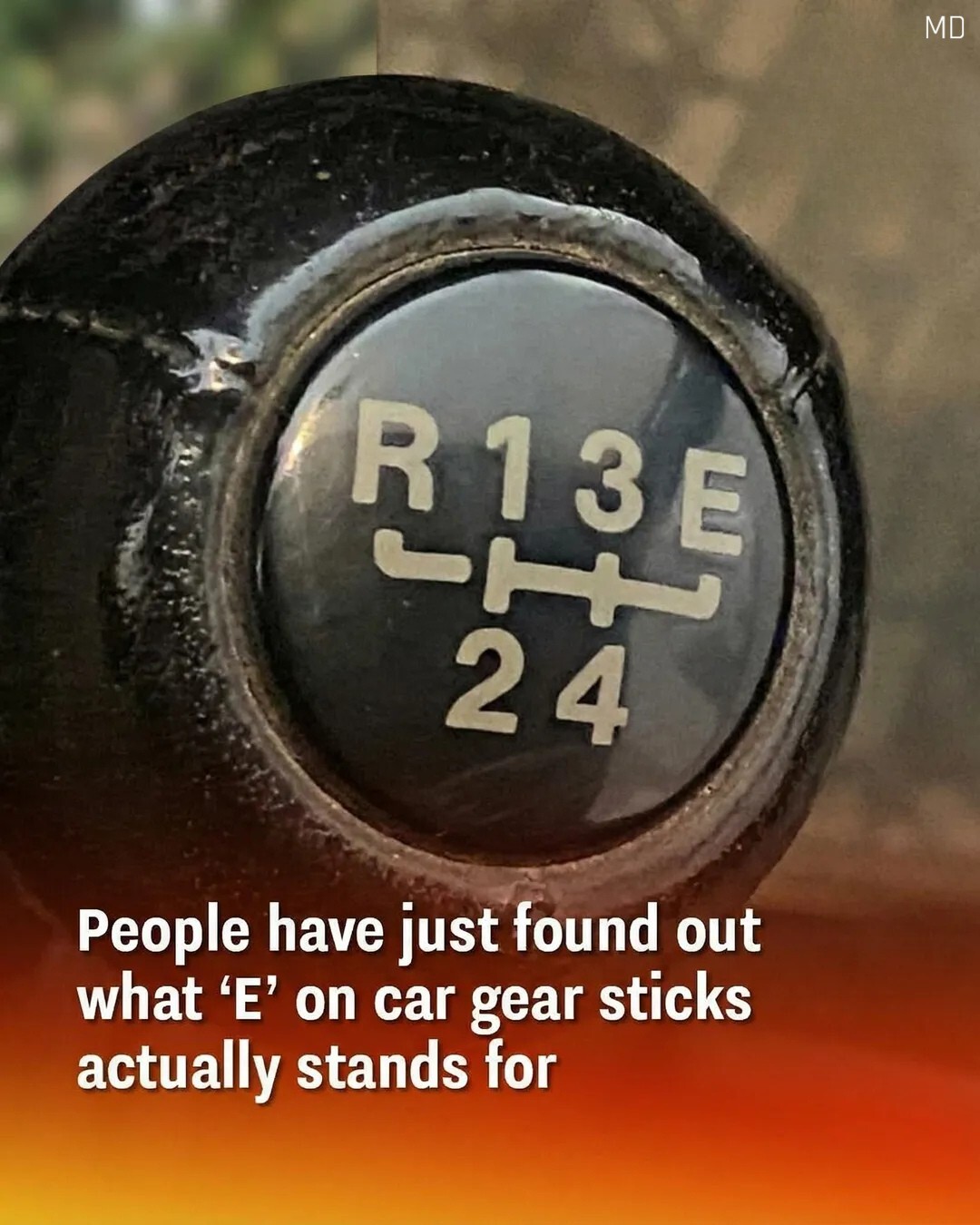
Many Drivers Are Discovering the Meaning Behind the "E" on Certain Car Gear Sticks
For decades, drivers have been familiar with the standard letters and numbers on gear sticks. Manual vehicles typically feature numbered gears along with "R" for reverse, while automatic cars display "P," "N," "D," and "R," representing Park, Neutral, Drive, and Reverse. Some automatic models also include "L" for Low gear. However, in certain older vehicles, drivers may notice an additional letter: "E." For many younger motorists, this marking is unfamiliar, which has recently sparked curiosity and conversation online.
What Does the "E" Stand For?
The "E" stands for Economy. In select older automatic models, this setting was designed to support better fuel efficiency during everyday driving. When activated, Economy mode adjusted how the vehicle shifted gears. It typically kept the engine's revolutions per minute (RPM) lower and encouraged smoother, earlier gear changes. By reducing engine strain and optimizing shift timing, the car could use less fuel, especially during steady city or highway cruising.
In practical terms, selecting "E" told the transmission to prioritize efficiency over responsiveness. The car would upshift sooner, hold higher gears longer, and avoid the aggressive downshifts that burn extra fuel during acceleration. The driving feel was calmer, less eager, and measurably thriftier.
Why Was It Introduced?
As fuel prices fluctuated and efficiency became a greater priority for manufacturers and drivers alike, automakers began adding features that could help reduce consumption. Economy mode offered a simple way for drivers to make their vehicles more fuel-conscious without changing their driving habits significantly.
The timing made sense. The oil crises of the 1970s had permanently altered how drivers thought about fuel, and the decades that followed saw steady pressure, from both regulators and consumers, for better mileage. An "E" on the gear selector was a visible promise: this car cares about your fuel budget.
While modern cars often include advanced "Eco" modes that adjust throttle response, air conditioning, and even steering feel, the humble "E" was the ancestor of all of them. It represented the same philosophy with simpler technology.
Which Cars Had It?
The "E" marking appeared primarily on certain automatic transmission vehicles from the 1980s through the early 2000s, varying by manufacturer and market. It was never universal, which is why many drivers went their whole lives without encountering it, and why younger motorists now find it mysterious.
You are most likely to spot it on:
- Older Japanese automatics, where economy-oriented engineering was a selling point.
- Certain European models from efficiency-focused manufacturers.
- Vehicles marketed during periods of high fuel prices, when economy features were emphasized in brochures.
If you drive a modern car, you will not find a lone "E" on the shifter. But check your dashboard or drive mode selector: the "Eco" button is its direct descendant.
How Economy Mode Actually Worked
The engineering behind the "E" was straightforward but effective:
- Earlier upshifts. The transmission moved to higher gears at lower speeds, keeping RPM down.
- Delayed downshifts. The car resisted dropping to lower gears unless truly necessary, avoiding fuel-hungry revving.
- Smoother shift timing. Less aggressive gear changes reduced the fuel spikes associated with hard acceleration.
- Reduced engine strain. Lower RPM operation meant less wear as well as less consumption.
The tradeoff was performance. In "E," the car felt noticeably less responsive. Merging onto highways required planning, and steep hills demanded patience or a manual override. Drivers learned to switch between "E" for cruising and standard drive for situations needing power, an early form of the drive-mode juggling modern drivers do with Eco, Normal, and Sport settings.
The "E" Versus Modern Eco Modes
Today's Eco modes do everything the old "E" did and more:
- Throttle remapping reduces engine response to pedal input.
- Climate control adjustment lowers air conditioning load.
- Start-stop systems shut the engine at idle.
- Coasting functions decouple the transmission to reduce drag.
- Dashboard coaching gives real-time feedback on efficient driving.
But the core idea is unchanged: trade a little responsiveness for meaningful fuel savings. The "E" on that old gear stick was simply the first draft of a concept the entire industry eventually adopted.
Should You Use Economy Mode?
If your older car has an "E" setting, the guidance is simple:
- Use it for steady cruising, highway driving, and relaxed city traffic. This is where the savings accumulate.
- Switch out of it when you need responsiveness: merging, overtaking, steep grades, or heavy loads.
- Do not expect miracles. Economy mode improves efficiency modestly, typically a few percent. Driving style matters more.
- Maintain your car regardless. Tire pressure, clean filters, and fresh oil affect fuel economy more than any mode selector.
A Small Piece of Automotive History
The mysterious "E" is a reminder that cars carry their history in their controls. Every button, letter, and marking represents a decision some engineer made in response to the concerns of their era. Fuel anxiety produced the "E." Safety concerns produced the interlocks. Performance culture produced the Sport button.
For younger drivers discovering it now, the "E" is a small time capsule: evidence that the previous generation worried about the same fuel prices, and that their solution, though simpler, was built on exactly the same logic we use today.
Frequently Asked Questions
What does the "E" on older gear sticks mean?
Economy. It was a transmission setting on certain older automatic vehicles designed to improve fuel efficiency through earlier upshifts and lower RPM operation.
Which cars have the "E" marking?
Primarily certain automatic models from the 1980s through early 2000s, varying by manufacturer. It was never universal, which is why many drivers never encountered it.
How is it different from modern Eco mode?
The principle is the same, but modern Eco modes additionally adjust throttle response, climate control, and other systems. The "E" only modified transmission shift behavior.
Should I drive in Economy mode all the time?
Use it for steady cruising where it saves fuel, but switch to standard drive when you need responsiveness for merging, hills, or heavy loads.



