
Mystery Object Discovered in the Attic Turns Out to Be Something Unexpected
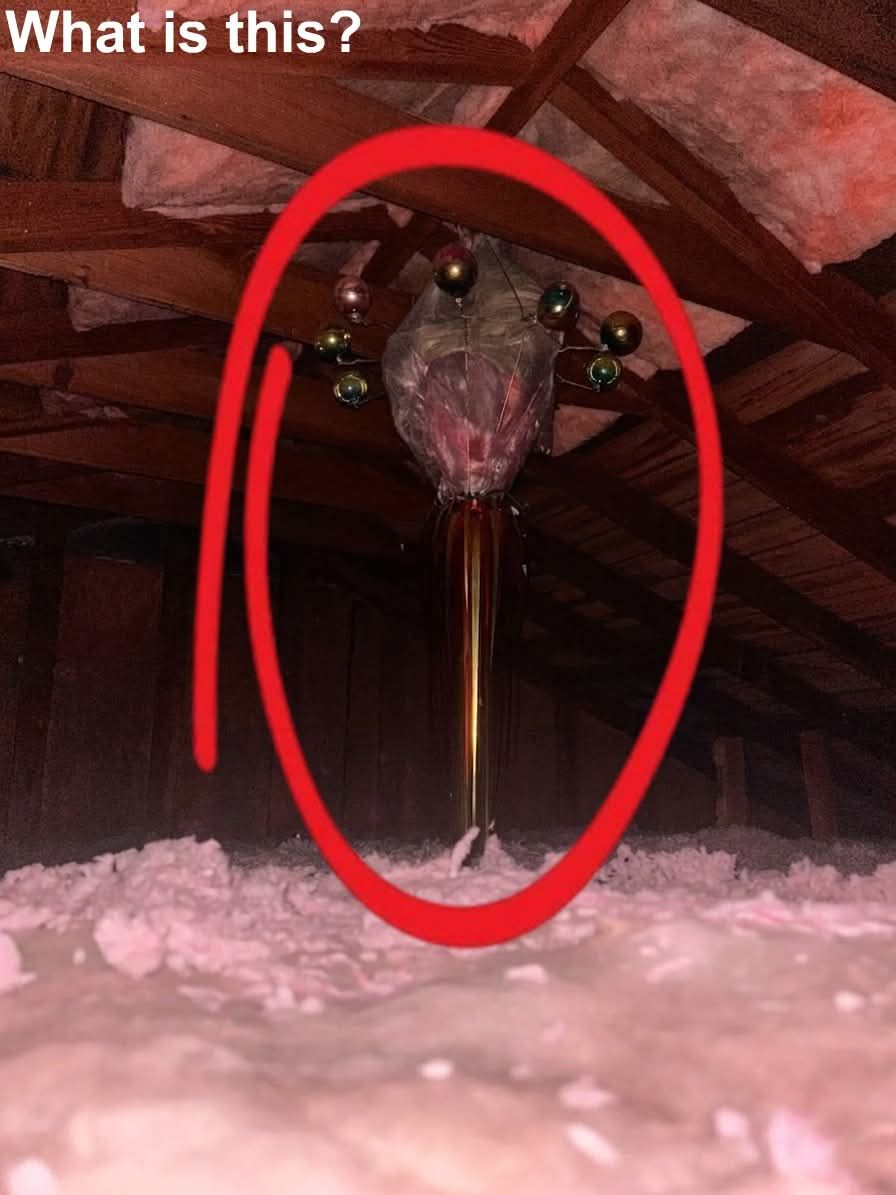
What started as a strange and unsettling discovery inside an old attic quickly turned into a surprising reminder of the past. At first glance, the object looked almost frightening. Hanging from the attic rafters was a tangled mass covered in dust, faded material, and long strands of debris. In the dim lighting, it appeared mysterious and completely out of place.
The shape was so unusual that it immediately sparked curiosity and concern. The homeowners were unsure what they were looking at. From a distance, it resembled damaged wiring or some forgotten structure hidden away for decades. The longer they stared at it, the more questions they had.
Naturally, imaginations began to run wild. Could it have been part of an old electrical setup? Maybe a storage item left behind by previous owners? Some even joked that it looked like something straight out of a movie scene because of its strange appearance and dusty condition.
A Closer Look Raises More Questions
As they moved closer, more details became visible. Small reflective pieces shimmered beneath the dust, while thin strands hung loosely from the frame. Time and age had completely transformed the object into something almost unrecognizable.
The reflective bits were intriguing. Were they glass? Metal? Some kind of insulation material? The strands looked organic at first glance, almost like cobwebs layered over years, but they seemed too structured, too deliberately arranged, to be mere dust and spiders.
Every new detail deepened the mystery rather than solving it. The object was clearly manufactured, clearly old, and clearly no longer serving whatever purpose it once had. But what had that purpose been?
This is the peculiar thrill of attic discoveries. Attics are time capsules, preserving the decisions of people who may be long gone. Every strange object is a message from the past, even when the message is hard to decode.
The Big Reveal: An Old Artificial Christmas Tree
But once they finally examined it closely, the truth became clear. It was simply an old artificial Christmas tree. Years earlier, the tree had likely been stored away after the holidays and never properly put back into its box. Over time, dust settled, materials degraded, and what was once a cheerful symbol of celebration became an unrecognizable tangle hanging in the dark.
The reflective pieces were remnants of tinsel and ornaments. The strands were the tree's synthetic needles, matted and discolored by years of neglect. The "frame" was the tree's central pole and branch structure, now bare and skeletal.
It is funny how the mundane becomes mysterious with enough time and darkness. In bright light, on a December afternoon, no one would mistake this object. But after years in a dim attic, context stripped away, it became something alien.
Why Attics Transform the Familiar
This story illustrates a fascinating perceptual principle: context is everything. Our brains identify objects not just by their features but by where we expect to find them. A Christmas tree belongs in a living room in December, decorated and lit. Remove the decorations, the lights, the season, and the living room, and the brain struggles.
Several factors conspired to make the tree unrecognizable:
- Degradation: Synthetic materials break down over years. Colors fade, needles mat, and tinsel tarnishes.
- Dust accumulation: Years of undisturbed dust create a uniform gray coating that obscures original colors and textures.
- Lighting: Dim attic light flattens depth and hides detail, making familiar shapes strange.
- Position: Hanging or collapsed in storage, the tree lost the conical shape our brains associate with "Christmas tree."
- Time: The homeowners had no memory of storing it, removing the most powerful identification cue of all: expectation.
Common Attic Mysteries (and Their Mundane Explanations)
The Christmas tree is far from the only attic object to spark confusion. Homeowners regularly discover items that seem mysterious until identified:
- Old wiring and insulators: Knob and tube wiring, common in pre 1950s homes, looks alarming to modern eyes but was standard for its era.
- Cisterns and tanks: Forgotten water storage systems puzzle new homeowners.
- Steamer trunks: Locked and heavy, they promise treasure but usually contain old linens.
- Vintage appliances: Strange metal contraptions often turn out to be early washing machines, heaters, or kitchen gadgets.
- Taxidermy: Nothing startles quite like glass eyes in the dark.
- Holiday decorations: Like our Christmas tree, years of storage render them unrecognizable.
Each discovery is a small archaeology project, revealing how previous occupants lived.
What to Do With Attic Discoveries
If you find something strange in your attic, a few guidelines help:
- Don't touch electrical components: If the mystery object might be wiring, call an electrician. Old wiring can be hazardous.
- Wear protection: Dust masks and gloves are wise. Attics harbor dust, insulation fibers, and sometimes pests.
- Photograph first: Document the object in place before moving it. Context aids identification.
- Ask the internet: Communities of vintage enthusiasts love identifying mystery objects from photos.
- Check for value: Some "junk" turns out to be collectible. Research before discarding.
- Consider safety: Very old items may contain lead paint, asbestos insulation, or other hazards. When in doubt, consult professionals.
The Sentimental Side of Forgotten Things
Beyond the mystery, there is something poignant about a Christmas tree abandoned in an attic. It was once the centerpiece of holiday joy: gifts beneath it, family around it, lights twinkling. Someone chose it, assembled it, decorated it with care. And then, one year, it went into the attic and never came back out.
Why? Perhaps the family moved and left it. Perhaps they switched to a real tree. Perhaps the person who loved it passed away, and no one had the heart, or the knowledge, to deal with it. The tree's slow decay mirrors the way memories fade when no one tends them.
Finding it is, in a way, a small act of remembrance. For a moment, the forgotten tree is noticed again. Its story, however fragmentary, is acknowledged.
Frequently Asked Questions
What was the mysterious attic object?
It was an old artificial Christmas tree that had been stored in the attic for years without its box. Dust, degradation, and dim lighting had made it unrecognizable until close examination revealed tinsel remnants, synthetic needles, and the tree's frame.
Why did it look so strange?
Years of dust accumulation, material degradation, poor lighting, and loss of its familiar context (decorations, shape, season) combined to transform a familiar object into something mysterious.
Is it safe to investigate strange attic objects?
Generally yes, with precautions: wear a dust mask and gloves, avoid touching anything that might be electrical, and consult professionals if you suspect hazardous materials like asbestos or old wiring.
What are the most common mysterious attic finds?
Old wiring, forgotten storage tanks, steamer trunks, vintage appliances, holiday decorations, and occasionally taxidermy. Most have mundane explanations once identified.
Should I keep or discard old items found in attics?
Research first. Some vintage items have collectible value. Items with sentimental or historical significance may be worth preserving. When in doubt, photograph and consult enthusiast communities before deciding.
The attic's mystery turned out to be a Christmas tree, of all things. But the real discovery was not the object. It was the reminder that time transforms everything it touches, that context shapes perception, and that even the most ordinary things carry stories if we take the time to look closely. Somewhere, years ago, that tree made a family happy. Finding it again, however strangely, was a small reunion across time.



