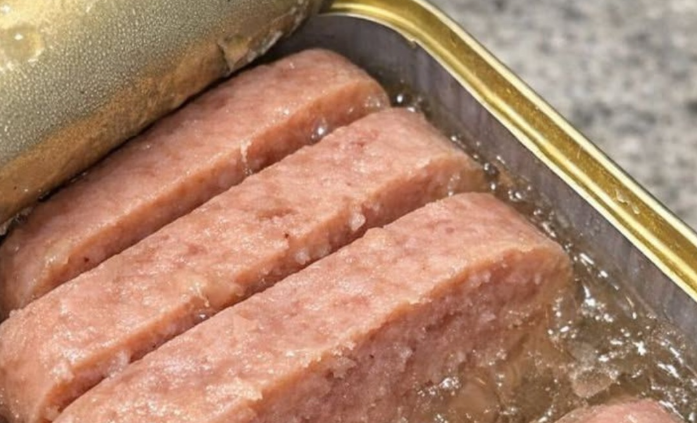
If you’ve ever opened a can of Spam and spotted a layer of clear or slightly amber jelly around the meat, you’re not alone. Many people pause at first glance, wondering whether it’s normal or a sign of something unusual.
The good news? In most cases, that jelly is completely natural.
Still, like with any canned product, it’s always smart to do a quick safety check before eating. Here’s what the jelly actually means—and how to make sure everything inside the can is safe to enjoy.
Why Does Spam Contain Jelly?
The clear jelly forms naturally during the cooking and canning process. As the meat cooks, proteins and natural juices are released. When the product cools inside the sealed can, those liquids solidify into gelatin.
It’s very similar to what happens when homemade broth cools in the refrigerator and forms a gel-like layer. It may look surprising at first, but it’s a normal result of proper preparation and preservation.
How to Tell If It’s Safe: The 3-Point Check
Even though the jelly itself is normal, it’s important to inspect any canned meat before eating. Storage conditions, age, or damage to the can can affect safety.
Here are three simple steps to follow each time you open a can:
Examine the Condition of the Can
Start with the outside.
A safe can should have:
-
Smooth, firm sides
-
No deep dents
-
No rust (especially around seams)
-
Flat top and bottom
-
No leaking
When opening, there shouldn’t be spraying liquid, foam, or a strong burst of pressure.
Avoid using the product if you notice:
-
Bulging ends
-
Heavy dents along seams
-
Flaking rust
-
Leaking liquid
-
An unusual hissing sound upon opening
If the can looks damaged, it’s best to discard it without tasting.
Check the Appearance and Texture
After opening, take a close look before handling the food.
Normal Spam should have:
-
Clear or pale amber jelly
-
Firm texture
-
Even pink color
-
Smooth, solid slices
Signs that something may be wrong include:
-
Cloudy, greenish, or very dark jelly
-
Slimy or stringy texture
-
Meat that looks gray, brown, green, or patchy
-
Excess bubbling or unusual separation
Spam should feel structured and firm—not mushy or sticky.
Use the Smell Test
Your sense of smell is a powerful freshness indicator.
Fresh Spam has:
-
A mild, slightly salty aroma
-
A gentle meaty scent
If you notice:
-
Sour smells
-
Rancid or sharp odors
-
Any unpleasant or “off” scent
It’s best not to taste it. When in doubt, throw it out.
Frequently Asked Questions
Can cooking remove the jelly?
Yes. When Spam is fried, baked, or grilled, the gelatin melts. It may blend into the meat or become part of the cooking juices. Many people find it enhances flavor and texture.
Do all varieties contain jelly?
Most traditional varieties do. Lower-fat or seasoned versions may contain less, but some gelatin formation is still normal.
Is the jelly safe to eat?
Yes. It’s simply gelatin formed from natural proteins during cooking—similar to cooled broth. It’s completely edible.
What if the jelly looks watery?
Temperature changes can soften or partially liquefy gelatin. If the color, texture, and smell are normal, watery jelly alone isn’t usually a concern.
The Bottom Line
The clear jelly in Spam isn’t a defect—it’s a natural part of the canning process.
If:
-
The can is undamaged
-
The meat looks pink and firm
-
The smell is mild
Then it’s generally safe to enjoy.
Whether you slice it for breakfast, fry it for sandwiches, or mix it into rice dishes, that small layer of gelatin is simply part of how this pantry staple is made.
Sometimes, what looks unusual is just food science at work.
Have you ever been surprised by the jelly in canned meat? It’s always interesting how small details can spark curiosity in the kitchen.