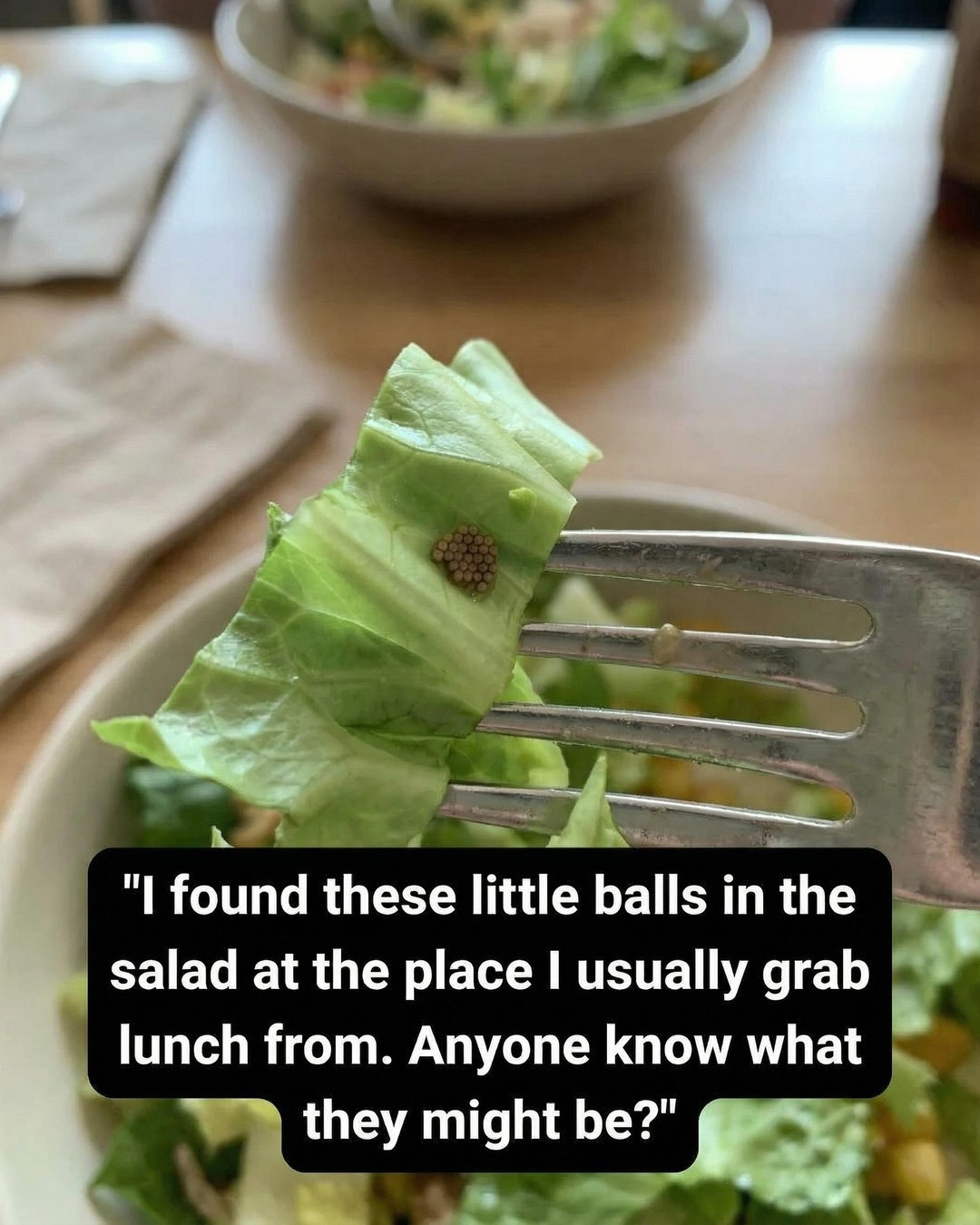
What began as an ordinary lunch break turned into a surprising learning moment. While preparing a quick salad, she added what she believed was quinoa, a familiar and healthy grain she often used. At first glance, everything looked normal. The tiny brown pieces blended easily with the greens.
Before taking a bite, however, something caught her attention. The grains appeared unusually uniform and seemed clustered on one section of a lettuce leaf. Trusting her instincts, she paused and took a closer look. That brief moment of caution proved important. What she had mistaken for quinoa was actually a group of small insect eggs attached to the leaf.
Food safety specialists explain that situations like this, while uncommon, can occasionally occur with fresh produce—especially leafy greens grown outdoors. Fruits and vegetables naturally come into contact with insects during cultivation, and small traces can sometimes remain if produce is not thoroughly cleaned. This does not automatically indicate a health risk, particularly if the food has not been eaten, but it does highlight the importance of careful preparation.
When encountering an issue like this in a restaurant, food safety professionals recommend stopping the meal and politely informing staff. Most establishments take such concerns seriously and will offer a replacement or refund while reviewing their preparation process. If a concern is not addressed appropriately, local health departments are available to help ensure food safety standards are maintained.
At home, simple habits can help prevent unexpected discoveries. Even produce labeled as organic or pre-washed should be rinsed carefully. Separating leaves, washing them under running water, and inspecting them before use can greatly reduce the chances of leftover debris. While this adds a small step to meal preparation, it offers peace of mind.
Being attentive when handling fresh ingredients not only improves kitchen safety but also builds confidence in everyday cooking. With just a few mindful practices, meals can remain both enjoyable and reassuring, turning a brief surprise into a valuable reminder of where our food comes from.