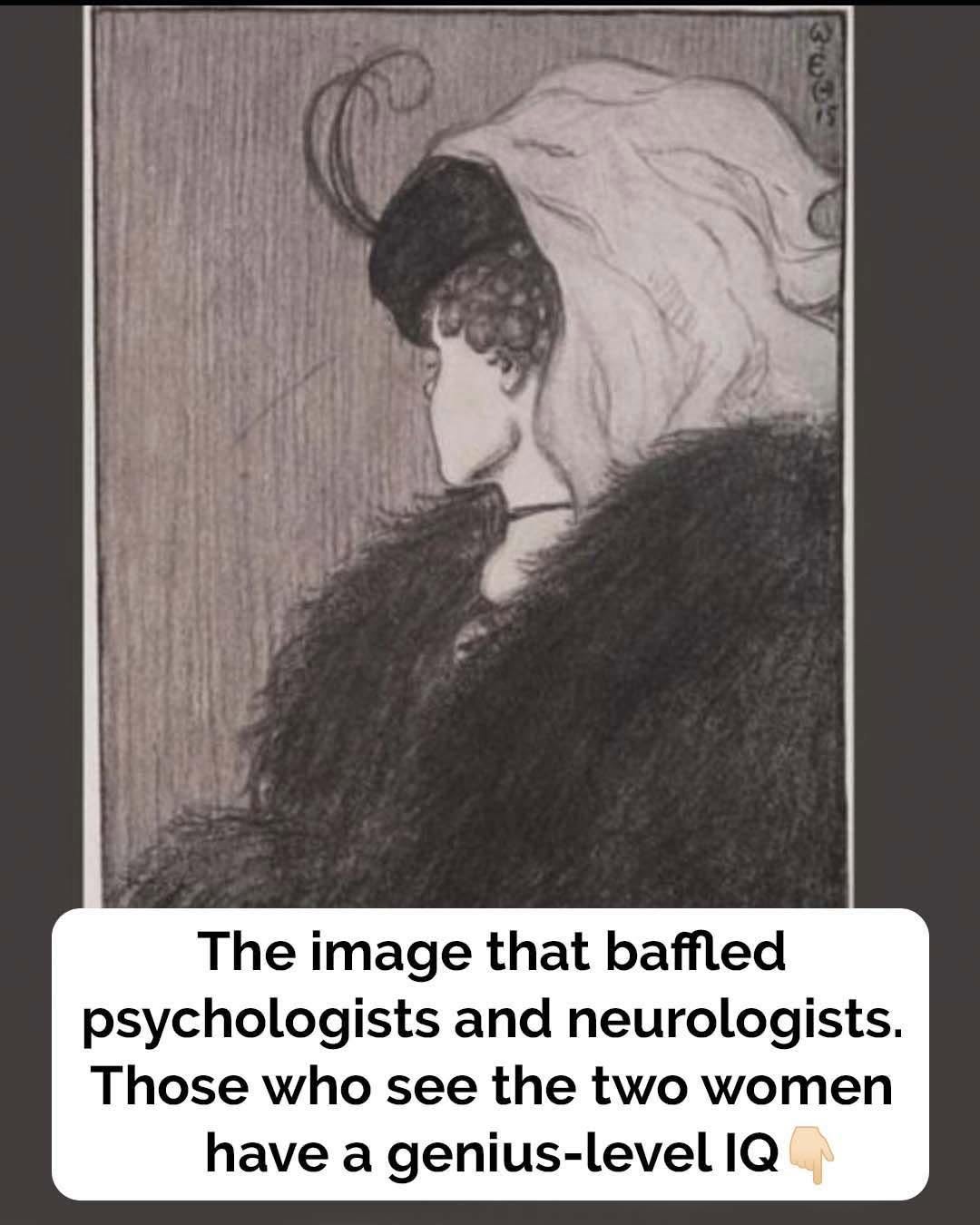
The Fascinating Science Behind Optical Illusions: Why Our Brains See Things Differently
Optical illusions have fascinated people for generations because they reveal something remarkable about the human brain. Rather than simply showing us what is in front of us, our brains constantly interpret visual information, sometimes leading us to see things that are not actually there.
This is not a flaw. It is a feature. Your visual system makes thousands of rapid predictions every second, filling in gaps and resolving ambiguities so you can navigate the world in real time. Illusions are simply the moments when those predictions get it wrong, and in getting it wrong, they show us how the system works.
Classic Illusions and What They Teach Us
The Müller-Lyer Illusion
One famous example is the Müller-Lyer Illusion. In this illusion, two lines of exactly the same length appear different because of the direction of the arrow like shapes placed at their ends. Even when people know the lines are equal, the illusion can still be convincing.
Why does it work? The leading theory involves depth processing. Your brain interprets the outward pointing fins as a corner receding into the distance and the inward pointing fins as a corner jutting toward you. Since distant objects project smaller images, your brain "corrects" by perceiving the "farther" line as longer. It is applying 3D logic to a 2D image, and getting fooled.
The Kanizsa Triangle
Another well known example is the Kanizsa Triangle. Here, the brain creates the impression of a bright white triangle, even though no triangle is actually drawn. The surrounding shapes encourage the mind to fill in missing information, demonstrating how perception works beyond what the eyes directly observe.
This illusion reveals that your visual system prefers complete shapes. Given suggestive fragments, it constructs the whole, even adding illusory contours and brightness that have no physical basis. You are literally seeing something that is not there, and your brain is doing it on purpose.
The Spinning Dancer Illusion
The Spinning Dancer Illusion offers another intriguing challenge. Some viewers see the dancer rotating clockwise, while others perceive the motion in the opposite direction. This difference occurs because the image contains ambiguous visual cues, allowing the brain to interpret it in more than one way.
The silhouette provides no depth information, so your brain must guess which way the figure faces at each moment. Once it commits to an interpretation, it tends to stick with it, which is why most people initially see only one direction. With effort, many can learn to "flip" the perception, a strange and delightful experience of watching your own brain change its mind.
Modern Viral Illusions
Modern viral illusions have also captured widespread attention. Images and sounds that appear differently to different people have sparked conversations about perception across social media.
Famous examples include:
- The dress: Blue and black or white and gold? The disagreement revealed how differently brains handle color constancy under ambiguous lighting.
- Yanny vs. Laurel: An audio illusion showing that ambiguous frequencies get resolved differently by different auditory systems.
- Hidden number images: Circles and patterns that reveal different numbers depending on contrast sensitivity.
- Rotating snakes: Static images that appear to move, demonstrating how motion detectors can be tricked by repeating patterns.
Each viral illusion follows the same formula: genuine perceptual ambiguity plus social sharing equals massive engagement. Disagreements feel personal because perception feels like reality.
Why the Brain Takes Shortcuts
Your visual system processes an enormous amount of data. Shortcuts, called heuristics, make this possible:
- Color constancy: You perceive an apple as red in sunlight and shade, even though the wavelengths hitting your eyes differ dramatically. Your brain corrects for lighting automatically.
- Size constancy: A car driving away does not look like it is shrinking into a toy. Your brain maintains stable size perception across distances.
- Pattern completion: You recognize a face from a few features, a word from partial letters. Filling in blanks is faster than waiting for complete data.
- Motion prediction: Your brain anticipates where moving objects will be, which is why you can catch a ball.
Illusions exploit these shortcuts by presenting situations the shortcuts were not designed for. The "errors" are actually evidence of sophisticated processing working as intended in the wrong context.
Individual Differences in Perception
Not everyone experiences illusions identically. Factors that influence susceptibility include:
- Culture: Research suggests people from different visual environments (urban vs. rural, for example) show varying susceptibility to certain geometric illusions.
- Age: Some illusions strengthen or weaken across the lifespan as visual processing changes.
- Attention: Where you focus within an image changes what you perceive.
- Expectation: Being told what to look for alters perception dramatically.
- Neurological differences: Conditions affecting visual processing change how illusions are experienced.
These differences remind us that perception is not a passive window onto reality. It is an active construction, and constructions vary.
Practical Applications
Understanding illusions is not just entertaining. It has real world uses:
- Design: Architects and graphic designers use illusory principles to make spaces feel larger or interfaces more intuitive.
- Art: Op art and trompe l'oeil traditions are built entirely on perceptual tricks.
- Safety: Understanding inattentional blindness helps design better warning systems and vehicle interfaces.
- Medicine: Illusions help researchers study visual processing disorders and test neurological function.
- Entertainment: Magic, film effects, and theme park design all exploit the gap between sensation and perception.
Frequently Asked Questions
Why do optical illusions work even when you know the truth?
Because the processes involved operate below conscious control. Knowing the lines are equal does not stop your depth processing circuitry from applying its corrections. Perception and knowledge run on separate tracks.
Do optical illusions reveal personality traits?
No. Viral claims linking illusion perception to personality lack scientific support. Illusions reveal how visual processing works, not who you are.
Can anyone learn to see the "other" interpretation?
Often yes. With practice, many people can flip ambiguous images like the spinning dancer or the Necker cube. It is a trainable skill involving attentional control.
Are some people immune to optical illusions?
Susceptibility varies, but complete immunity is rare. Different people are more or less affected by specific illusions, influenced by culture, age, attention, and neurology.
Why do illusions go viral?
They combine genuine perceptual surprise with social disagreement. When two people see different things in the same image, discussion is inevitable, and discussion drives sharing.
Your brain is not a camera. It is a storyteller, constantly narrating the visual world based on incomplete data and educated guesses. Optical illusions are the moments when you catch the storyteller improvising. Far from revealing a defect, they reveal one of the most sophisticated information processing systems in nature: yours.