My mother didn’t leave my life all at once.
Her presence faded slowly, almost quietly, like a dimmer being turned down one step at a time.
At first, the changes seemed harmless. She misplaced everyday items, forgot appointments, and repeated stories she had already told. We smiled through it and told ourselves it was just part of getting older.
Then one afternoon, she looked at me with familiar warmth and asked if I lived nearby.
That moment changed everything.
The doctor explained her condition using careful words—progressive and unpredictable. He spoke gently, as if kindness alone could soften the weight of the truth.
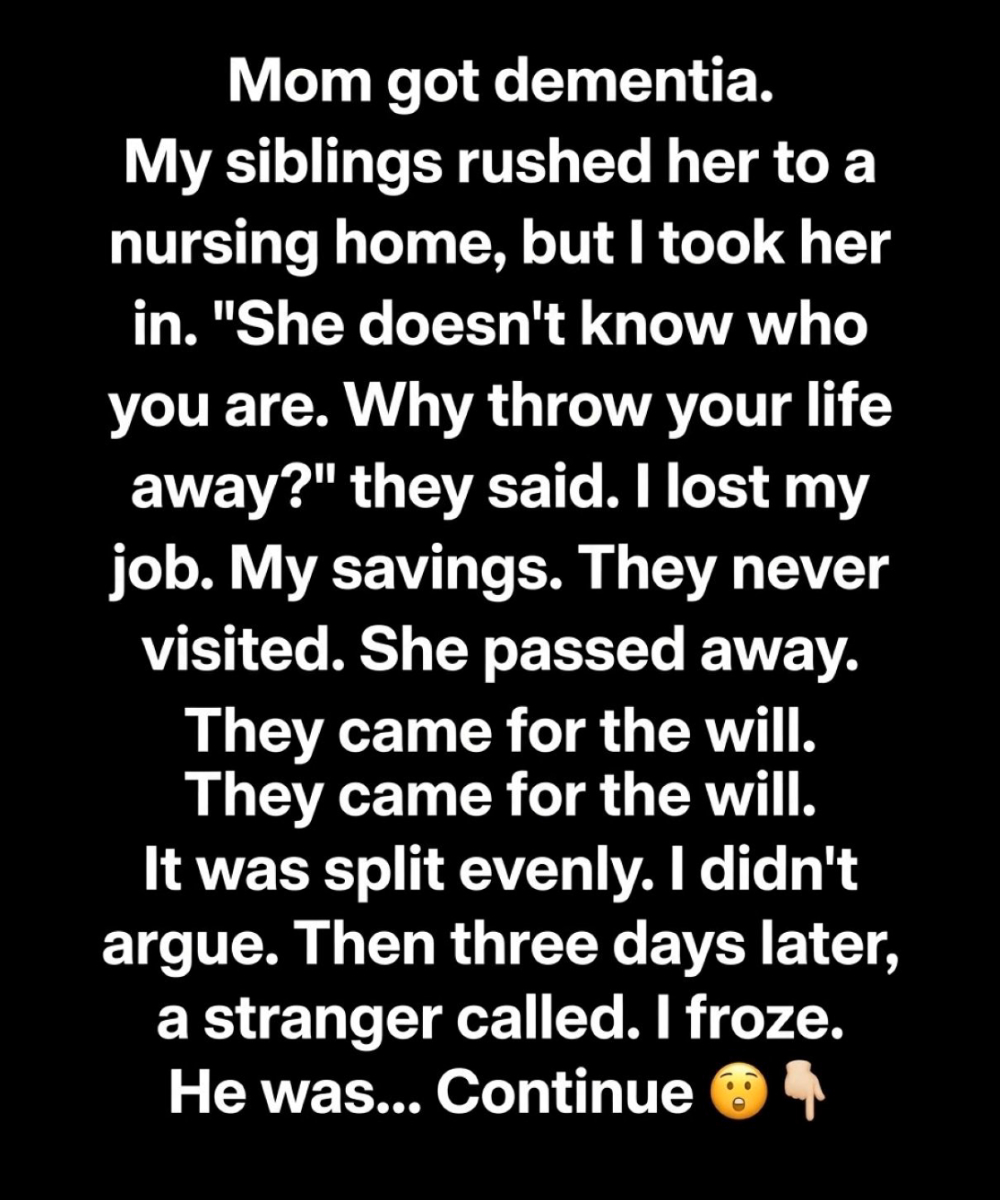
My siblings reacted quickly and practically. They discussed care facilities, waiting lists, and expenses. I listened without interrupting because I already knew what my decision would be.
I couldn’t place her in an unfamiliar environment.
I couldn’t leave her fear in the hands of strangers.
So I brought her home.
Many people warned me it would be overwhelming. They said she might never recognize what I sacrificed. Some cautioned that love without acknowledgment can eventually turn into exhaustion and resentment.
I heard them—and chose to stay.
Caring for my mother gradually reshaped my life. My work hours were reduced, then eventually disappeared altogether. Savings were spent on medications, special meals, safety equipment, and quiet solutions for difficult moments. My world became smaller, centered around her routines, her emotions, and her comfort.
There were peaceful days. She would hum songs from her youth, her face calm as sunlight filled the room.
Other days were harder. She felt anxious, confused by fears she couldn’t explain.
My siblings checked in occasionally. Visits were rare.
Still, I reminded myself that love is not measured by being remembered. Even when she forgot my name, she relaxed when I held her hand. She felt safe.
That had to be enough.
She passed away quietly just before sunrise. I was with her, holding her hand, as I always had. She left the same way she had lived in her final years—gently and without attention.
Afterward, my siblings returned to handle arrangements. The will was read. Everything was divided evenly, exactly as my mother had planned long before her memory faded.
I didn’t argue. I didn’t explain the years of care. Grief had already drained me, and peace felt more important than recognition.
When they left, the house felt empty—not only because she was gone, but because the purpose that had guided my days was gone too.
Three days later, I received a phone call.
The caller was a man from my mother’s past, a former colleague I had never met. He explained that early in her illness, she had entrusted him with something important.
It wasn’t a large sum of money.
It wasn’t a secret inheritance.
It was a modest account she had quietly placed in my name—not as payment, but as appreciation. Along with it came a letter she had written while her handwriting was still steady.
She thanked me.
For my patience.
For my kindness.
For choosing to stay.
That was when I understood a truth that took years to learn: memory can fade, but love leaves its own record.
What I gave her mattered. And in the end, it gave something back—not wealth or praise, but the quiet certainty that I had made the right choice.
And that, finally, was enough.